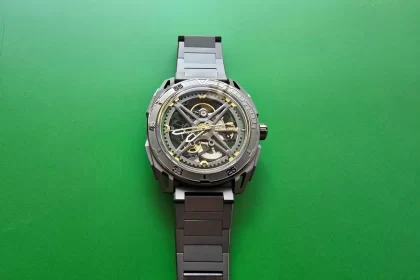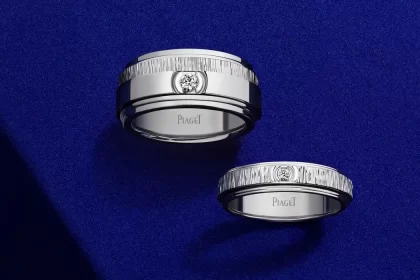
If you’ve ever shopped for a watch and seen words like “automatic,” “quartz,” or “COSC certified” and had no idea what they meant, you’re not alone, we all have to start somewhere, and we are here to learn together. The movement is the engine inside your watch, and understanding it will help you buy smarter and appreciate your watch more. Here’s a full simple guide to how watch movement work, the different types out there, and what actually matters when you’re choosing one. Also, I have written a Luxury watch buying guide and also a Dive watch Guide. So feel free to read those as well because you will understand the world of watches.
- What Is a Watch Movement?
- How a Mechanical Watch Actually Works
- Manual vs. Automatic: What’s the Difference?
- Quartz Watches: Simple and Accurate
- Hybrid Movements: The Best of Both Worlds?
- In-House vs. Third-Party Movements
- Benchmark Workhorse Movements at a Glance
- What About Accuracy Standards Like COSC?
- Tourbillons and Fancy Escapements: Do They Matter?
- How Often Does a Watch Need Servicing?
- Which Watch Movement Type Is Right for You?
- These are the watch movements that power the watches we love
What Is a Watch Movement?
The Watch Movement (also called a caliber) is everything inside the watch that makes it tick and show the time, basically it’s the heart that pumps energy. It includes the power source, the gears, and the parts that turn that stored energy into moving hands.
Every movement has a reference number, like ETA 2824-2, Sellita SW200-1, or Rolex 3235, and a few basic specs worth knowing:
- Beat rate – how fast the balance wheel swings back and forth
- Power reserve – how long the watch runs on a full wind or charge
- Jewel count – tiny ruby bearings that reduce friction at key points
- Accuracy – how many seconds it gains or loses per day
More jewels don’t automatically mean a fancier watch, it’s not about that. A basic movement can easily have 24 to 26 jewels, that’s normal, not a luxury signal. The Sellita SW200-1 has 26, the ETA 2824-2 has 25, and the Miyota 9015 has 24. If you find a movement without any jewels, then we have a problem.
What Counts as a Complication?
A complication is any function a watch does beyond simply showing hours, minutes, and seconds. That includes a date window, day display, power reserve indicator, chronograph, GMT, annual calendar, perpetual calendar, moonphase, or alarm. As a general rule, the more complications a watch has, the more parts are packed into the Watch Movement, which usually means a thicker case, a higher price, and more complex (and pricier) servicing down the line.
My favorite complications are power reserve indicator and GMT’s, just love them.
How a Mechanical Watch Actually Works
I’m trying to keep everything simple and exact, I don’t want to boring you endless stories, I will focus more on technical details.
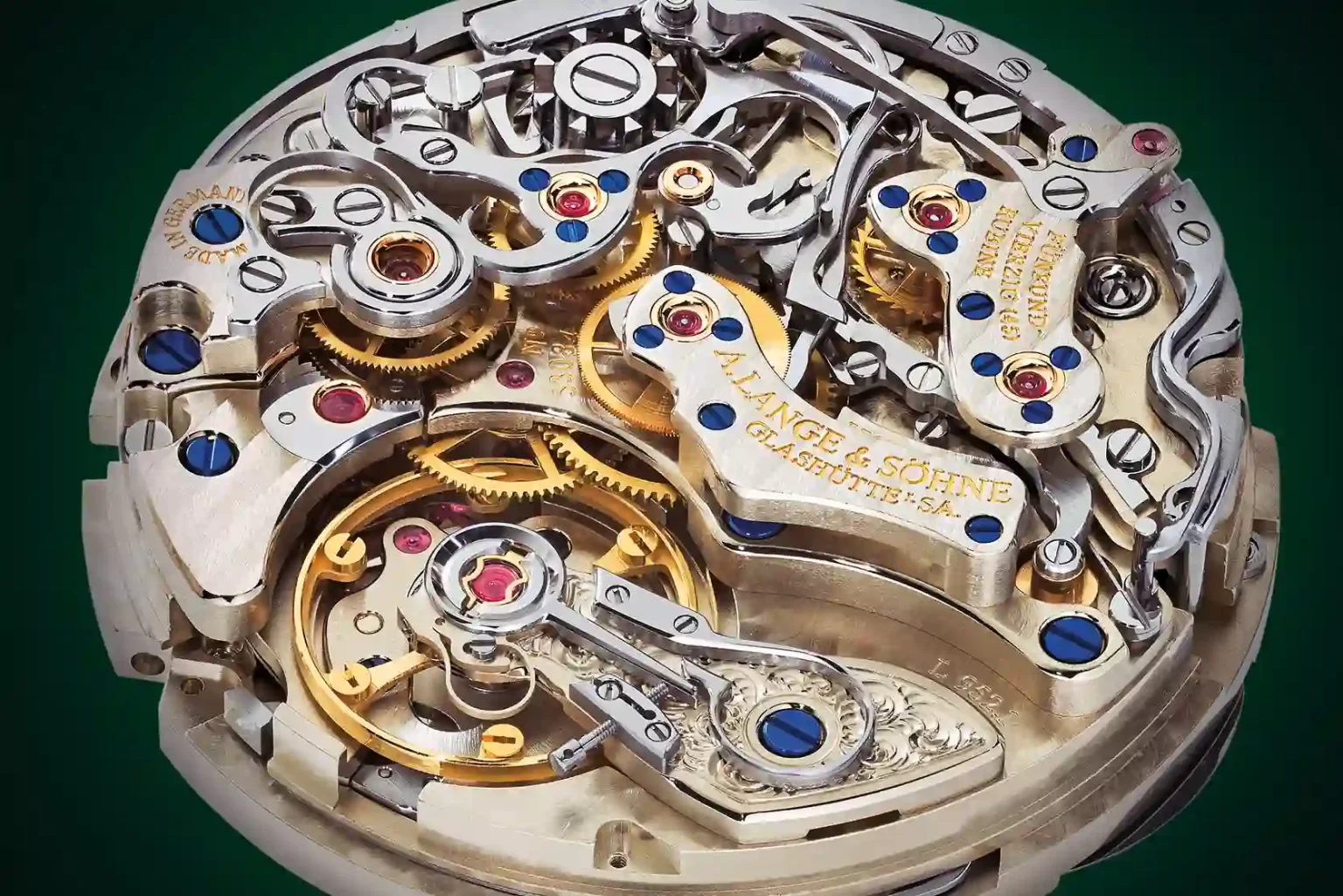
A mechanical watch has no battery. Instead, energy travels through a simple chain:

- The mainspring stores energy. Winding the crown, or wearing an automatic watch, coils up a spring inside a barrel.
- The gear train passes the energy along. A series of gears carries that stored energy toward the escapement, stepping down the speed but building up torque.
- The escapement releases energy in small bursts. This is the escape wheel and pallet fork working together. It’s what makes the “ticking” sound and stops the mainspring from unwinding all at once.
- The balance wheel keeps the beat. It swings back and forth at a steady rate, working with the escapement to regulate timekeeping. This rate is what’s called the beat rate.
- The hands move. A final set of gears, the motion works, turns that regulated motion into the hour, minute, and second hands you see on the dial, along with any complications like the date or GMT.
Simple, right?
Beat Rate: Hz vs. VPH
Beat rate is usually shown in hertz (Hz) or vibrations per hour (vph). The two most common rates you’ll run into are:
- 3 Hz (21,600 vph) – used in many Seiko calibers and the Powermatic 80 which we see mostly in watches from Swatch Group, like Mido TV Big Date or Tissot Gentleman
- 4 Hz (28,800 vph) – used in the ETA 2824-2, Sellita SW200-1, and Miyota 9015
A higher beat rate tends to improve stability across different wrist positions, but it also increases friction and drains energy faster. That’s part of why some long-power-reserve movements deliberately run at a lower beat rate. I personally prefer movements with more power reserve and lower VPH.
Power Reserve
Power reserve is simply how long the watch keeps running after a full wind, measured in hours. A Sellita SW200-1 or ETA 2824-2 will typically run for 38 to 42 hours. A Miyota 9015 runs for at least 42 hours. The Powermatic 80, true to its name, stretches that out to around 80 hours by using a lower beat rate, a longer mainspring, and reduced friction.
Safe to say that Powermatic 80 is my preferred movement, because as I said before, I prefer a bigger power reserve in my watches.
Manual vs. Automatic: What’s the Difference?
Manual-wind watches need you to turn the crown regularly to keep them running. Turning the crown engages a winding pinion and crown wheel, which wind the mainspring directly. The advantage is that , manual watches can be built thinner, since there’s no winding rotor taking up space inside the case, this is why many ultra-thin dress watches use manual movements.
Many collectors also enjoy the daily ritual of winding their watch and appreciating the movement through a display caseback. Not me though. This is the reason I still don’t own an Omega Speedmaster, even though I love that watch. But I think it’s time to pull the trigger on one. Maybe the white dial version.
Pros of manual movements:
- Slimmer cases, ideal for dress watches
- A stronger tactile, hands-on connection to the watch for those who prefer this kind of interaction.
- Fewer parts overall, which can simplify servicing and maybe less expensive to service it.
Cons of manual movements:
- They stop running fairly quickly if left unworn
- Older designs without a slipping bridle could theoretically be damaged by overwinding, though modern designs largely solve this
Automatic watches wind themselves using a weighted rotor that spins as you move your wrist, turning that motion into stored energy through a reverser and winding train. Most automatics can also be wound by hand if needed. Some rotors wind in both directions (like the ETA 2824-2 and Sellita SW200-1), while others wind in only one direction, both work fine for daily wear, though bi-directional winding is marginally more efficient. Usually when you pick an automatic watch, it starts almost immediately.
The rotor module does add height to the movement. A Sellita SW200-1, for example, measures 4.6mm thick, compared to thinner integrated designs like the ETA 2892-A2. In general, automatics tend to be a bit thicker and heavier than an equivalent manual caliber, which is something case designers have to work around. But technology is getting better and better. And maybe you are a guy that prefers to feel the watch on the wrist.
Pros of automatic movements:
- Convenient, the watch stays wound just by being worn
- Well suited to everyday and tool watches, and pieces with several complications. You don’t want to manually wind and set a watch that has 5 complications. Too much time!
Cons of automatic movements:
- The added rotor, reversers, and bearings mean slightly more parts to service
- Some designs produce a noticeable rotor “wobble” or noise that certain wearers don’t love
Micro-Rotors, Peripheral Rotors, and High-Beat Movements
A few clever variations exist within automatic movements:
- Micro-rotors are compact, off-center rotors built into the movement plate itself rather than sitting on top of it, which allows for a thinner overall watch. High-end manufacturers use this to combine automatic convenience with a slim profile.I have never seen one live honestly.
- Peripheral rotors form a ring around the edge of the movement instead of sitting in the center. This keeps the watch thin and leaves the movement fully visible, though it’s technically demanding to engineer.
- High-beat movements run faster than the standard 4 Hz, with 5 Hz (36,000 vph) being a classic example, found in certain Zenith and Seiko calibers. The upside is better chronometric stability and finer resolution, especially for chronographs. The downside is more friction, more wear, and usually a shorter power reserve unless the brand engineers around it.
Quartz Watches: Simple and Accurate
Quartz movements run on a battery instead of a spring. This movement almost killed the entire Swiss watch industry. A battery supplies steady voltage to a quartz crystal cut to vibrate at exactly 32,768 Hz through the piezoelectric effect. A small integrated circuit divides that signal down to 1 Hz and drives a stepping motor, which is what advances the hands one second at a time, that once-per-second tick is the signature of standard quartz.
Standard quartz watches are impressively accurate, typically within about 15 seconds a month (roughly half a second a day). They also need very little maintenance, since there’s no mainspring or escapement to lubricate, and batteries usually last 2 to 5 years.
This is the perfect movement if we look at the number, but it lacks craftsmanship and most importantly, it lacks soul.
High-Precision Quartz
Some quartz movements go well beyond standard accuracy:
- Bulova Precisionist uses a unique three-prong quartz crystal vibrating at 262,144 Hz, eight times the standard frequency, for an advertised accuracy of around ±10 seconds per year, plus an unusually smooth-moving seconds hand.
- Grand Seiko 9F movements use thermocompensation and carefully aged crystals to reach around ±10 seconds per year, along with high-torque step motors and backlash compensation to stop the seconds hand from wobbling.
- Solar-powered quartz watches, like Seiko Solar and Citizen Eco-Drive, use a photovoltaic dial to convert light into stored electrical energy. With enough light exposure, many of these can run for months in total darkness on a full charge, which basically eliminates the need for routine battery changes.
Hybrid Movements: The Best of Both Worlds?
Some watches mix mechanical and quartz technology:
- Meca-quartz chronographs, like Seiko’s VK64, use a quartz base movement for accurate timekeeping, while a separate mechanical module handles the chronograph pushers, reset-to-zero, and subdials. You get a crisp, satisfying pusher feel with quartz-level accuracy. Probably the best from both worlds, but I still feel that it lacks soul.
- Grand Seiko’s Spring Drive is the most unusual hybrid on the market. It’s wound like a mechanical watch, using a mainspring, barrel, and gear train, but instead of a traditional lever escapement, it uses a quartz-regulated glide wheel. This is managed by what Grand Seiko calls the Tri-Synchro Regulator, which balances three types of energy: mechanical power from the mainspring, electrical current generated by the spinning glide wheel, and electromagnetic braking to keep everything precise. The glide wheel itself spins eight times per second, generating the current that powers the quartz oscillator. The result is a movement that’s mechanically powered but glides smoothly with no ticking at all, typically accurate to around ±15 seconds a month, with some high-end variants reaching ±10 seconds a month.
In-House vs. Third-Party Movements
Not every brand builds its own movement from scratch, and that’s not necessarily a bad thing.
Third-party (ébauche) movements come from specialist suppliers and are used across many different watch brands:
- ETA (Swatch Group) – the historic Swiss giant behind core calibers like the 2824-2 and the Valjoux/ETA 7750, which forms the basis of many COSC-certified chronometers
- Sellita – an independent Swiss manufacturer producing the SW200-1 (a 2824-2 alternative) and the SW500 (a 7750 alternative), created partly to fill gaps left by ETA’s supply restrictions
- Miyota (Citizen Group) – a Japanese supplier whose 9000 series, including the 9015, is a slim, high-beat automatic favored by microbrands
- Seiko / TMI / SII – Seiko supplies movements like the NH35 and VK series to third-party brands, while keeping its higher-tier 6R movements for its own watches
- Soprod – a Swiss maker offering mid- to high-end alternatives to ETA and Sellita
- Sea-Gull – a major Chinese manufacturer producing affordable mechanical movements, including tourbillons, for domestic and international brands, mostly Chinese brands.
- Kenissi – jointly owned, supplies robust automatic movements to Tudor and other brands
- Vaucher Manufacture Fleurier – a high-end Swiss maker used by Parmigiani Fleurier and other independents for thin, premium movements
These movements are well known and documented, , generally easy and affordable to service, most of them at least,, and have a long track record of reliability.
In-house movements are designed and mostly produced by the brand itself, sometimes with proprietary escapements or architecture, think Rolex’s 32xx series, Omega’s Co-Axial Master Chronometer calibers, Tudor and Kenissi movements, or Grand Seiko’s mechanical and Spring Drive families.
Pros of in-house movements:
- Brand differentiation through unique architecture and finishing
- The case, dial, and movement can be engineered together as a complete package
- Strong marketing and collector appeal tied to “manufacture” status
Cons of in-house movements:
- Parts and documentation are sometimes restricted to authorized service centers
- Servicing can cost more, especially for proprietary materials or complex escapements
- First-generation in-house designs sometimes have early teething issues compared to battle-tested workhorses
Some brands sit in between, using white-label partnerships. Tudor’s modern movements, for example, are produced with Kenissi, a closely linked but independent manufacturer. TAG Heuer has used Sellita and modified Seiko-based movements in some of its lines before shifting toward more in-house designs.
For everyday buyers, a well-made third-party movement like the SW200-1, 9015, or NH35 often means easier long-term servicing and better parts access. In-house movements make the most sense where the brand’s specific engineering and finishing are central to the appeal of the watch.
Benchmark Workhorse Movements at a Glance
| Caliber | Type / Origin | Beat Rate | Power Reserve | Jewels | Hacking / Hand-Wind | Typical Accuracy |
| ETA 2824-2 | Auto, Swiss | 28,800 vph | ~38–42 h | 25 | Yes / Yes | ±12–30 s/day (standard) |
| Sellita SW200-1 | Auto, Swiss | 28,800 vph | 38–42 h | 26 | Yes / Yes | ±12–30 s/day, up to +6/−4 s/day at chronometer grade |
| ETA 7750 | Auto chrono, Swiss | 28,800 vph | ~42 h | 25–27 | Yes / Yes | ±10–20 s/day (regulated) |
| Sellita SW500 | Auto chrono, Swiss | 28,800 vph | ~42 h | ~25–28 | Yes / Yes | Similar to 7750, grade-dependent |
| Seiko NH35 | Auto, Japan | 21,600 vph | ~41 h | 24 | Yes / Yes | −20/+40 s/day |
| Seiko 6R35 | Auto, Japan | 21,600 vph | Extended vs. NH35 | ~24 | Yes / Yes | Tighter than NH35 |
| Miyota 9015 | Auto, Japan | 28,800 vph | ≥42 h | 24 | Yes / Yes | −10/+30 s/day |
| Powermatic 80 | Auto, Swiss | 21,600 vph | ~80 h | ~23 | Yes / Yes | ±10–20 s/day |
The ETA 2824-2 remains a classic Swiss Watch Movement , though it’s less widely available outside the Swatch Group. The Sellita SW200-1 is a direct alternative with an extra jewel and grades that go all the way up to COSC. The Miyota 9015 is notably thinner than the Seiko NH35 (3.90mm vs. 5.32mm), which is part of why microbrands love it.
What About Accuracy Standards Like COSC?
You’ll often see terms thrown around to describe how accurate a watch is:
- Standard mechanical watches typically run around -15 to +20 seconds per day out of the factory. Skilled regulation can often tighten this to around ±5 seconds a day, though real-world stability still depends on wear, shocks, and positional habits.
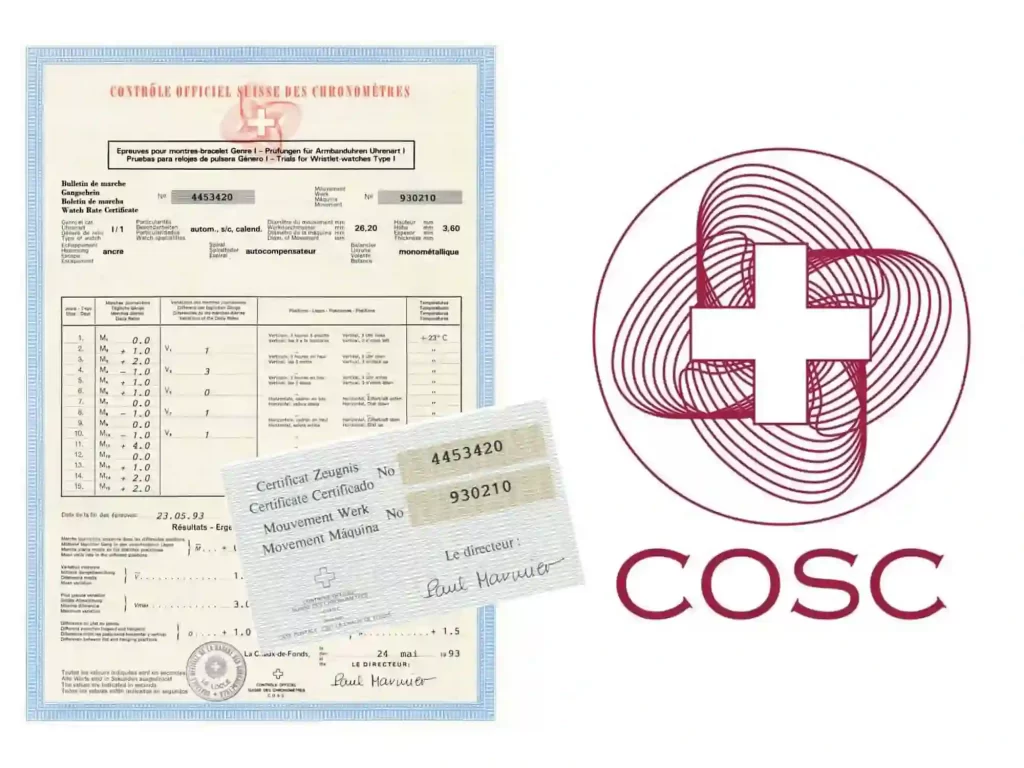
- COSC-certified chronometers must average between -4 and +6 seconds per day, tested over 15 days across 5 positions and 3 temperatures, roughly 2 to 3 minutes of deviation per month in real use.
- METAS Master Chronometer (used by Omega and Tudor) requires 0 to +5 seconds per day, tested on the fully assembled watch, plus resistance to magnetic fields up to 15,000 gauss.
- Rolex Superlative Chronometer tightens this further to -2/+2 seconds per day.
- Grand Seiko uses its own in-house standards rather than COSC: mechanical Grand Seiko watches run around -3/+5 seconds a day, Spring Drive models around ±15 seconds a month, and 9F quartz models around ±10 seconds a year.
- Standard quartz watches land around ±15 seconds per month.
- High-accuracy quartz, like Grand Seiko’s 9F or the Bulova Precisionist, can hit around ±10 seconds per year.
The tighter the tolerance, the more testing and precision engineering went into the movement and usually, the higher the price tag.
Tourbillons and Fancy Escapements: Do They Matter?
You’ll sometimes see watches advertised with a tourbillon, a carousel, or a special escapement like Omega’s Co-Axial. Here’s the honest breakdown:
Tourbillons were invented by Abraham-Louis Breguet to average out positional timekeeping errors by placing the escapement and balance wheel inside a rotating cage. In pocket watches, which spent most of their life sitting still in one position, this could genuinely improve accuracy. On a wristwatch, which constantly changes position as your arm moves, the practical benefit is much smaller. Today, tourbillons are mostly a showcase of watchmaking skill and finishing rather than a real accuracy fix. Tourbillon watches are very expensive, and mostly it’s just for the design purpose.
Carrousels work toward a similar goal, compensating for positional errors using a differently driven rotation system with extra gearing to control the cage’s speed. Like the tourbillon, in a modern wristwatch it’s more about craftsmanship and visual drama than a measurable accuracy gain.
The Co-Axial escapement, invented by George Daniels in the 1970s and industrialized by Omega starting in 1999, modifies the traditional Swiss lever escapement using three pallets and a stacked escape wheel system that separates locking and impulse. This dramatically reduces the sliding friction found in traditional escapements, which in theory means less need for lubrication and more stable performance over time. It’s a genuine engineering improvement, not just marketing language.
Silicon hairsprings, sometimes branded as Silinvar, are produced through a precise photolithographic process. They resist magnetism almost entirely, barely react to temperature swings, and don’t deform over time the way traditional metal alloys can. Brands like Patek Philippe, Rolex, Omega, and others across the Swatch Group use proprietary silicon hairsprings in their mid- to high-end movements for exactly these reasons.
How Often Does a Watch Need Servicing?
Service needs vary based on how the watch is worn and its environment, but here are some general benchmarks:
- Everyday mechanical and automatic watches (ETA, Sellita, Miyota, Seiko workhorses) generally need a full service every 3 to 5 years, sometimes stretched to 5 to 7 years with modern lubricants. A full service typically includes disassembly, cleaning, lubrication, regulation, and replacing worn parts like the mainspring, gaskets, or rotor bearings. The more complicated the watch is, the more money you pay. Also, keep in mind that the more expensive the watch is, the more you pay for servicing.
- High-horology and complex in-house movements – tourbillons, perpetual calendars, minute repeaters, Spring Drive, co-axial, and heavily decorated movements, often require more specialized and costly servicing, usually at brand-authorized centers.
- Standard quartz watches mostly just need a battery change every 2 to 5 years, along with occasional gasket changes and pressure testing if water resistance matters to you.
- Solar-powered quartz watches, like Eco-Drive models, rarely need anything beyond an occasional capacitor or secondary cell replacement after many years, plus water-resistance checks if the case has been opened.
In very general terms, entry mechanical and workhorse automatics are the most affordable and easiest to get serviced independently, since parts for movements like the SW200-1, 2824-2, 9015, and NH35 are widely available. In-house and high-complication movements sit at the top of the cost tier, often requiring brand-specific parts and procedures.
Which Watch Movement Type Is Right for You?
Standard quartz: A battery-powered 32,768 Hz movement with a stepping motor. Very accurate (around ±15 seconds a month), low maintenance, affordable, and allows thin cases. The trade-off is less mechanical charm and limited “watchmaker” appeal, plus the movement eventually needs replacing once it’s electronically obsolete. Best for first-time buyers, tool or daily watches, low-maintenance wearers, and travel or secondary watches.
Entry mechanical (NH35, 4R series, SW200-1 Standard grade): Robust, mass-produced automatics with modest accuracy specs. They offer real mechanical charm, easy servicing, and wide parts availability at a good price. The trade-off is accuracy which typically sits in the -15/+20 seconds a day range, thicker cases, and more sensitivity to shocks and magnetism. Best for enthusiasts entering mechanical watches, microbrand buyers, and daily wearers who don’t mind some drift.
Workhorse automatic, premium grades (Powermatic 80, Miyota 9000 series, higher SW200-1 grades): Better-regulated workhorses with improved power reserves or specs. You get a smoother sweep, longer reserves (roughly 42 to 80 hours), and higher grades available up to chronometer level. The trade-off is a slightly higher purchase and service cost, while still not reaching full haute horlogerie territory. Best for buyers who want a solid, technically interesting automatic watch without going all the way to luxury.
High-horology in-house: Proprietary calibers with advanced escapements, silicon components, tourbillons, or elaborate finishing. These offer unique engineering, high-level finishing, strong brand storytelling, and tighter in-house accuracy standards. The trade-offs are high acquisition and service costs, brand-dependent servicing access, and the possibility of first-generation teething issues. Best for collectors, brand-loyal buyers, and anyone who values movement architecture and finishing as much as raw timekeeping.
Hybrids (Spring Drive, meca-quartz, HAQ): These mix mechanical power with quartz regulation, or combine a quartz base with a mechanical module. You get quartz-like accuracy with genuine mechanical feel (Spring Drive), a superb chronograph feel (meca-quartz), or ultra-high accuracy (HAQ). The trade-off is more specialized servicing, and purists sometimes see hybrids as less “traditional.” A modern Frankenstein.
These are the watch movements that power the watches we love
There’s no single “best” Watch Movement, just the right one for how you want to wear and think about your watch. If you want to set it and forget it, quartz has you covered, and high-accuracy quartz options push that even further. If you love the idea of a small mechanical engine on your wrist that you wind, or that winds itself as you move, mechanical and automatic movements offer that connection, with a wide range of options from affordable workhorses to elaborate in-house calibers. And if you want the best of both, hybrids like Spring Drive give you mechanical romance with quartz-like precision.
Understanding what’s ticking or gliding inside your watch makes every purchase, and every glance at your wrist, a little more meaningful.
I for one I prefer the automatic movements, it has soul, story and the fact that some small components keep time that accurate is fascinating to me.