The Luxury Watch Buying guide for beginners was created because stepping into the world of luxury watches can feel a little overwhelming. We have countless brands, models and technical specifications to navigate. If you are a first time buyer you might find yourself asking more questions and have little answers.
- Luxury watch buying guide – Understanding what makes a watch “Luxury”
- Mechanical vs Quartz Movements in Luxury Watches
- Mechanical Movements: Tradition and craftsmanship
- Quart Movement: Very precise, but boring
- Spring Drive Technology: Hybrid Innovation
- Watch Complications that you need to know
- The Top Luxury Watch Brands for Beginners
- Quick Comparison: Best Luxury Watch Brands for Beginners
- The Holy Trinity of Watches
- Rolex- A standard in luxury
- Omega : James Bond and Space
- Tudor : More accessible brother of Rolex
- TAG Heuer : Sport Sophistication
- Longines: Heritage and Value
- Cartier: From jewelry to great watches
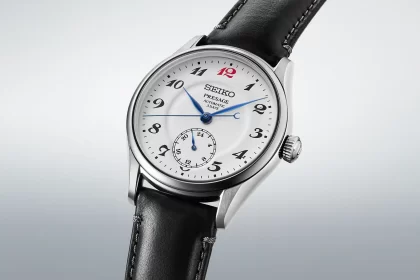
- Grand Seiko : Elegance and precision
- Different Types of Luxury Watches
- Dress Watches: For elegant moments
- Sports Watches
- Dive Watches
- Chronographs Watches
- Pilot Watches: Designed inspired by Aviation
- Setting your Budget : What to expect at different Price Points
- Entry-Level Luxury : $1500 -$3000
- Accessible Premium – $3000-$7000
- Serious Investment $7000 – $15,000
- High-End Luxury
- Luxury watch buying guide: New vs Pre-Owned Luxury Watch
- Luxury watch buying guide : Where to buy Your Luxury Watch
- Authorized Dealers and Brand Boutiques
- Gray Market Dealers
- Online Marketplaces
- Auction Houses
- Pre-Owned Specialists
- Luxury watch buying guide : Key Factors to Consider before Buying a Luxury Watch
- Define Your Purpose and Lifestyle
- Wrist Size and Watch Proportions
- Luxury watch buying guide : Material Considerations
- Brand Heritage and Resale Value
- Authenticity and Documentation
- Caring for Your Luxury Watch
- Understanding Watch Terminology
- Luxury watch buying guide : Common Mistakes First-Time Buyers make
- Buying Based on Hype
- Ignoring Proportions
- Skipping Research
- Neglecting after Purchase Costs
- Buying too many too quickly
- Luxury watch buying guide : Investment Potential and Value Retention
- Which Watches appreciate in value?
- Realistic Expectations
- Factors that affecting your Luxury Watch Value
- Luxury watch buying guide : Making your Final Decision
- Luxury Watch Buying Guide FAQ
- Conclusion on Luxury Watch buying guide
This luxury watch buying guide is here to help you make the right and informed decision whether you build a collection, plan to purchase your first high-end watch or plan to invest in a piece that will appreciate over time.
By the end of this article, you will know:
- What separates luxury watches from regular ones and why they cost so much
- The difference between mechanical, automatic and quartz movements
- Which luxury watch brand has the best prestige and value for beginners
- How to set your budget based on your financial situation and goals
- Pros and cons of buying new versus pre-owned luxury watches
- How to verify authenticity and avoid fakes
- Where to buy safely from authorised dealers and gray market
- How to care for and maintain your luxury watch
- Which models hold their value and have investments potential
- Common mistakes first time buyers make and how to avoid them
Luxury watch buying guide – Understanding what makes a watch “Luxury”
Luxury watches are far more than a timekeeping device, as a tool, mostly all watches become obsolete. Nowadays, watches are seen as the most important jewelry for men. Also, they embody centuries of horological tradition, exceptional craftsmanship and mechanical excellence. But what exactly puts a brand or a watch in the luxury category? We will explain everything in our luxury watch buying guide!
Characteristics of Luxury Watches
Usually a luxury watch features superior craftsmanship, the best materials and great design. The majority of experts agree that watches priced above $1500 enter the luxury category but I would say that the definition extends beyond the price alone.
These watches come with hand-finished movements, precious metals like gold, platinum or rose gold, they have sapphire crystals for scratch resistance and complications that show the mechanical mastery.
The intangible part is also very important, luxury watches carry brand prestige and history built over decades or centuries, they represent a symbol of accomplishment and often become heirlooms passed through generations.
So, when you wear a luxury watch you are not checking the time, you are wearing a piece of horological history.

Swiss Made Excellence and Global Competition
Switzerland dominates the luxury watch industry, but not all brands are originally from Switzerland. Take for example Breguet or Cartier that are French, but moved their watchmaking production to Switzerland because Swiss Made is the label associated with great quality and luxury.
Even so, the Swiss Made watches, and Switzerland produce only 2% of global timepieces by volume but have over 50% of the market value. Swiss Made label comes with quality standards but also with strict requirements for brands in order to be able to add Swiss Made on their watches.
For example at least 60% of the manufacturing cost must be in Switzerland , the watch assembly and final inspection must be made in Switzerland etc. For more info check the table below.
I also wrote an article about Swiss Made where you can read more about the label and the importance of it.

| Criteria Aspect | 1971 Ordinance | 1995 Revision | 2016 Revision |
| Movement Swiss Requirement | Movement must be Swiss: assembled in Switzerland, ≥50% Swiss component value (excluding assembly) | Movement must be Swiss; increased clarity on component value | Movement must be Swiss; ≥60% of movement component value must be Swiss |
| Manufacturing Cost Location | ≥60% of manufacturing costs must come from Switzerland | Strengthened focus on manufacturing costs in Switzerland | ≥60% manufacturing costs of entire watches must be Swiss-based (not just movement) |
| Assembly | Movement cased in Switzerland | Assembly in Switzerland emphasized | Entire watch assembly in Switzerland |
| Final Inspection | Conducted in Switzerland by manufacturer | Final inspection required in Switzerland | Final inspection must be Swiss |
| Technical Development | Must occur in Switzerland | Emphasized but less specific | Technical development must be Swiss |
| Scope of Cost Percentage | Manufacturing costs generally covering movement and parts | Expanded scope, more cost elements included | Full watch manufacturing costs must meet the Swiss threshold |
| Purpose/Focus | Protect authenticity; combat counterfeits | Tighten standards to protect Swiss watchmaking reputation | Strengthen Swiss identity in global market; holistic approach |
In theory, if a watch is Swiss Made ensures the exceptional precision and craftsmanship that makes Swiss watches so renowned.
But they are not the only ones that produce great quality watches. Grand Seiko, for example, a Japanese manufacturer, gained a lot of recognition for their watches. Their Zaratsu polishing technique creates flat surfaces without flaws and their Spring Drive movements have incredible accuracy of plus or minus 20 seconds per year! It’s safe to say that at least Grand Seiko can rival or surpass many Swiss brands.
Grand Seiko is a luxury brand, so you don’t need to turn your attention only on Swiss Made watches.
Mechanical vs Quartz Movements in Luxury Watches
The most important part of any watch, the heart that pumps the energy is the movement – mechanism that powers the timepiece and keeps accurate time. You can have the best design for a watch, if the movement is not good you will end up with a pretty watch face and a bad hearth.
Understanding the movement types is in my opinion fundamental in order to make an informed purchase of a luxury watch.
Mechanical Movements: Tradition and craftsmanship
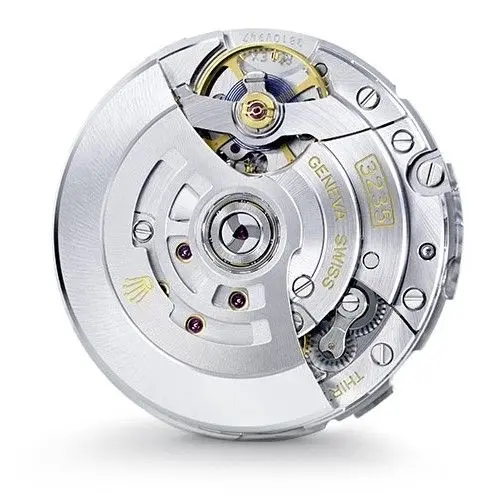
Mechanical watches have an amazing system that operates through springs, gears, jewels and this, for me, for a man usually, is the most beautiful part, some metal parts working together in order to keep accurate time.
These movements require no battery to work, instead the power is drawn from a mainspring that stores the energy. Of course, we have two types of Mechanical Movements:
Manual Wind Watches – require regular winding via the crown , usually the power reserve is somewhere around 40-48 hours. Some people appreciate them and feel like it creates an intimate connection with the watch through this daily ritual. Honestly, it’s not my favourite type of movement, I don’t want to wind the watch daily. But that’s just me.
Automatic Watches – This is my favourite movement. As long as you have it on your hand, or in a winding box, the watch will never stop. Automatic movements contain a rotor that spins with your wrist movement, this way the mainspring is continuously winded.
Automatic movements are the most common luxury watch movement type because it offers convenience without sacrificing the traditional mechanical appeal.
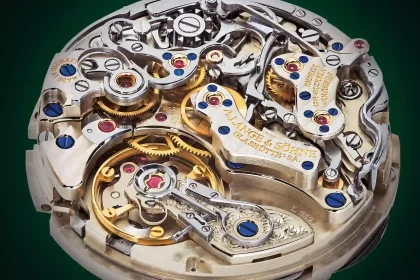
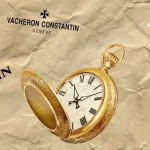
In most of the cases, mechanical movements are beautifully decorated, hand-worked and in some cases a piece of art on its own. Take for example Metiers d’art Tribute to the Quest of Time from Vacheron Constantin.
Quart Movement: Very precise, but boring
We agreed mechanical movements can be beautiful as well, it’s not really the case with quartz movement. They are better in terms of accuracy, but they feel soulless to me. Quartz watches use battery-powered electronic oscillators to achieve remarkable accuracy.
A common thing, or misconception is that the quart watches don’t belong in the luxury market category. And I agree, I’m one of those people. If I pay a lot of money for a watch, I don’t want it to be powered by a battery, I want an open caseback to see that beautiful movement working, rotating and giving me the time or whatever complication might have just with the help of gears. That’s why mechanical watches are beautiful.
Anyway, there are some luxury brands that created exceptional quartz timepieces. Prestigious brands like Grand Seiko, Breitling and Cartier to name a few.
Quartz watches offer some advantages. For example they do have superior accuracy which typically is plus or minus 15 seconds per month versus several seconds per day for mechanical ones.
It also requires minimal maintenance and lower costs for servicing.
Spring Drive Technology: Hybrid Innovation
This is probably the best technology because it combines the best of both worlds, mechanical and quartz. It is a movement developed by Grand Seiko and it combines mechanical power from a mainspring with electronic regulation for exceptional accuracy.
Result? High accuracy levels of seconds per month while maintaining the soul of mechanical watchmaking.
Watch Complications that you need to know
Complications are features beyond simple timekeeping. The more complicated a watch is, the more expensive it is. The high end luxury watches usually come with more complications. My favourite complications are GMT and power reserve. In case you want to know.
Chronograph Luxury Watch
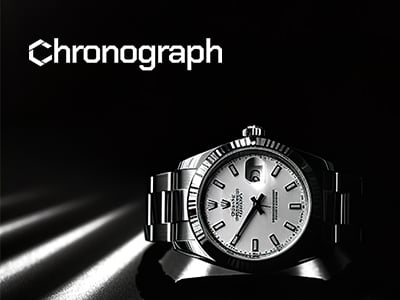
Chronographs work as stopwatches, recording the elapsed time through subdials and pushers. The name derives from Greek meaning “to draw the time”. Most of the chronographs have motorsport origins.
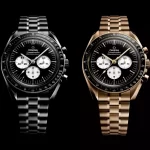
The most iconic Chronographs in the market are Rolex Daytona and Omega Speedmaster, yet another reason for the “battle” between Rolex and Omega which I covered in the article Rolex vs Omega
Chronographs were used also for other sports, not just motorsports. For example Omega has been the official timekeeper at the Olympic Games since 1932. Rolex Daytona is the most desired Chronograph in the world at this moment. But I would mention another brand when it comes to chronographs, and the brand is Zenith, they have an amazing history and they were the ones to create the first automatic chronograph movement. Until 2000 Rolex used for Rolex Daytona Zenith movements.
Date and Calendar Functions
Simple date windows are the most common complications found on almost all watches. Some of them display even the day like Seiko on their affordable Dive Watches.
But when it comes to luxury watches, some brands often feature more complex calendar complications:
Annual Calendar: Is a complication which automatically adjusts for a month with 30 or 31 days, requiring only one correction per year, in February.
Perpetual Calendar: This complication is even more special because it accounts for leap years, displaying the correct dates indefinitely without adjustment. I consider this to be a marvel of mechanical engineering. It also requires hundreds of additional components.
GMT and World Time
Like I said, this is one of my favourite complications. Usually GMT and World Time were created for people that travel frequently and need to keep track of one extra or multiple timezones.
GMT Function: It displays a second time zone via an additional hour hand. You can track the time of the zone you are in and also the home time. Also, the second time zone usually is displayed on the bezel of the watch, and it has 24 hours markings. One luxury affordable model is Longines Spirit Zulu Time, an amazing watch that I own.
World Time: Probably my favourite of these two types. This complication shows 24 time zones simultaneously through rotating bezels or subdials with corresponding city names. Frederique Constant has one great model but my favourite is the Omega Worldtimer.
Moon Phase
Moon Phase is one of the most elegant complications and it displays lunar cycles through apertures on the dial. It’s not really practical these days, this complication showcases artistic craftsmanship. High End moon phase complications can remain accurate for centuries before requiring adjustments.
Come to think of it, I don’t own any moon phase watches. I need to fix that.
Power Reserve Indicator
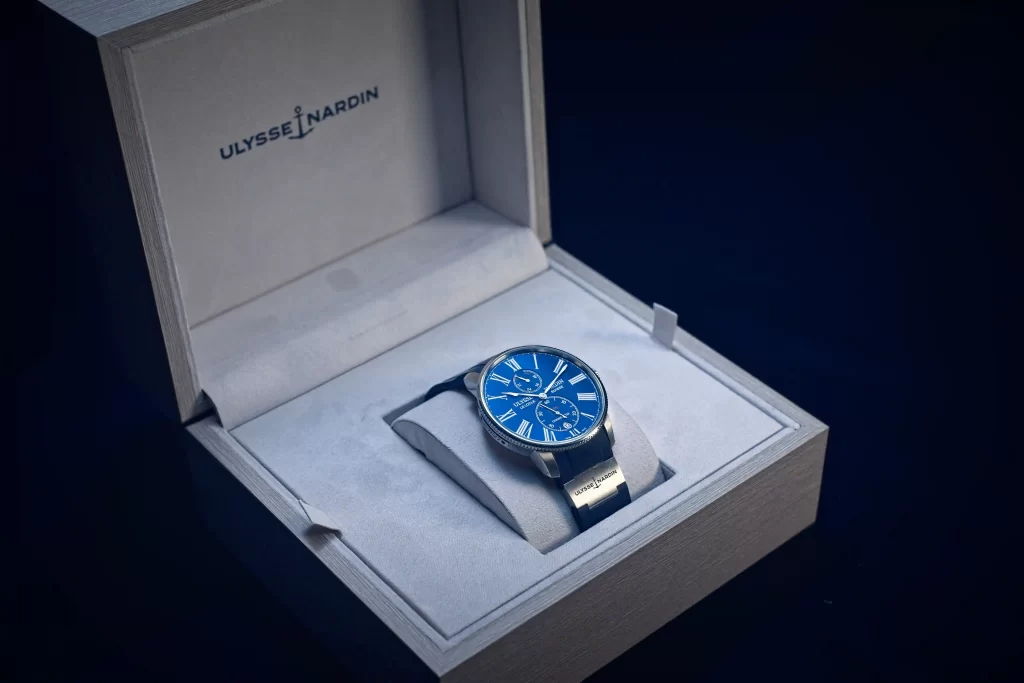
This is my second favourite complication. I have it on my Ulysse Nardin Marine Torpilleur watch and basically it displays how much energy remains in the mainspring before the watch stops. Is it useful? Can be, if you have multiple watches and don’t have a winder but still don’t want them to stop.
The Top Luxury Watch Brands for Beginners
Quick Comparison: Best Luxury Watch Brands for Beginners
| Brand | Entry Price Range | Best Known For | Value Retention | Ideal For | Iconic Model |
|---|---|---|---|---|---|
| Rolex | $6,000 – $15,000 | Status, durability, investment | Excellent | Investment & prestige | Submariner |
| Omega | $4,000 – $10,000 | Space heritage, Bond films | Very Good | Balanced luxury | Seamaster |
| Tudor | $2,500 – $5,000 | Vintage styling, value | Good | Budget-conscious buyers | Black Bay |
| TAG Heuer | $2,000 – $6,000 | Motorsport, bold design | Good | Sports enthusiasts | Carrera |
| Longines | $1,500 – $4,000 | Heritage, elegance | Fair | Classic dress watches | Master Collection |
| Cartier | $3,000 – $8,000 | Jewelry-house design | Very Good | Formal occasions | Tank |
| Grand Seiko | $3,000 – $10,000 | Japanese precision, finishing | Very Good | Quality-focused buyers | Spring Drive |
| Breitling | $4,000 – $8,000 | Aviation, functionality | Good | Pilots & professionals | Navitimer |
Navigating brand selection represents a crucial aspect when you make a decision. Some brands offer better entry level watches and still maintain the prestige and quality.
We will speak about some brands, but this is not a definitive top, each brand has its place and each top made by watch enthusiasts will be different because we have different tastes.
The Holy Trinity of Watches
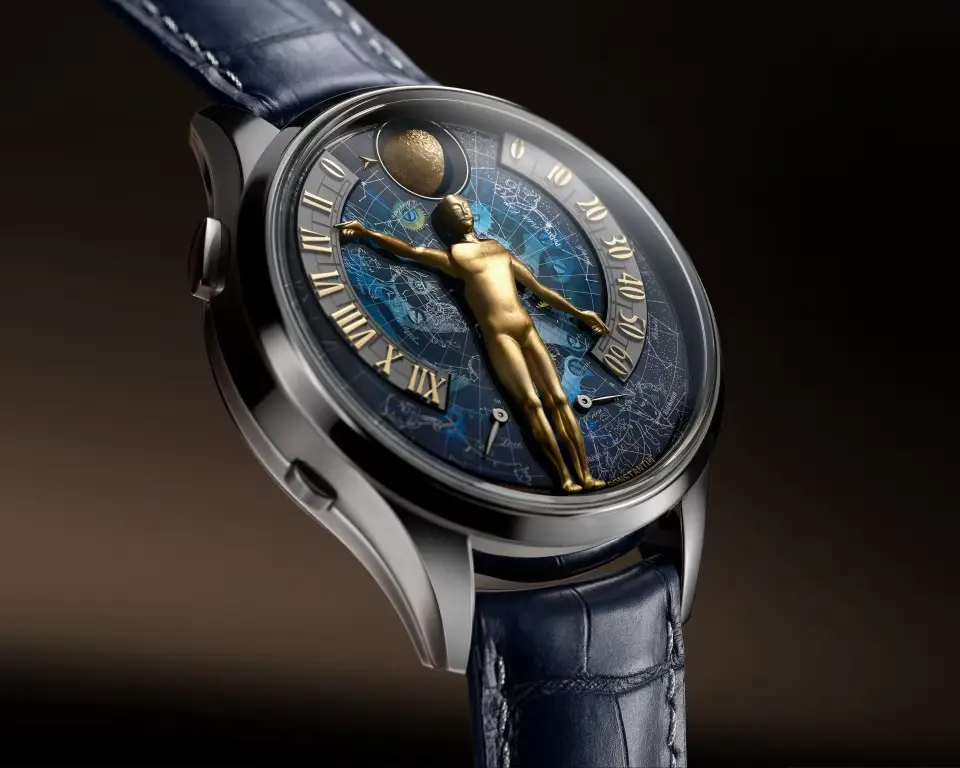
Ok, this is not debatable, three Swiss manufacturers embody haute horlogerie: Patek Philippe, Audemars Piguet and Vacheron Constantin. Dating back to 1755, these three brands represent the pinnacle of watchmaking. Their watches start above $20.000 while watches that have multiple complications can cost hundreds of thousands.
Watches from Holy Trinity are way out of budget for most of the beginners but understanding these brands helps appreciate the luxury watch landscape.
Rolex- A standard in luxury
We don’t really need an introduction for Rolex. It is the world’s most recognized luxury watch brand and their watches have a timeless design, great build quality and strong value retention.
Entry Level models like the Oyster Perpetual start at $6,000 and increase with some sought-after models like GMT-Master II, Daytona or Datejust.
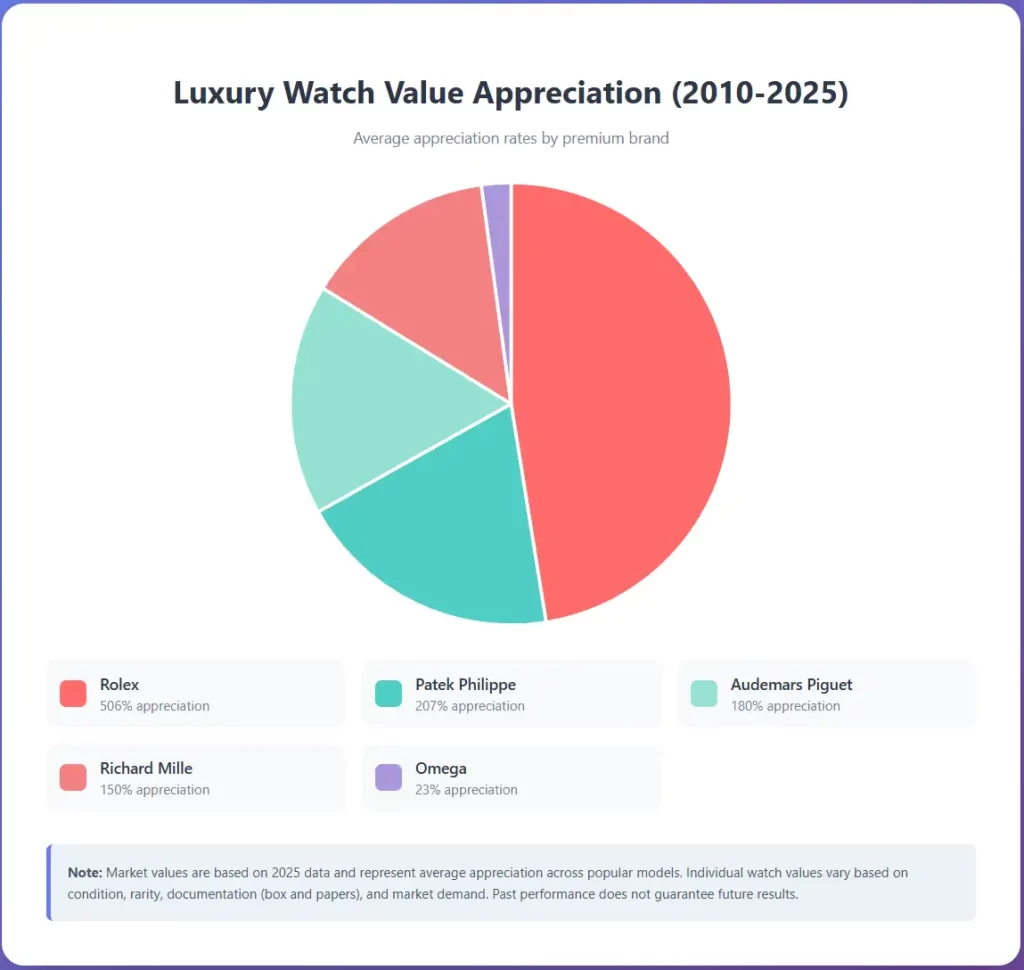
The strength of Rolex lies in its reputation for precision and durability. They make in-house movements and have great quality control and some models appreciate significantly in time. For example, GMT-Master II has seen a 506% appreciation since 2010. Rolex watches are a safe bet when it comes to investment potential. I don’t encourage it, but this is the way the world works nowadays.
Omega : James Bond and Space

Omega is the perfect combination when it comes to brand prestige and affordability. They have a great heritage. Omega Speedmaster was selected as NASA’s official timekeeper and it became the first watch to be worn on the moon. I think it is a must in each collection.
The Seamaster Diver 300M is associated with James Bond and it combines a great design with exceptional functionality.
Entry Level watches from Omega start around $4,000 offering accessible luxury with serious horological heritage and prestige. Their Co-Axial MAster Chronometer movements provide great precision and magnetic resistance.
Tudor : More accessible brother of Rolex

It is not that you cannot afford a Rolex, because if you have money to buy a Tudor, you can save some more and buy a Rolex. The problem is that Rolex won’t let you buy a watch from them. But that is a topic for another day.
Tudor shares ownership with Rolex but operates at more accessible price points, usually around $2,500-$5,000. The Black Bay collection shows us the Tudor’s diving heritage with vintage inspired design.
Black Bay Fifty-Eight, at 39mm fits just well on various wrist sizes, a good alternative for those who don’t particularly like oversized modern Dive Watches.
Tudor has exceptional value, due to his big brother who “lends” the prestige with in-house movements, great designs that appeal to enthusiasts that appreciate understated elegance.
TAG Heuer : Sport Sophistication

TAG Heuer has a good reputation when it comes to motorsport chronographs, offering dynamic designs at attractive prices. The Carrera and Aquaracer collections range from $2000-$6000 a price that makes them an accessible entry point into Luxury Swiss Watchmaking.
Their design appeals more to the younger buyers, but this is just my general feeling. Also, their iconic model is Monaco, which is a splendid watch that is starting to cost more and more.
Longines: Heritage and Value

Longines is one of the oldest watch companies in the world and represents exceptional value in luxury watchmaking. They have a watch for each category: Chronographs, GMT, Diver, elegant and so on. The Master Collection has a classic dress watch elegance and it starts around $2000.
Longines Spirit Zulu TIme is also a great model if you want a GMT, and the Hydroconquest is the Divers Watch you can choose if you want a diver.
Cartier: From jewelry to great watches
They bring jewelry making expertise to watchmaking. Usually Cartier watches don’t feature a lot of complications, but that doesn’t make them less beautiful or less elegant.
The Tank Solo has a timeless design, a rectangular case inspired by World War I tanks. Cartier watches emphasize elegance over technical complications. And of course, let’s not forget the Cartier Santos which is an exceptional watch with great history.
Grand Seiko : Elegance and precision
It is one of the premier luxury watchmakers outside Switzerland. The attention to details is like no other comparing or even exceeding Swiss Made watches. Zaratsu polishing technique became a staple for Grand Seiko and the Spring Drive movement represents their technical masterpiece.
Grand Seiko offers exceptional value with entry level models starting around $3000.
Different Types of Luxury Watches
Understanding this category from our luxury watch buying guide will definitely help you to choose the perfect watch for your lifestyle and intended use. Of course, there is no limitation and my recommendation is to get at least one from each category.
Dress Watches: For elegant moments
I want to say that dress watches embody refined minimalism, but that depends. Sure, you can find watches that are clean, simple and yet elegant. But not always a simple dial means that it is elegant.
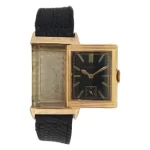
Usually the cases are thin, but it depends on complications as well, and come with leather straps. Dress watches are meant for formal occasions and business settings. Patek Philippe Calatrava or Jaeger-LeCoultre Reverso are some watches from this category that are very beautiful and elegant.
Of course, Cartier offers similar elegance with their Tank for example. Let’s not forget some affordable luxury brands like Longines which offers a big variety of dress watches.
Sports Watches
Usually sports watches have larger cases, higher water resistance than dress watches (typically 100-300 meters). Being a sports watch doesn’t mean you can’t wear it on a suit. Audemars Piguet Royal Oak became a sports watch that is very elegant and often seen at the wrists of men that wear suits. So it’s not really a rule that we need to respect anymore.
Modern sports watches have a great balance between ruggedness and refinement.
Dive Watches

Basically the same situation with Sports Watches. For example Rolex Submariner became iconic on the wrist of James Bond who always wore a suit. It won’t look bad.
Dive watches represent a subset of sport watches but have some specific requirements like minimum water resistance, rotating bezels or luminous markers for underwater legibility. For more information about Dive watches, we have a comprehensive guide that explains everything regarding this type of watches.
Few owners will actually dive with their watch even more with a luxury dive watch. Their construction is usually a little more robust and one good example of a luxury Dive Watch are Omega Seamaster Professional 300M, Omega Seamaster Planet Ocean which was recently launched , Rolex Submariner or even Tudor Black Bay.
The watches I mentioned are Iconic for watch collectors and they are a perfect blend between technical capability and everyday wearability. For more information about this type of watches, we have a comprehensive Dive Watch Guide.
Chronographs Watches
Chronograph watches can be dress watches or sport watches as well. They have stopwatch functions, have a great motorsport heritage and can be elegant as well. Take for example my Tissot especially made for the Romanian National Rugby Team, a chronograph with leather strap and rose-gold case. Sporty but more on the elegant side.
Pilot Watches: Designed inspired by Aviation
Brands like IWC and Breitling are the best in this category. Pilot Watches usually have large dials, high-contrast markers and often come in oversized dimensions. Their bold and daring aesthetics work well for those who appreciate a distinctive design or better said a purpose-driven design.
While there is a clear divider between types of watches, they can cross that border, a sport watch can also be an elegant watch, and an elegant watch can be a sport watch.
For example Ulysse Nardin Marine Torpilleur, a model we reviewed on TickingTales, it is in my opinion the most versatile watch. It only takes to change the strap and can be sporty, elegant, dress watch, except a diver, because the water resistance is low.
Setting your Budget : What to expect at different Price Points
If you understand the different price segments from our luxury watch buying guide, then you will have a realistic set of expectations and you can narrow your choices.
Also, I will mention brands, not give the exact model for each category. I will probably do that in a separate article. Keep in mind though, there is a big debate all over the internet which brand is luxury and in which category sits. It’s stupid, but it exists.
Entry-Level Luxury : $1500 -$3000
In this category brands like Hamilton, TIssot or Longines deliver Swiss Made quality watches with automatic movements and excellent finishing.
If I have $3000 to spend, probably I would go with Longines because it has the prestige from those brands I mentioned. Nevertheless, all brands from this category provide good movements, great finishing and quality. Honestly they are a great introduction to luxury watchmaking without spending a lot of money.
Accessible Premium – $3000-$7000
I think these are entry level brands but with more prestige. Brands like Tudor, TAG Heuer, Omega or some Rolex pre-owned watches can fall into this category. This spot balances brand recognition, quality construction and a reasonable investment.
In my opinion, and other enthusiasts this is the ideal range for a first luxury watch purchase.
Serious Investment $7000 – $15,000
This tier has some brands that we had on accessible premiums as well. Brands like Omega, Rolex, Breitling, Ulysse Nardin and many others have watches that can be purchased as new in this category.
You are paying for established desirability, better value retention and Iconic Models.
High-End Luxury

This tier is for people that have a lot of money and can afford to spend this much on a watch. Of course, it can be for us as well, if we save and treat ourselves with a grail watch that will end our collection.
Usually in High-End luxury watches we find amazing complications that are very complex, precious metals and exceptional quality. Holy Trinity brands are part of this category and usually their prices in the second hand market are bigger than retail.
These pieces represent the ultimate craftsmanship and exclusivity. Usually we get to this point after we experience cheaper watches but if you have the money and read this luxury watch buying guide, you know what exactly you want.
The tiers I presented in this luxury watch buying guide do not represent the ultimate truth, this is my opinion and this is what I consider to be correct for me.
Luxury watch buying guide: New vs Pre-Owned Luxury Watch
In my books this is an important decision to make. Do you buy retail or go to the pre-owned market? I will explain the differences bellow on luxury watch buying guide.
Benefits of Buying New
New watches offer peace of mind. You have a manufacturer warranty which is typically 2-5 years, pristine condition and the satisfaction of being the first owner if that matters to you. Another important aspect is that if you buy from authorized dealer or brand boutiques you have the guarantee that the watch is original.
The primary downside is the cost. New luxury watches have a premium price which is somewhere around 20%-40% higher than pre-owned watches. Also, you must keep in mind that as soon as you get out the door with your new watch, the value has dropped. So that is a thing to take into consideration. Bellow is a pie chart with the brands that had gained value.
Pre-Owned Watches
The pre-owned market offers great value. You can buy the same watch at a lower price, you can get access to discontinued models and so on. Some models that you might want are available only pre-owned , especially discontinued models. Keep in mind that some of the pre-owned models might be more expensive than the retail price if the demand is high and the model is discontinued.
Buying second hand doesn’t mean you compromise on quality. Luxury watches are built to last for more than a lifetime if you take care of them. But you have to be extra careful, there are some Frankenstein watches, meaning that might come with parts from different watches that could be original…or not!
Important considerations for Pre-Owned purchases
You should always buy a pre-owned watch from a reputable dealer or from platforms like Chrono24. Always insist on complete documentation (box, papers, service records). You can verify your watch even to an authorised dealer, that for sure will give you a peace of mind.
Also beware of the very well made fakes that flooded the market in recent years. It’s becoming more and more difficult to spot fakes.
If you are buying online, make sure to ask for high resolution photos to check for defects and scratches. For payment methods I recommend that you should use escrow services. Never pay upfront and never agree to cash payment and face to face selling.
Luxury watch buying guide : Where to buy Your Luxury Watch
A luxury watch can be bought in different places. But the best way to do it is from authorised dealers or brand boutiques. Why? Because the experience is amazing. Choosing a buying channel impacts your experience, protection and investment,
Authorized Dealers and Brand Boutiques
Official channels provide the best security. Boutiques guarantee the authenticity of the watch, you will have full warranty and official servicing access. The staff is well trained and they can guide you through options if you are not sure what to buy and also you can try the watch before the purchase.
The boutique experience is on another level and elevates your buy. You have personalized service, however expect to pay full retail price but some boutiques will offer discounts.
Gray Market Dealers
Well, the majority of Rolex watches are sold through this channel. So if you want a Rolex be prepared to pay a price bigger than the retail one.
Gray Market dealers sell authentic watches but they don’t have the official brand authorisation. If you are choosing this route, you need to do your homework and research the seller. Verify their return policies and understand the warranty limitations.
For less hyped models and brands, gray market can offer excellent value.
Online Marketplaces
You know them, the big boys, Chrono24 for example connects the dealers with buyers and private sellers worldwide. They have buyer protection programs and authentication services. The selection is very big, prices are competitive and you can find new and pre-owned pieces.
I recommend that you always use platform protection services, always check the seller ratings and insist on detailed photos and documentations.
Understand that Online Marketplaces offer protection but the risk is still there when you are dealing with international sellers or private individuals.
Auction Houses
This is for special models and for vintage ones. Audemars Piguet just beat the record for their most expensive watch ever sold at an auction. Sotheby’s or Christie’s are two well known Auction houses that offer unique watches from different brands.
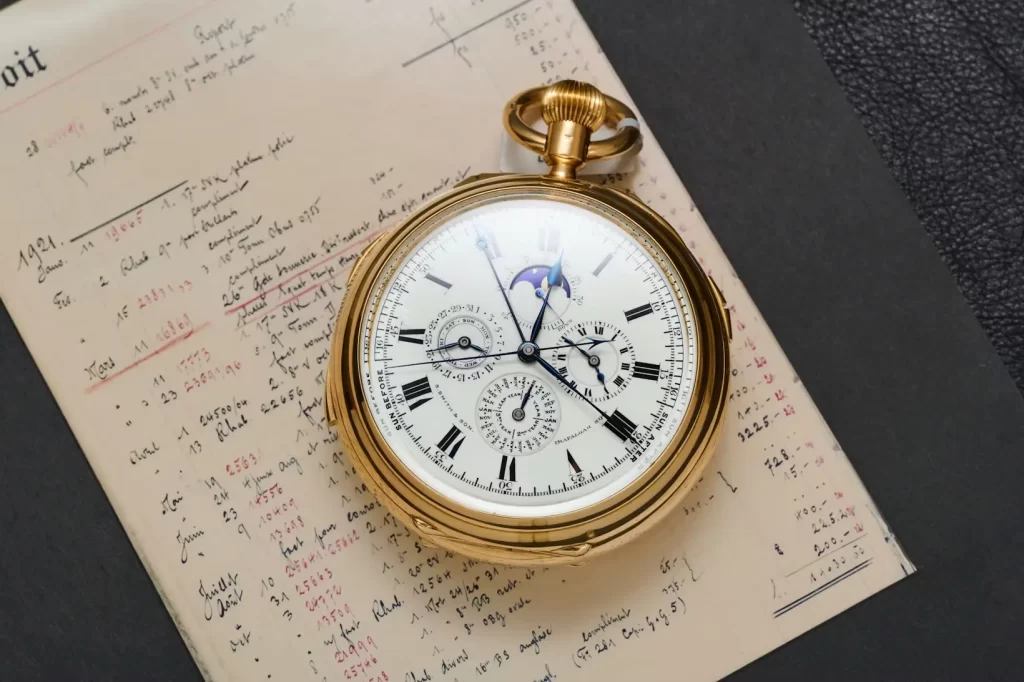
However, to buy via this channel you have to understand the provenance, condition grading and to be prepared for competitive bidding dynamics. Auction houses typically suit experienced collectors rather than a first time buyer of a Luxury watch.
Pre-Owned Specialists
There are dedicated pre-owned luxury watch retailers that offer middle ground solutions. They make a professional inspection of the watch, they have great warranty and return policies while maintaining a competitive pricing.
They usually have watchmakers on staff who service and authenticate the watch before sale. This is an extra point that private sellers cannot match.
Luxury watch buying guide : Key Factors to Consider before Buying a Luxury Watch
This is a critical point in our luxury watch buying guide and you should read it carefully because it will guide your purchase decision.
Define Your Purpose and Lifestyle
The first question you should ask yourself is: Will this watch be a daily wear, a special occasion or a versatile watch for multiple situations?
You have to be honest. I have watches that don’t get much wrist time because I didn’t ask myself this before purchasing. So now they just sit in the box.
Your lifestyle dictates the appropriate choices. If you are an office professional, you might prefer elegant dress watches, while an active individual might prefer sports watches. If you are a frequent traveler then you should consider a GMT and so on.
Consider your wardrobe and your activities. Sport watches with bracelets offer versatility, while dress watches on leather strap are for formal occasions.
Think about water resistance. You may not dive, but water resistance also protects against rain, handwashing and accidental splashes.
Wrist Size and Watch Proportions
It all comes down to this. Wrist size matters for comfort and aesthetics. Modern trends now are favouring smaller watches, at least that is what I’m observing with the launch of a lot of models that came with 40 or 41mm or reduced to 38mm due to high demands.
For example Tissor PRX is a model that had 41 mm and recently they launched the PRX with Damascus Steel of Titanium in 38mm for smaller wrists sizes.
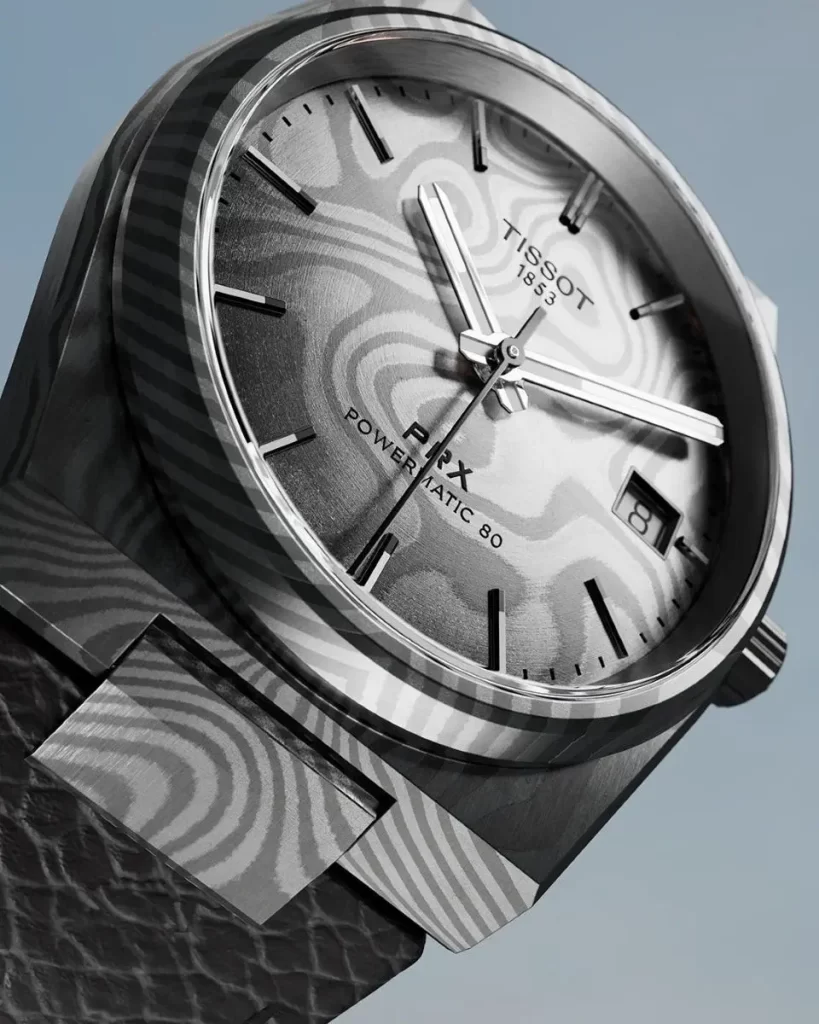
The point is that you must try the watch before you buy it. It’s not a rule though, if you like a watch and have a big wrist but you prefer smaller size watches, even though you might look ridiculous just buy it and wear it. You are the one that should feel good when you wear your watch. Not me or anybody else. Just enjoy it no matter what.
You should consider lug-to-lug distance(how far your watch extends up to your wrist) and case diameter. A 42mm watch with short lugs may fit better than a 40mm watch with long lugs. So I say again, first test,then you buy!
The watch should sit comfortably between your wrist bones without hanging too much.
Luxury watch buying guide : Material Considerations
Depends on what you really want, and the watch guys are different. Some models are more valuable in steel than in gold. It is just that our head is messed up when it comes to watches. Don’t need to worry.
So, let me explain to you the most common luxury watch materials.
Stainless Steel: Very durable, versatile and affordable. Steel watches are great for any occasion. Usually they use 316L stainless steel which resists corrosion and maintains appearance with minimal care. Rolex uses another type of steel 904L, which is better and more durable than standard 316L.
Gold: Yellow, white or rose gold are screaming luxury watches. It also adds value because, well, gold is expensive. Gold watches make a clear statement but require special and extra attention because they scratch very easily. Gold watches are also heavier. So keep that in mind.
Platinum: It’s the best precious metal because it is very dense, hypoallergenic and exclusive. Platinum watches have very premium prices and appeal to serious and rich collectors.
Titanium: It’s lighter than Steel watches and has a superior scratch resistance. I prefer this metal, but keep in mind it is not very shiny. But super comfortable to wear.
Ceramic: Scratch resistance at its finest, it also has rich and deep colors and ceramic bezels have become a standard on modern dive and sport watches.
Brand Heritage and Resale Value
There are a lot of brands out there that are very expensive when you buy retail and lose a lot of value on the secondary market. I mean a lot! Some brands retain value better than others. Some brands might also increase their value, but this is very rare.
Audemars Piguet and Patek Philippe have strong secondary market performance, same goes for Rolex. However, if you buy a watch as an investment, then you are not doing it out of passion, you just want to invest your money. In this case I recommend buying gold.
I think you should buy watches that you plan to wear. In order to do this, research the brand history and reputation. Established brands with great history maintain stronger resale value than new players. Limited production numbers, iconic designs and discontinued models often appreciate over time.
Authenticity and Documentation
Always, always always verify authenticity before purchasing. Especially if you are buying an expensive watch. Complete sets include original box, papers, warranty cards and service records if you buy pre-owned. Keep in mind that second hand watches that come with all of this, will be a little more expensive 20% to 30%.
For pre-owned pieces, service history shows you that the watch has proper care and will run smoothly without requiring an immediately costly maintenance.
Caring for Your Luxury Watch
It does not end with the purchase. You have to take care of your watch after you buy it. And that involves costs as well. Proper maintenance ensures your timepiece will serve you for decades or even generations.
Regular Servicing
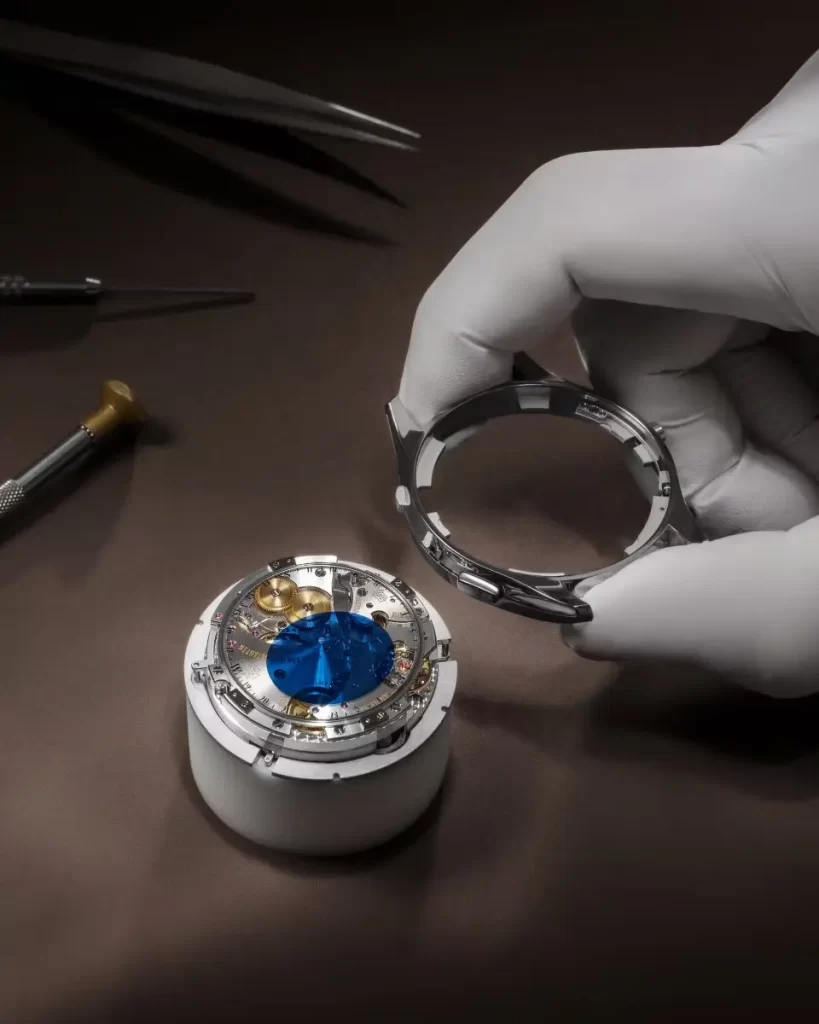
Mechanical watches require servicing usually every 3-5 years, similar to car maintenance. Watchemakers disassemble the movements, clean the components, replace the used parts and lubricate the movement.
This prevents damage from dried lubricants or accumulated debris. In case that your watch is a dive one, they will replace the rubber seal and then test the watch for water resistance.
Service typically will cost around $300-$800 for standard movements. The complicated ones will cost you even more.
Daily Care and Handling
If your watch is stopped, wind it gently about 20-30 turns until you feel some resistance. Never overwind your watch, tough modern automatic movements prevent this. Avoid adjusting date or complications between 8PM and 4AM because the date-change mechanisms are engaged and it could damage delicate gears.
Remove your watch from your wrist if you have an activity that has heavy impact, extreme temperatures or exposure to chemicals. Even though your watch is water resistant, don’t trust it blindly, annually check the caskets if you frequently expose your watch to water.
Storage considerations
I recommend you to store your watch in cool, dry places and away from magnetic fields like speakers, phones or tablets. I know, modern watches have great anti-magnetic resistance, especially Omega, but not all of them have this.
Consider buying a watch winder because it will keep your automatic watches running when not on your hand, this way the lubricants will not settle on the parts. This is an option only if you have multiple watches. If you have only one, you are safe.
Always keep your watches in a watch case, or original boxes, this way you will prevent them from accidentally scratching. If you are rich and have a valuable collection, consider safes or secure storage and insurance!
Understanding Watch Terminology
Familiarizing yourself with common terms helps navigate the luxury watch world and understand this or other articles much better. .
Case: The outer shell housing the movement, measured in diameter (mm) and thickness.
Crown: The knob on the case side used for winding and setting time. Screw-down crowns enhance water resistance.
Bezel: The ring surrounding the crystal, either fixed or rotating. Dive watches use rotating bezels to track elapsed time.
Dial: The watch face displaying time and other information. Also called the face.
Movement/Caliber: The mechanism powering the watch. Each movement has a specific caliber designation.
Power Reserve: How long a mechanical watch runs when fully wound, typically 38-72 hours for modern watches.
Water Resistance: Measured in meters or ATM (atmospheres), indicating depth ratings for water exposure.
Sapphire Crystal: Scratch-resistant transparent cover protecting the dial, standard in luxury watches.
Complication: Any function beyond basic timekeeping-date, chronograph, moon phase, etc.
Manufacture: Brands that produce movements entirely in-house rather than using third-party movements.
Patina: Natural aging of vintage watch components, particularly dial discoloration, often increasing collector value.
Luxury watch buying guide : Common Mistakes First-Time Buyers make
Avoiding this will save you money, frustration and disappointment. I wish I knew this sooner.
Buying Based on Hype
This is a bad decision to make. I did it twice, both times I regretted it. Social media and celebrities endorsements create artificial demand. Popular models often command a waitlist, so my advice is to not chase trends but to focus on watches that genuinely appeal to you. Keep in mind that trends change, but timeless design remains relevant for decades.
Ignoring Proportions
I did this as well with Hamilton Broadway, too small for me, but I only saw it in pictures, and I really wanted that model. It was a pain to sell it, because no one wanted it.
Oversized watches look good in pictures, but it can be uncomfortable and awkward on a small wrist. Try before you buy! If you cannot try it, then at least check the lug-to-lug measurements against your wrist width.
If your watch is comfortable it will be worn, if not it will sit in your watch box.
Skipping Research
This is an important aspect as well. If you don’t research your watch, you might find yourself in a bad situation. If you are new to this, always read reviews, watch videos, check forums and so on. Try the watch you want in person. Document everything before you buy.
Neglecting after Purchase Costs
If you pay a lot of money for a watch, expect to pay a lot for servicing it. If you buy a $5000 watch, it will cost you $500 for regular servicing every 3-5 years. So keep that in mind, and be sure you will do the servicing, otherwise your watch could damage.
The watch you buy is an ongoing investment.
Buying too many too quickly
Resist the urge! I feel you, I’ve been through this before. But you need to resist. Try the watches first, read about them, check what experience other people had with the model you want. Otherwise you will end up regretting buying a watch and you wont wear it that much.
Luxury watch buying guide : Investment Potential and Value Retention
I’m always telling people to buy watches that they want to wear and purchase them for enjoyment. I understand that some brands and models might be a good investment and you need to understand this aspect really well.
Which Watches appreciate in value?
There are some brands, models and categories of Watches that perform really well in the secondary market.
Steel watches from Rolex, Patek or Audemars Piguet often appreciate significantly in value, especially the discontinued references or limited editions.
There are some vintage watches as well, from the 50’s or 70’s that have unmodified condition and can command substantial premiums, especially from prestigious brands.
Not to speak of the limited editions that you can appreciate, but do keep in mind that some brands abuse the limited edition watches and it’s kinda lost its meaning in the last few years.
Of course, the iconic models like Rolex Daytona, AP Royal Oak or Patek Nautilus will always be iconic and have exceptional value and appreciation potential even on the secondary market. The pie chart shows exactly how much each brand have grown from 2010.
Realistic Expectations
Look, most watches depreciate instantly, just like cars. A typical luxury watch loses between 20%-30% value from the moment it leaves the store. But you might be in luck, and your watch could recover and appreciate in the next 5-10 years, particularly if you have a watch from an established brand with secondary market value.
I’m saying this again, don’t buy watches just for investments unless you are a collector with market knowledge. And if you are a collector you will not sell your watch, right?
If your watch appreciates in value, consider it a bonus. Just enjoy it.
Factors that affecting your Luxury Watch Value
Condition is the most important. Scratches, polishing, modifications or damage reduces the value by a lot. Complete documentation can add a 20%-30$ premium. Service history demonstrates that the watch had proper care and maintenance.
If something is missing, the value will go down.
Luxury watch buying guide : Making your Final Decision
Here we are, you have some knowledge after you read this article and you are ready to make an informed purchase.
Some last points I will give to you:
Trust your Instincts
It’s about you and your watch. Beyond technical specifications, movements or brand history, luxury watches are emotional purchases. Choose something that excites you, makes your heart beat faster. Something that will make you proud when you wear it.
A watch that checks all boxes on paper but doesn’t inspire you, it won’t bring any satisfaction. That I guarantee!
Start Slowly
Your first luxury watch doesn’t need to be your last. Many people recommend starting with versatile models, mid-tier pieces, that work across situations. I say, if you have money, go for it, get the watch you like. In time you will develop preferences and you will understand this industry better, so your next purchases will become more targeted and personal.
Think Long-Term
I hate this, I don’t have patience either. I want all the watches NOW! But don’t go head first. Think about what you want, be sure you have seen all the watches, you have read and know all the categories. Maybe you will find yourself loving Dive watches more, but you only bought dress watches. Got my point?
Choose timeless design pieces that won’t feel dated in decades. Consider if you will wear that watch in 20-30 years from now. Do you think Richard Mille will be a timeless design?
Build Relationships with your AD
If you do this, in time you will have access to hard-to-find models, insider knowledge and great services. Regular customers often receive priority for limited editions or exclusive pieces. So it is worth being friends with them.
But also be sure that they don’t take advantage of you and “force” you to buy some watches that you don’t really want in order to have the possibility to buy the watch you want.
Luxury Watch Buying Guide FAQ
The best brands for beginners include Tudor, Omega, TAG Heuer, and Longines. These offer excellent quality, Swiss craftsmanship, and strong brand recognition at more accessible price points ($2,000-$7,000). Rolex is ideal if your budget allows ($6,000+), offering legendary status and strong value retention. Each brand provides different aesthetics Tudor for vintage-inspired designs, Omega for space-age heritage, TAG Heuer for sporty sophistication, and Longines for classic elegance.
Most experts recommend $3,000-$7,000 for first luxury watches. This range offers genuine prestige from respected brands without excessive financial risk. However, your budget should reflect personal finances, never overextend yourself. Better to buy one quality piece you can afford than something that causes financial stress. Entry-level luxury starts around $1,500-$2,000, while serious collector pieces begin at $15,000+.
Mechanical movements use intricate systems of springs, gears, and jewels to keep time, powered by a wound mainspring. They’re valued for craftsmanship and tradition but require regular servicing. Mechanical watches can be manual (requiring daily winding) or automatic (self-winding through wrist movement). Quartz movements use battery-powered electronic oscillators for superior accuracy, minimal maintenance, and lower cost. Both have their place in luxury watchmaking, Grand Seiko, Breitling, and Cartier all make exceptional quartz timepieces.
New watches offer peace of mind through warranties and pristine condition, while pre-owned provides better value and access to discontinued models. For first purchases, many recommend new watches from authorized dealers for the full luxury retail experience and security. Pre-owned can save 20-40% and offers unique vintage pieces. As you gain knowledge, exploring pre-owned markets makes more sense. Always buy pre-owned from reputable dealers with authentication guarantees.
As we mentioned in our luxury watch buying guide , authorized dealers and brand boutiques offer maximum security with full warranties and guarantees. Online marketplaces like Chrono24 provide vast selection with buyer protection. Pre-owned specialists offer inspected, warrantied secondhand pieces at competitive prices. Gray market dealers sell authentic watches at discounts but without official brand backing. For your first purchase, stick with authorized dealers or established pre-owned retailers to ensure authenticity and proper documentation.
Some luxury watches appreciate significantly, particularly steel sports models from Rolex, Patek Philippe, and Audemars Piguet. However, most watches depreciate initially and should be purchased primarily for enjoyment. If investment is your goal, traditional financial instruments offer better returns and liquidity. Buy watches you want to wear, if they appreciate, it’s a pleasant bonus. Certain iconic models, limited editions, and vintage pieces in original condition show the strongest investment potential.
As we mentioned in our luxury watch buying guide, mechanical watches require servicing every 3-5 years, costing $300-$1,000+ depending on complexity. Quartz watches need battery changes ($50-$100) every 2-3 years. Factor these ongoing costs into your budget when purchasing. Regular servicing prevents damage from dried lubricants and ensures accuracy. Watches worn daily may need more frequent attention than those worn occasionally.
Watch size depends on your wrist size and personal preference. Smaller wrists (under 6.5 inches) typically suit 36-40mm cases, while larger wrists can accommodate 40-44mm. Try watches in person when possible, comfort and proportion matter more than trendy sizing. Also consider lug-to-lug distance, as a 42mm watch with short lugs may fit better than a 40mm with long lugs. The watch should sit comfortably between your wrist bones.
Luxury watches commonly use stainless steel (durable and versatile), gold in yellow, white, or rose varieties (luxurious but expensive), platinum (ultimate precious metal, very dense and exclusive), titanium (lightweight with superior scratch resistance), and ceramic (extremely scratch-resistant for bezels and cases). Stainless steel offers the best balance of durability, value, and versatility for beginners. Gold and platinum add significant cost but create heirloom pieces.
Most modern luxury watches are designed for daily wear, particularly sports models with water resistance and robust construction. Dress watches require more care due to thinner cases and delicate finishing. Rotate between watches if you own multiple to spread wear and prevent boredom. Remove watches during heavy impacts, extreme temperatures, or chemical exposure. Proper daily care ensures decades of reliable service.
Buy from reputable dealers, authorized retailers, or established platforms with authentication services. Verify serial numbers with manufacturers when possible. Request complete documentation including original box, papers, and warranty cards. For expensive pieces, consider independent authentication from certified watchmakers before purchasing. Check for proper weight, smooth movement operation, quality finishing, and correct markings. Counterfeit watches often have spelling errors, poor finishing, or incorrect fonts.
Water resistance indicates how much water pressure a watch can withstand, measured in meters or ATM (atmospheres). Ratings include: 30-50 meters (splash-resistant for handwashing), 100 meters (suitable for swimming but not diving), 200-300 meters (recreational diving), and 500+ meters (professional diving equipment). These are laboratory ratings, real-world performance varies. Avoid hot water regardless of rating, as heat affects gaskets that maintain water resistance. Have gaskets checked annually if frequently exposing your watch to water.
Conclusion on Luxury Watch buying guide
Look, I’m not the god of watches and for sure I don’t know everything about them. Just like you, I’m still learning. But I’m speaking from my experience of buying the first luxury watch that is the reason I created this luxury watch buying guide . The joy I felt, the disappointment when I realized that actually is not what I really want. It can happen!
That’s why I encourage you to take your time. Do your research, read our guides , check reviews, photos, ask for opinions. Ask us, we will reply and help everyone who needs it for free.
The knowledge you gain will prevent you from making costly mistakes and enhance your appreciation for the watches you chose.
Remember, luxury watches are personal expression, it’s not about trends or impressing other people, it’s about you!
This is my luxury watch buying guide. Thank you for reading this article!