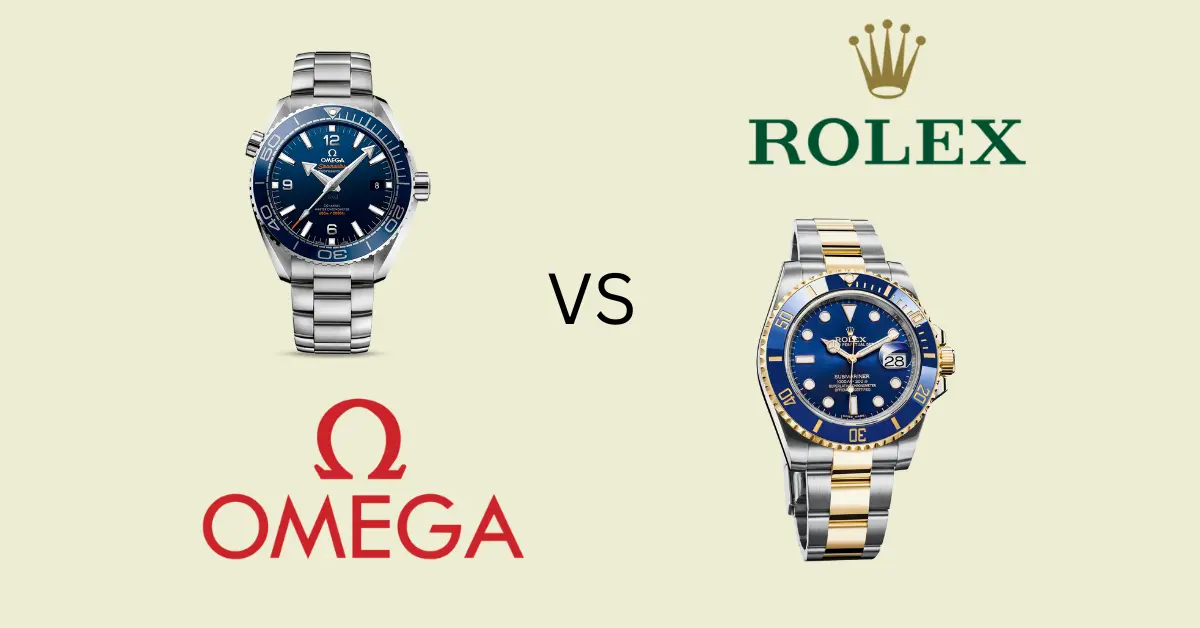
Rolex vs Omega is not an article that puts either brand in a bad light. It is just a personal analysis that I want to share with you. Nothing more! In the end, everyone buys the watch that excites them the most.
- History and Heritage
- Rolex vs Omega Prestige and Perception
- Rolex vs Omega Quality and Craftsmanship
- Rolex vs Omega Case and Bracelet Quality
- Price and Value
- Rolex vs Omega – Resale Value and Investment
- Rolex vs Omega Availability and Shopping Experience
- Rolex vs Omega: Which one should you buy?
- If you still can’t decide, answer these questions.
- Rolex vs Omega: The unconventional choice.
- Rolex vs Omega: The Final Verdict
- Rolex vs Omega FAQ
You’ve been saving up for years, and you’re finally ready to buy your first luxury watch. You are at a crossroads. What to choose? Rolex or Omega? Both brands are well-known, both have extremely beautiful models. Both are Swiss Made, and Rolex vs Omega has been a hot topic since…forever!
The choice is difficult, I think all of us who are passionate about watches will reach this point at some moment. The luckiest ones will be able to afford to buy both. Rolex vs Omega is not just about the fight between brands, it goes deeper, to prestige, to movements, bracelets and so on.
Fortunately, I was lucky enough to test watches from both brands, Rolex and Omega. I’ve tried pretty much all the models, except for the newly launched Rolex Land Dweller.
So, in this Rolex vs. Omega comparison guide, we will see what separates the two brands and which watch is right for you!
By the end of the article, I hope to inform you about:
- Which brand offers value for money
- How they compare in terms of quality
- Which of these two brands retains more value
| Factor | Rolex | Omega | Winner |
|---|---|---|---|
| Founded | 1905 | 1848 | Omega (older) |
| Entry Price (New) | ~$6,000 | ~$3,000 | Omega |
| Price Range | $6,000 – $100,000+ | $3,000 – $100,000+ | Omega (accessible) |
| Brand Prestige | 10/10 | 8/10 | Rolex |
| Movement Innovation | 8/10 | 9/10 | Omega |
| Resale Value | 10/10 | 7/10 | Rolex |
| Availability | Very Difficult | Easy | Omega |
| Magnetic Resistance | ~90 gauss | 15,000 gauss | Omega |
| Warranty Period | 5 years | 5 years | Tie |
| Power Reserve (Avg) | 70 hours | 60 hours | Rolex |
| Sports Heritage | F1, Tennis, Golf | Olympics, Moon | Tie |
| Most Iconic Model | Submariner | Speedmaster | Both! |
| Best For | Status & Investment | Enthusiasts | Depends |
Table data current as of December 2026. Prices and specifications subject to change.
History and Heritage
Of course, we will discuss this briefly, and I will cover the history of each brand in separate articles, as I did in the article Tissot: From Le Locle to the World or in the article about Atlantic: A treasure for the East, non-existent for the West.

The history of Omega

Omega has an interesting history, founded long before Rolex, in 1848 to be exact, and is one of the oldest watch companies in the world. It also had a partnership with Tissot, with which it formed SSIH, the first major alliance in the watchmaking industry.
Since 1932, it has been the official partner of the Olympic Games, the first watch on the moon was an Omega Speedmaster, and since 1995, it has been the watch worn by James Bond in the movies. Omega has been part of the Swatch Group since 1998.
It’s not just marketing (the James Bond case) but also innovation. Omega invented the Co-Axial escapement and established the Master Chronometer certification standard. This certification subjects watches to very rigorous testing. Therefore, only the best watches will obtain this certification.
I will write a more detailed article about Master Chronometer Certification.
The history of Rolex
Rolex was founded a little later, in 1905, by Hans Wilsdorf in London, UK.
They made a name for themselves with the invention of the first water-resistant watch, launched in 1926, and the first automatic watch with date change, launched in 1945 under the name DateJust.
The inventions did not stop there, so in 1954 they launched the first watch that displayed the time in two different zones, the GMT-Master.
Rolex does not belong to a large luxury group, but is one of the few independent watch manufacturers on the market.
Their innovations include the Oyster Case, Perpetual movement, and Cerachrom bezels. Rolex is one of the most famous luxury brands in the world. Their watches are also the best-selling, producing over 1 million watches annually.
Heritage and Inovation
Omega: It is an older brand and has more innovations in its portfolio.
Rolex: a younger brand, but the marketing team has done an excellent job making Rolex models highly sought after.
Winner: I’m torn here. Rolex clearly has the prestige, but if you appreciate history and take that into account when purchasing a watch, then Omega is the clear winner!
Rolex vs Omega Prestige and Perception
Rolex
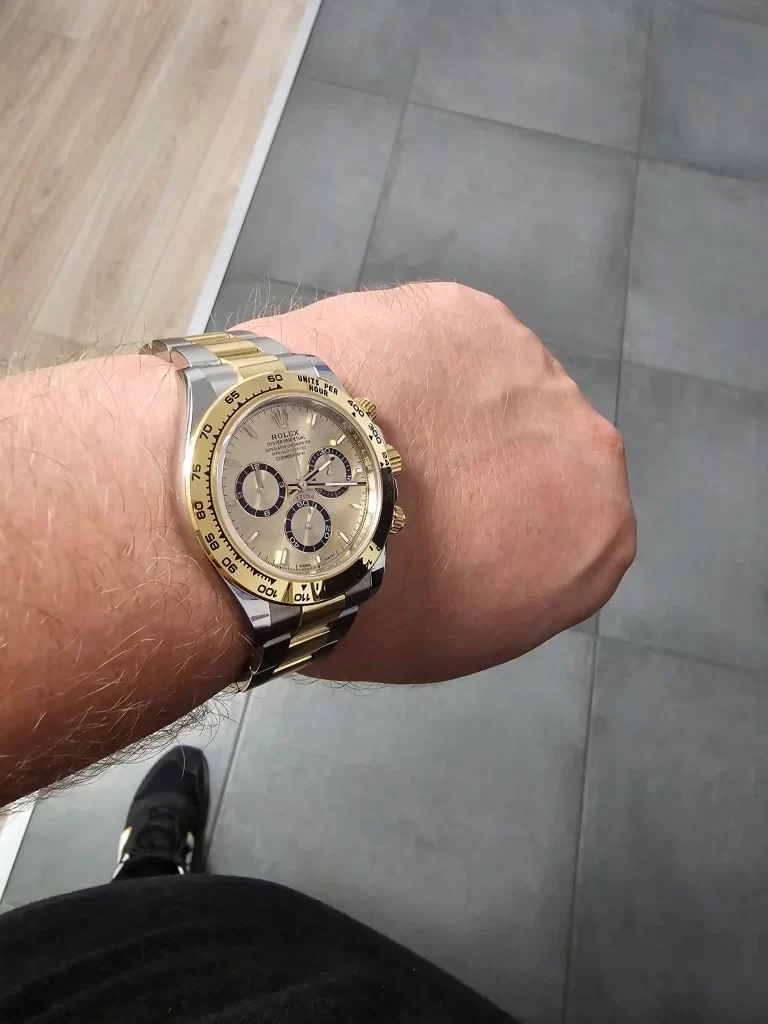
By far, the Rolex brand has greater prestige than Omega. The crown, which is the company’s logo, is recognized worldwide. The Rolex brand is associated with success, fame, and wealth.
Over time, Rolex watches have been and continue to be worn by presidents, various CEOs of large companies, and even celebrities such as Paul Newman.
It is therefore a symbol that shows others that you have succeeded in life. In fact, through a well-designed marketing scheme, Rolex watches are harder to obtain, regardless of whether you have money or not. We are referring, of course, to authorized dealers who “do not have the watches in stock.” It is a marketing technique called “scarcity marketing.”
As a result, you end up paying much more than the manufacturer’s recommended price for a Rolex if you buy it on the gray market.
Like Omega, Rolex has also appeared on the big screen in films such as The Fugitive Kind with Marlon Brando, The Usual Suspects, and Apollo 13 (1995).
Cultural Impact
It’s no surprise that people associate Rolex watches with success. Buying a Rolex is an achievement in itself, a milestone in your life. It’s a brand that people aspire to when it comes to watches, and I don’t think there’s a collector or watch enthusiast out there who doesn’t want one!
As already mentioned, it has appeared in films symbolizing success, it is part of human culture, and artists have sung about Rolex.
The level of prestige is maximum. My honest rating is 10/10.
Omega
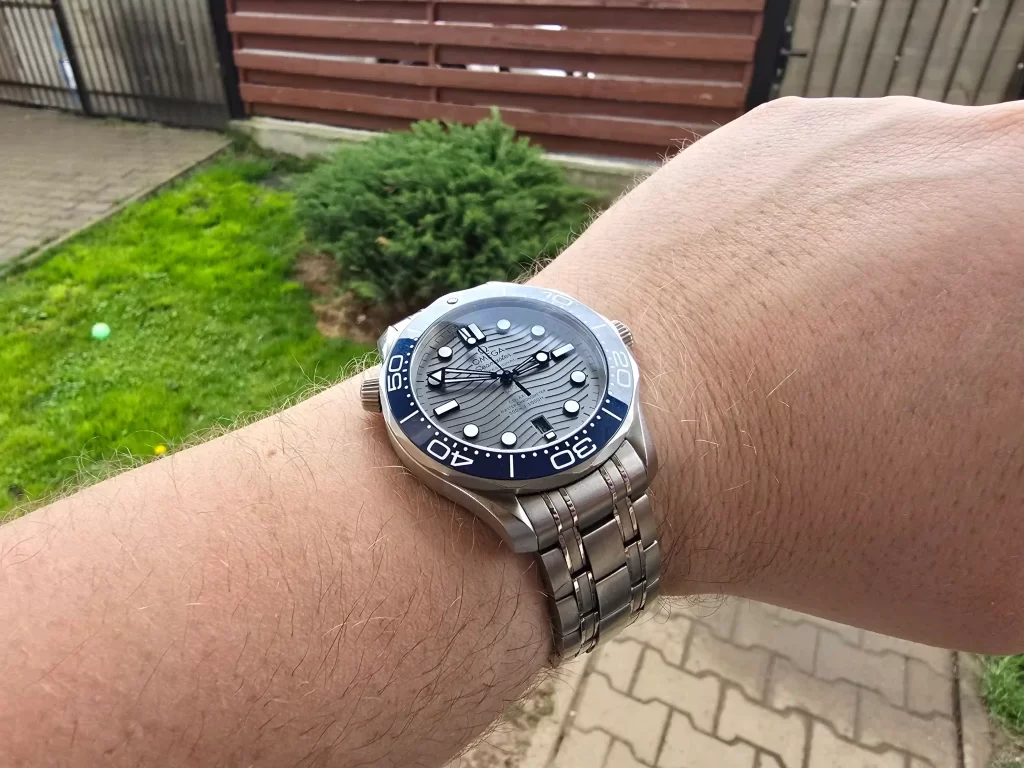
Omega is a respected brand, but less flashy. It is known and appreciated especially by watch enthusiasts and collectors. Omega is more about technical excellence than marketing.
Although in the 1990s they began to promote their watches in films, especially in the James Bond series, where the Omega Seamaster Professional 300, a dive watch, became the official watch of the most beloved spy.
In the world of watch collectors, Omega is often seen as the smart choice when making a purchase, rather than a status symbol that doesn’t even come close to Rolex.
Omega watches are much more accessible in the sense that there is no waiting list for them. You have the money, you walk into the store, and you walk out with the watch on your wrist.
Cultural Impact
Omega is clearly the choice of watch enthusiasts or James Bond fans. For me, when I see a man wearing an Omega, it usually tells me that he knows his watches and knows exactly why he bought a watch from this brand.
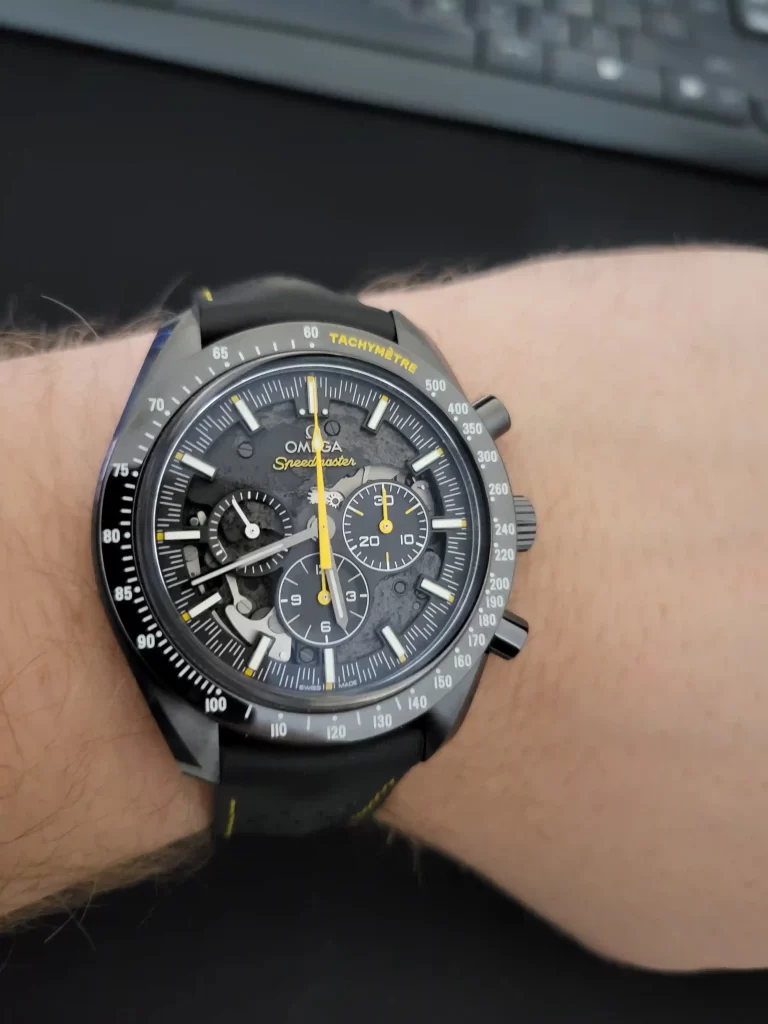
History is also important; let’s not forget that Omega, with its SpeedMaster model, was the first watch to “see” the moon.
Omega watches have a reputation as true “tool watches” that have been used exactly for what they were created for.
Honest Truth
People who are not necessarily passionate about watches will always recognize a Rolex, which is not the case with Omega.
If status matters to you, Rolex is the clear winner. However, if quality matters more, I would lean towards Omega. Do you just want to attract attention? Rolex! Do you want the respect of watch enthusiasts? Omega!
My rating for Omega in this category is 8/10.
Rolex vs Omega Quality and Craftsmanship
Both Omega and Rolex are known for their quality and craftsmanship. At first glance, you might not be able to tell them apart in this regard, but there are still small differences that tip the balance toward one watch or the other.
We will divide this chapter into two parts, briefly discussing the movement and the case/bracelet.
Omega Movement
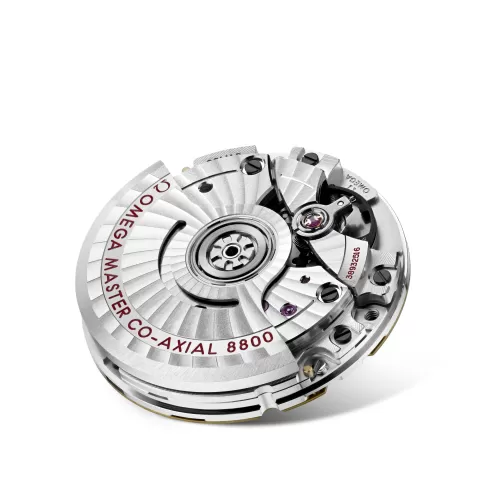
There is no doubt that the movements created by Omega are among the best and most reliable on the market. Throughout history, they have developed and patented various improvements such as the Co-Axial escapement (a method by which they have reduced friction and considerably increased the periodic service interval).
Omega’s movements are METAS-tested and Master Chronometer-certified, with magnetic resistance of 15,000 gauss (huge) and a 5-year warranty from Omega.
Overall, Omega has many technical innovations, and it is clear that this has been their mission over time, which makes me appreciate them even more.
An added bonus of Omega is that the back of the watch is usually made of sapphire crystal, but this matters more to those who want to admire the movement.
Among the notable calibers, I would mention the Caliber 8900 found mainly in the Seamaster series and the Caliber 3861 found in the Speedmaster series.
My rating: 9/10
Rolex movement
Rolex is not far behind, with its in-house movement featuring Superlative Chronometer certification, which means that Rolex movements not only meet the highest standards, but exceed them. The accuracy of Rolex movements is -2/+2 per day.
Rolex mechanisms also feature Paraflex shock absorbers, increasing the shock resistance of Rolex watches by at least 50%.
Chroenergy escapement is Rolex technology based on technology developed by SEIKO in the 1970s. Compared to Omega’s Co-Axial escapement, I would say that Rolex has an advantage, but only in the early years of the watch’s life.
As already mentioned, Co-Axial has low friction, which means that the mechanism is more durable. So if Rolex is more accurate today, it will most likely not be as accurate in 2-3 or 15 years.
The power reserve of Rolex mechanisms is usually 70+ hours, which is slightly better than Omega, which usually has a 60-hour power reserve.
Some calibers I would mention from Rolex are: Caliber 3235 found mainly on the Submariner series and Caliber 3285 on the GMT-Master II.
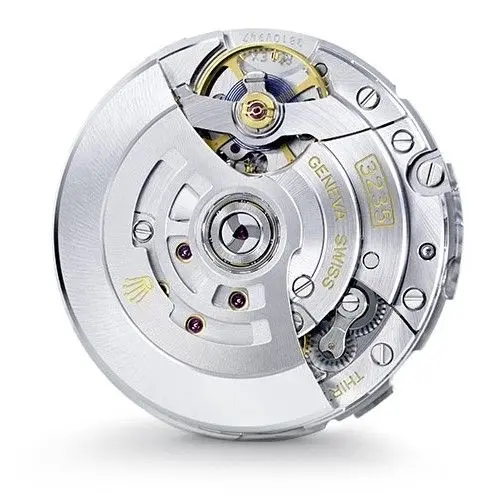
My rating is 9/10.
Verdict
It’s quite difficult for me, but I lean towards Omega even though I gave them the same rating.
Omega has better magnetic resistance, Co-Axial technology is superior, and over time they have had more technical innovations.
That doesn’t mean Rolex is inferior.
Rolex vs Omega Case and Bracelet Quality
I anticipate that Omega will lose because, as I mentioned in my review of the Omega Seamaster Professional 300, I am not fond of the buckle.
Omega
The quality is exceptional, and the case has an excellent finish. It is very durable; even after three years, I still have no scratches on it, even though I wear the watch every week.
Unfortunately for the case and bracelets, Omega uses 316L stainless steel, which is not bad, but it is a steel that we also find in more affordable models. It is an industry standard, and there are alternatives for a more premium material.
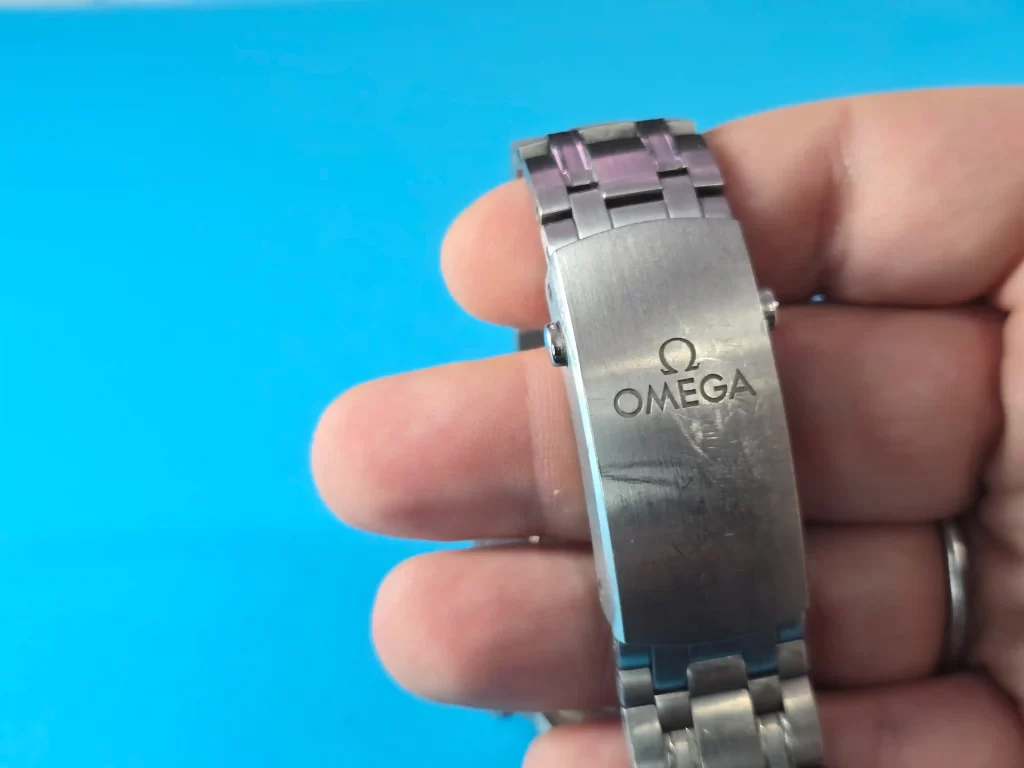
Omega uses different buckles for different models, which creates chaos, because some bracelets are good, while others are incredibly uncomfortable.
One advantage Omega has is that the bezel on their models is made of ceramic, which gives them a much more elegant and beautiful overall look.
Of course, design plays an important role, so the design of Omega watches is much more diverse, which is not necessarily the case with Rolex.
Rolex
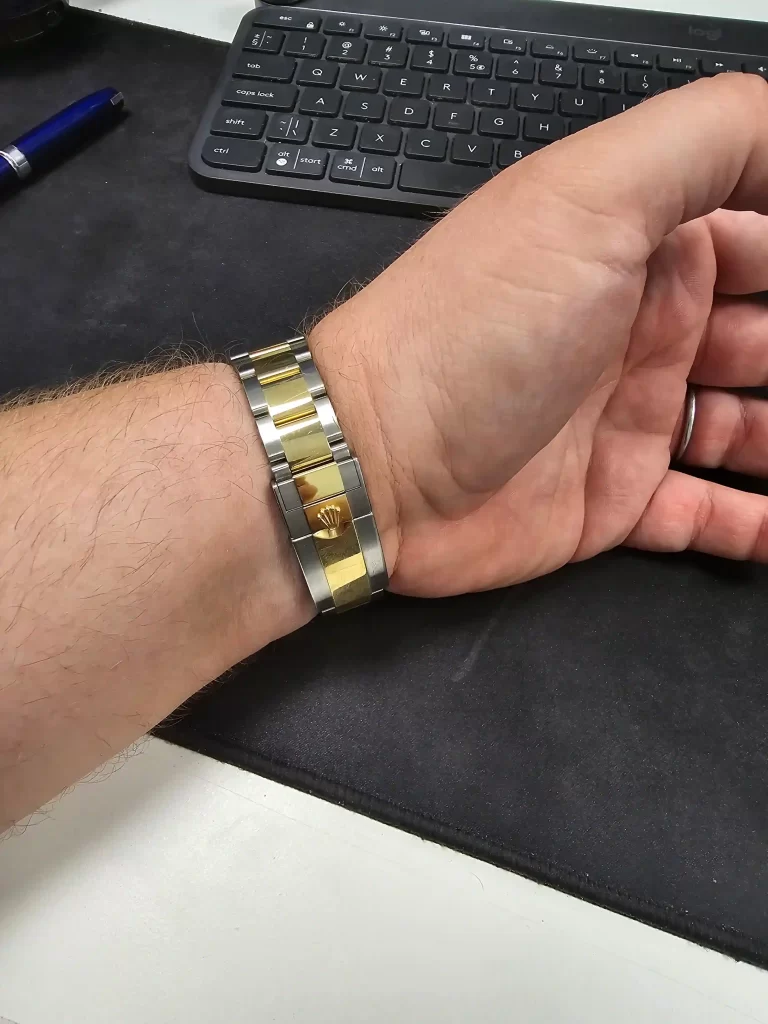
Rolex is famous for its Oyster case, as well as being the first water-resistant watch, which is a big plus. At the same time, Rolex uses 904L steel for its bracelets and cases, which is far superior to the 316L steel used by Omega, as it is more resistant to corrosion.
Rolex’s Glidelock clasp is by far the best in the industry, unlike Omega, which, at least on the Seamaster models, has a clunky and uncomfortable clasp.
Ceramic is also present on Rolex watches, called Cerachrom, and is renowned for its quality.
Overall, I would say that Rolex is superior when it comes to bracelets, with legendary models such as Jubilee or Presidential. Even the fluted bezel is a trademark that cannot be ignored.
As for the design of Rolex watches, I have only one word to say: LEGENDARY!
Yes, most models borrow elements, which is not necessarily a bad thing, and for me, the Datejust is an iconic model copied by many brands, some of them well-known, such as Tissot.
Winner
For me, Rolex wins hands down in this category. The fact that they use superior 904L steel and a Glidelock buckle is enough to steal the trophy from under Omega’s nose.
Price and Value
As far as possible, I thought about dividing the categories into entry level and mid-range. Although it’s quite difficult because both brands are quite expensive, with Rolex offering added value.
Omega
Iconic watches such as the Seamaster or Speedmaster fall into all categories, whether we’re talking about entry level or mid-range.
The same Speedmaster model can start at $6,800 and go up to $50,000 depending on the material used, whether it is a limited edition or not, and many other factors.
It also depends a lot on the country and the authorized dealer where you buy the watch. We are using the prices below as a reference.
Entry Level – Seamaster Aqua Terra (38mm): $5,400 – Seamaster Diver 300M: $5,600 – Speedmaster Moonwatch (Hesalite): $6,800 – Constellation: $4,900
Mid Level ($6,000-$12,000): – Seamaster 300 – Speedmaster Racing – Planet Ocean – Constellation Chronograph
Value
Omega watches are valuable, and for their price, you get better technology in movements that have proven their reliability over time, are much more affordable, and don’t have a waiting list.
The movements are in-house at a fairly affordable price, and the design of Omega watches is much more varied.
Rolex
It is very difficult to find a Rolex watch that is not highly regarded, even those that I do not like, such as the Explorer or Air King. The truth is that everything Rolex has done has been good and appreciated, if not at the time of launch, then a few years later.
Rolex watches start at around $6,150 and can reach tens of thousands of dollars. As with Omega, the material used and other factors are important.
Entry-Level – Oyster Perpetual 36mm: $6,150 – Explorer 36mm: $7,400 – Air-King: $7,400 – Submariner: $10,250 (if you can find one)
Mid-Range – ($10,000-$15,000): – Submariner Date – Explorer II – GMT-Master II (retail, if available) – Datejust 41
Value
Clearly, Rolex is more recognizable, and in some cases, you can even make a profit if you decide to sell the watch. Therefore, it has much better value retention than Omega at the moment. This makes it a much better long-term investment.
Warning! My advice is not to buy a watch, any watch, to make money from it or to consider it an investment. That’s not what the world of watches is about. For investments, you can buy stocks on the stock market.
Verdict
Purchase value: Omega – cheaper, easier to buy
Value over time: Rolex – for the reasons already explained. Better price retention may even increase over time.
Rolex vs Omega – Resale Value and Investment
I repeat, watches in general are not an investment, and I don’t think it’s a good idea to buy a watch with the intention of making money. The value of watches fluctuates greatly, and let’s not forget that the whole craze surrounding Rolex watches, which increase in value and can be sold for more than you paid for them, is a recent phenomenon. One that could disappear at any moment.
Therefore, Rolex wins hands down in this category. I would give it a score of 9/10, and I will explain why.
Popular models such as the Submariner, GMT-Master II, or Daytona usually sell on the gray market at a higher price than retail. Why is this?
Because Rolex has artificially created a shortage of watches, even though they produce over 1 million pieces annually. Demand is still high, so it creates a favorable environment for the gray market, which can sell at a higher price than retail. And Rolex turns a blind eye.
Demand is very high because Rolex offers a special status in global culture, so when people have money and want to buy something to impress, Rolex is the first thing that comes to mind.
We also wrote a Luxury Watch Buying Guide, if you want a luxury watch, it doesn’t necessarily need to be a Rolex or Omega, there are a lot of aspects to take into consideration. We think the guide will help you understand better what it means to buy a luxury watch.
Omega resale
For Omega, things are worse. The watches are available to anyone at any time as long as you have the money. Usually, an Omega watch loses somewhere between 30% and 45% of its value after a while.
This is not because the watches are not good. It’s because they are available! So there is no artificial shortage as with Rolex. The brand is particularly recognized by watch enthusiasts, so it doesn’t necessarily give you status because the average person wouldn’t recognize an Omega. They would recognize a Rolex, though.
Another issue affecting retention is that Omega offers discounts on their watches. This is not the case with Rolex.
Is it still a negative thing that a watch loses its value? Yes and No! I would rather say that it is a good thing for us who are not millionaires, because we can afford a renowned watch such as Omega.
For example, the Omega Worldtimer is a watch I want, but the $10,000 price tag seems far too high to me. It’s much more comfortable for me to buy it second-hand for $6,000-$7,000.
But it can be a negative thing for those who believe that watches are an investment. But that’s a story for another time.
Needless to say, Rolex wins by a long shot in this category.
Rolex vs Omega Availability and Shopping Experience
The difference is like night and day. Buying a Rolex is a pain, but it’s super satisfying when you finally get it (we’re talking about buying from an official store at the real price).
Rolex

Difficulty 9/10. Honestly, it feels like a teenage dance where hormones are running high.
Authorized dealers “don’t have the watches in stock,” and the most popular models are never available. There is the concept of a waiting list, and you need a purchase history to have any chance of buying models such as the Daytona.
Plus, if you’re dying to buy a Rolex, you’ll inevitably head to the gray market, where you’ll be charged an extra 20-50% of the model’s value.
The buying experience isn’t the best either. In order to buy a Rolex from an authorized store, you first have to build a relationship with the salesperson, as if you were marrying the watch, not buying it.
Then they push some watches on you that you probably don’t want, but because you don’t want to be taken off the list, you buy them. I’ve personally heard of cases where people were forced to buy watches such as Rolex Oyster or jewelry from stores that sold them before being given the chance to buy the model they wanted.
After doing all this, you realize that 2-3 or even 5 years have passed and you still don’t have the watch you want on your wrist.
And that’s frustrating for a watch lover who appreciates them for their true value.
The level of frustration is EXTREME!
Omega
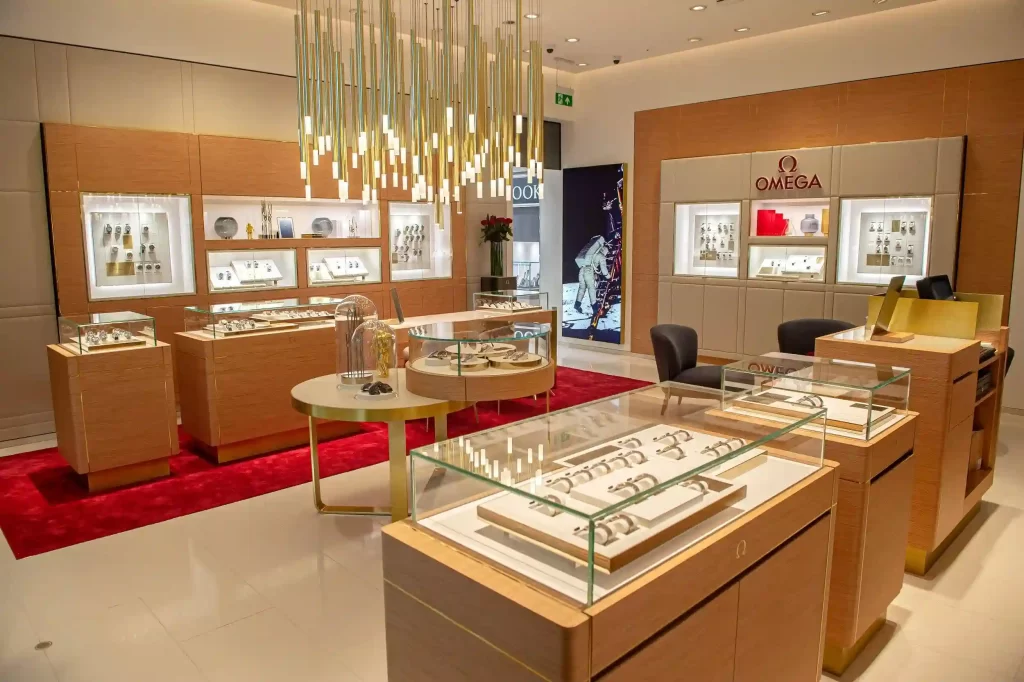
With Omega, everything is easy, which is why it doesn’t retain its value very well. To buy an Omega watch, all you have to do is go to the store and ask for it.
There are no waiting lists, you buy the watch you want, when you want it, and you may even get a 10-15% discount.
Life is easy and satisfaction is MAXIMUM! Difficulty 2/10 because you have to go to the store. Just kidding…
Rolex vs Omega: Which one should you buy?
The short answer is whichever one you like best. But I’ll try to explain in more detail.
Why choose Rolex?
If status and recognition matter to you, then a Rolex watch is clearly the right choice. I have already mentioned in this article that everyone knows Rolex and associates this brand with success.
If you want a watch as an investment, although I do not recommend this, Rolex is the best choice because it retains its value very well and the resale price is sometimes higher than the retail price. But that’s only if you manage to buy the watch from an authorized dealer at the official price.
Also, keep in mind that you will need a lot of patience because the waiting list can be several years long.
If your budget allows you to purchase this watch and you want the best regardless of price, Rolex is the watch for you, especially if you are not interested in seeing the movement.
The best Rolex watches, which everyone wants, are: Submariner Date (hard to get), Daytona, or Day-Date. Rolex Explorer, on the other hand, is more affordable in terms of price and availability.
Why choose Omega?
Because you don’t have the patience to wait for a Rolex. Also, the price is lower without compromising on quality. Plus, you can buy the watch whenever you want as long as it’s in stock.
Of course, it loses some of its value, but if you’re passionate about watches, that doesn’t matter much to you. Another advantage is that you can buy the watch at a much more affordable price if you buy it second-hand. Plus, authorized dealers offer discounts.
If you appreciate the work behind watches, the movement, and innovation, Omega watches are right for you. The same goes if you like to admire the caliber from time to time.
Of course, you have to take into account that Omega loses value. Compared to Rolex, you have more options when it comes to dial color. And keep in mind that Omega is not an investment, so if you plan to sell the watch, you should expect to lose money.
The best Omega watches that I recommend are: Omega Seamaster 300 Professional, Omega Speedmaster, which is superb and has a historical significance that Rolex can only dream of, and Aqua Terra.
If you still can’t decide, answer these questions.
Q: Do I care about status?
If the answer is YES: Rolex.
If the answer is NO: Omega or Rolex if you have the money.
Q: Do I need people to recognize the watch I’m wearing?
If the answer is YES: Rolex.
If the answer is NO: Omega or any other model, even Rolex.
Q: Am I buying this watch because I want to invest my money?
If the answer is YES: Definitely Rolex
If the answer is NO: I think you should consider Omega because, in terms of value, Omega is just as good for less money.
Q: Can I wait 2-5 years for a watch?
If Yes: Then Rolex is worth considering
If NO: Then Omega all the way!
Q: Will I wear the watch every day and don’t plan to sell it?
If YES: Omega (less stress, better value for money)
If NO: Rolex (retains its value longer and the resale price may be higher than the price you paid for it new)
If that doesn’t help either, you probably want a different watch! Just kidding, of course. I know how hard it is to decide on a particular model, especially if you like them all but your budget is limited. I’m in the same situation as you!
Rolex vs Omega: The unconventional choice.
And why should we choose? Of course, we do it because we can’t afford both, but what if we lived in an ideal world where we had money for both? Then it’s simple, we buy both watches and see which one evokes stronger feelings in us.
But still, we have more options. For example, you can buy a new Omega now and save up for a Rolex over time. Don’t forget that we’re playing the waiting game here, and a watch collection is built over time, over several years. That is, unless you’re a millionaire.
Another option is to buy a second-hand Omega watch, which is cheaper, and save up for a new Rolex from an authorized dealer when you have the money and when the Rolex calls you.
Or maybe you don’t want a Rolex or an Omega. Then why are you reading this article? Just kidding. But if that’s the case, I can recommend a watch from Formex, the Essence Ceramica Dark Matter model, or a Ulysse Nardin Marine Torpilleur, which I’ve also reviewed.
There are other options as well.
Rolex vs Omega: The Final Verdict
I don’t think anyone can say for sure whether Omega is better or Rolex is better. Both brands make excellent watches, and what you buy is entirely up to you. If you want status, you should definitely buy a Rolex, although I would say that Omega also offers you a certain status.
The best luxury watch is the one that gives you satisfaction when you wear it. For example, there are times when I stare at the dial of my Omega Seamaster for a long time, just admiring how beautiful it is. It makes me happy, even if the buckle is silly.
I don’t have a clear favorite, although I like a few Rolex models. The Day-Date and DateJust are the watches that appeal to me, and I will buy them in the future. Otherwise, nothing else interests me.
On the other hand, from Omega, I like the Seamaster Professional, I like the Speedmaster, and I simply adore the Worldtimer. Therefore, I will have more watches from Omega than from Rolex, not necessarily because of money, but because the design of Omega watches arouses my curiosity and appreciation more.
Everything I have written in Rolex vs Omega article is my personal opinion and assessment. As I said, I have worn and handled many Rolex and Omega models, which have been with me for a few days to a few weeks.
I don’t have a clear favorite; it’s just a matter of what I like more visually and historically when it comes to watches. Whatever you choose between Omega and Rolex, you can’t go wrong, unless you start from the premise that watches are an investment.
I hope this article has helped you in some way, if not in making a decision, then at least in providing some additional information. In a future article, I will compare all Rolex and Omega watches.
I look forward to hearing your thoughts in the comments.
Rolex vs Omega FAQ
Technically, yes. Omega’s mechanisms are undoubtedly more innovative, thanks to
Co-Axial technology and superior magnetic resistance. Rolex wins in terms of brand prestige
and resale value, but Omega matches or exceeds it in quality.
Brand positioning, artificial scarcity, and gray market inflation.
Rolex limits supply, while demand remains high. Omega is more accessible
and offers regular sales, keeping prices at a reasonable level.
Rolex, without a doubt. Popular Rolex models often sell for above retail prices.
Omega usually depreciates by 25-40%. If resale matters, Rolex wins.
Yes. Omega is a high-end watch brand with its own movements, excellent finishes
and a rich tradition. It is simply positioned more affordably than Rolex.
Both are extremely accurate. Rolex: -2/+2 seconds/day (Superlative Chronometer).
Omega: 0/+5 seconds/day (Master Chronometer). The actual difference is negligible.
Rolex: No. (You’re lucky if you buy it at retail price). Omega: Yes, discounts of 10-15%
are common in boutiques, sometimes up to 20% at authorized dealers.
The strategy of artificial scarcity. Rolex produces fewer watches than demand,
creating waiting lists and premiums on the gray market. Omega produces enough to meet
demand.
Generally, yes. Omega entry price: ~$3,000. Rolex entry price: ~$6,000. Omega tops out at around $50,000. Rolex far exceeds $100,000.
Omega. More affordable prices, no waiting lists, excellent quality. You get
immediate satisfaction, no games or inflated prices.
No. Omega makes sturdy watches with a 5-year warranty. Magnetic resistance
exceeds that of Rolex. Reliability is excellent.
Rolex if you are buying retail. Do not buy Omega expecting it to appreciate.
Do not buy Rolex at premium prices on the gray market expecting to make a profit
Opinions are divided. Serious collectors respect both. Omega gets points for
technical innovation. Rolex for its finishes and brand prestige. Both are represented in
serious collections.