Tissot History has 172 years of innovation. Present at the wrists of historic figures from the Czar of Russia to Danica Patrick – the only woman to win the IndyCar race. What do these personalities have in common? The Tissot watch!
Today, Tissot isn’t the luxury brand that’s hard to touch because of the price. On the contrary, the watches are affordable and Swiss quality is at home. Well, as long as it’s still made in Switzerland.
Tissot has come to be synonymous with sports, that’s because they’ve always associated themselves with top athletes or various well-known international competitions.
But before we get to the recent successes, we need to talk about the past.
Tissot History – Beginnings: Founding and first steps
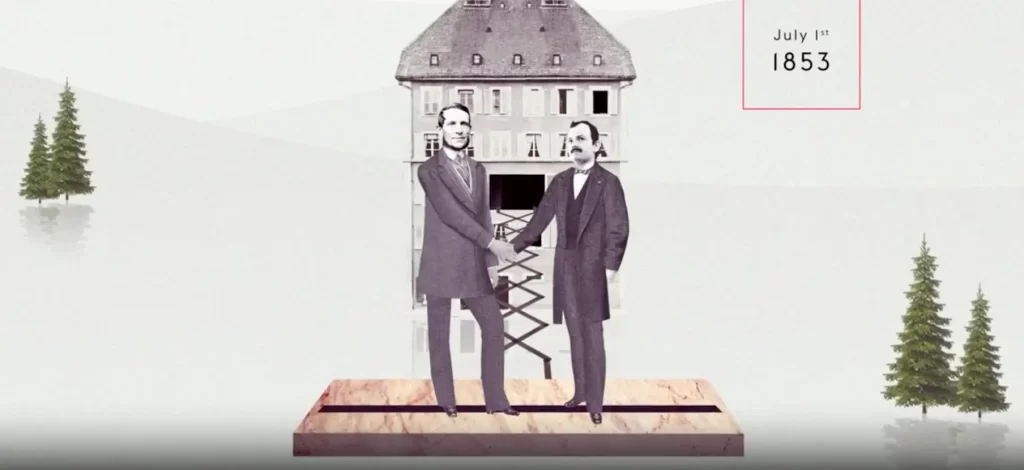
One town we’ll always hear about when talking about watches or their history is Le Locle- a small town in the Jura mountains, and like other brands, Tissot has its origins in this town.
The company’s name comes from its founder, Charles-Felicien Tissot, and his son Charles-Emile Tissot. The two divided their roles in the company, with Charles-Felicien in charge of making watch cases and Charles-Emile the watchmaker.
They set up their headquarters in their home, so they turned their house into a small workshop. The Tissot watches they produced were actually only assembled, as they sourced their components from other manufacturers, especially very small ones, preferring family businesses.
Even so, in the first year of its founding, Tissot sold around 1200 watches. And apparently all of them were sold in the Le Locle region. But things were to take a different turn when Charles-Emile left for Russia.

Charles-Felicien Tissot
By his full name, Charles-Felicien Tissot Daguette de Bourgogne, he is the father of Charles Emile Tissot-Daguette with whom he founded the Tissot watch company.
According to some sources, he was born in 1802 on May 1st in the village of La Ferriere. He married Julie Othenin-Girard in 1828 and had five children with her, including Charles-Emile. He died in 1873 in Le Locle and left behind one of the most popular and powerful watch brands in the world.
Charles Emile Tissot Daguette
He is the son of Felicien and co-founder of the Tissot brand, and is the man who will lead the brand to glory. He was born on February 20, 1830 in Le Locle and died on June 5, 1910 at the age of 80.
It was he who made the Tissot brand known in Europe, traveling and establishing a sales outlet in Russia.
He married Fracoise Sophie Amelie Favre-Brandt in 1856 on May 2nd. Together they have two sons by the names of Charles Tissot-Daguette and Paul Edouard Tissot-Daguette.
Tissot History – expansion in Europe
The Tsar and Russia
It seems that for young Charles Tissot, Le Locle and Switzerland were too small, so in 1858 he traveled to Russia where he obtained permission from the Tsar to sell watches throughout the Tsarist Empire.
Not surprisingly, Russia became the biggest market for Tissot, their models were very popular, and Charles Tissot, son of Charles Emille , moved to Moscow in 1885 to manage the shops opened there.
Charles (the son in Moscow-I know it’s hard with so many names) has 2 children, Paul Tissot who was born in 1890 and Marie Tissot born in 1897. I mention this again because Paul and Marie become very important to the company.
Marie ends up in charge of the day-to-day activities at Tissot and Paul and his father take care of the general business.
Tissot History – Beginnings also bring awards
It is worth noting that Tissot watches were appreciated all over Europe, not only in Russia, so numerous prizes were won at various exhibitions.
In 1888 in Zurich, Tissot won the Diploma of Honor, followed two years later, this time in Antwerp, by the Grand Prix and the Gold Medal in 1890.
It would be another 10 years before Tissot won a Grand Prix for their watches, and in 1900 they won the Grand Prix in Paris, followed 7 years later by the Grand Prix awarded by the Observatory in Neuchatel for the Chronometer and Marine Chronometer categories.
As things were going from strength to strength and the prizes won were creating greater demand, Tissot needed to reorganize. In 1918, Tissot restructured its watch production, becoming a manufacturer from a workshop.
This is when they begin mass producing watch mechanisms.
New fields, New name
The leadership of the company changes, and with it the first name change. In 1865 the company name became Charles-Emile Tissot & Fils, and in 1917 the name would change again, this time to Chs. Tissot & Fils-SA.
In 1930, after the partnership with Omega, Tissot joined the conglomerate that would be called SSIH, and in 1976 the name Tissot Marche Suisse would be used. Eventually all this name-changing madness would calm down and the Tissot name would become a constant and unique part of the company name, so in 1982 the company would present itself as simply Tissot SA.
The following year, 1983, SSIH formed a partnership with ASUAG and the name adopted is SMH (Société de Microélectronique et Horlogerie) under Nicolas Hayek.
The merger with Omega and the birth of the Swatch Group
The merger actually began in 1925 as a partnership. At that time, Tissot and Omega , led by Louis and Gustave Brandt, had a commercial partnership, and under their patronage the Swiss Society for the Watch Industry (SSIH) was born.
In 1930, under the leadership of Paul Tissot-Daguette – who had been educated in the Tissot factory and later became managing director of Omega – they formally merged to form the Société Suisse pour l’Industrie Horlogère (SSIH).
This was the first major watchmaking alliance in Switzerland, aimed at pooling resources, sharing expertise and stabilizing their market positions.
The SSIH structure allowed Tissot and Omega to maintain separate identities while working closely together. Omega has focused on the luxury and high-end market, while Tissot has targeted the luxury and high-end segments.
From an operational point of view, they shared production capabilities: Tissot often produced simpler and more robust mechanisms for Omega (such as the 30T2), while Omega produced and supplied more complex mechanisms, including automatic mechanisms, to Tissot.
This synergy extended to joint promotions and sales and even co-branded watches, such as those labeled “Omega Watch Co. Tissot” in the 1930s and 1940s, which are now highly prized by collectors.
The merger proved a success, and by the 1970s, SSIH had become the leading Swiss watch manufacturer, absorbing other brands such as Lemania (known for its chronograph mechanisms, including those used in the Omega Speedmaster).
However, the “quartz crisis” of the 1970s and early 1980s brought new challenges, as cheap quartz watches from Japan disrupted the mechanical watch market and nearly bankrupted the entire industry. SSIH faced financial difficulties and was bailed out by Swiss banks in 1981.
The partnership was a way of alleviating the economic crisis of 1929 which affected all industries.
The partnership lasted for 53 years, until SSIH merged with ASUAG (Allgemeine Schweizerische Uhrenindustrie AG) to form a conglomerate that would later become the Swatch Group – the largest watch manufacturer.
This merger was a very important move because ASUAG was a major supplier of watch mechanisms and components, owning brands such as Longines and Rado.
The consolidation formed ASUAG-SSIH, which was taken over in 1985 by a group of private investors led by Nicolas Hayek.
It was renamed Société de Microélectronique et d’Horlogerie (SMH) in 1986, and in 1998 became what is today the Swatch Group.
Today, both Tissot and Omega operate as separate brands under the Swatch Group umbrella, with Omega positioned as a luxury brand that battles with Rolex sparkling controversy between collectors on topics such as Rolex vs Omega , and Tissot as a mid-range innovator, just as in the 30s.
Post-war prosperity and growth (1945-1975)
The decades following the Second World War, from 1945 to 1975, marked a golden age of growth and prosperity for Tissot, Omega and the Société Suisse pour l’Industrie Horlogère (SSIH), the entity formed by their merger in 1930.
During this period, both brands thrived amid a booming global economy and a renewed demand for Swiss made timepieces, driven by post-war reconstruction, growing consumer confidence and the prestige of Swiss craftsmanship, a tradition and impression that is still preserved today, only Swiss made today no longer means what it once did. More on this in the article: (Here is the name of the article)
For Tissot, headquartered in Le Locle, it was a period of significant expansion. The company became a cornerstone of the local economy, becoming one of the largest employers in the region.
Tissot’s workforce grew as it increased production to meet demand for its affordable and reliable timepieces, which appealed to a growing global middle class.
Employees enjoyed generous benefits and perks, reflecting the company’s success and its commitment to the community.
Even today, retirees from this era – known as “Tissot pensioners” – speak proudly of their association with the brand, a testament to its status and the loyalty it inspired.
The role of Omega in Tissot ‘s History
Omega, based in Biel/Bienne, capitalized on its reputation for precision and luxury, underpinned by milestones such as the 1944 launch of the Omega Automatic and its role as official timekeeper at the 1948 London Olympic Games.
The synergy with Tissot under the SSIH umbrella proved highly effective: Tissot provided Omega with robust, cost-effective mechanisms (such as the caliber 30T2 with manual-winding mechanism), while Omega’s advanced engineering – particularly in automatic and chronograph mechanisms – raised the bar for Tissot’s timepieces.
The SSIH group expanded further during this period, integrating other notable brands such as Lemania, a brand that specialized in the production of chronograph mechanisms.
Lemania’s expertise has directly benefited Omega, most famously the Caliber 321, which powered the Omega Speedmaster – certified by NASA for the Apollo missions and worn on the moon in 1969.
This achievement reinforced Omega’s global prestige and indirectly strengthened SSIH’s financial and reputational strength, from which Tissot also benefited. By the 1970s, SSIH had become the leading Swiss manufacturer of finished watches, a position built on decades of post-war innovation and strategic brand positioning.
Notable Tissot watches
The Tissot company has guided its entire business towards innovation, in addition to beautiful watches, Tissot invented technologies that made the watches more durable and overall better.
So among the popular pocket watches are those launched early on, especially after they had the ability to mass produce them. And that’s an achievement in itself because watches have become more affordable both financially and in terms of their presence in stores.
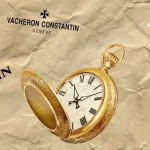
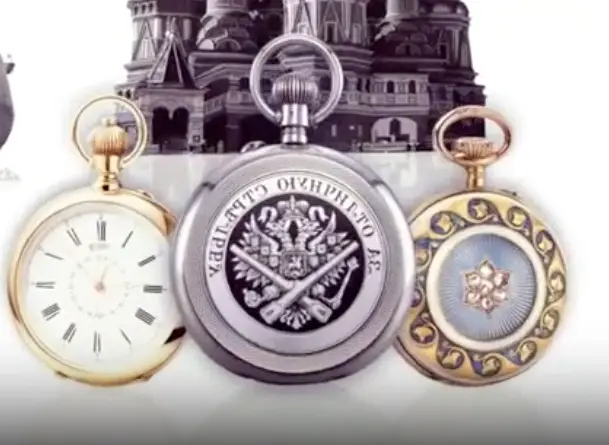
The first pocket watches had what you called savonnette (savon in French means soap, I don’t know if it’s related), I honestly don’t know how it translates, but they were the watches that had a cover that you could decorate with different engravings. These watches were present on the markets in Europe, Russia or the United States.
But a notable clock from this period is the dual time zone clock, created especially for those traveling or exploring the earth.
It is also worth mentioning that in 1904, the Russian Tsar Nicholas II owned a Tissot watch.
Tissot PRX
In the recent years, Tissot PRX became the most appreciated line of watches among collectors. The design is amazing, you have a ling range of colors from which to choose, also you can buy with quartz movement or with Powermatic 90.
In the PRX line you can choose from multiple sizes and materials. The recently launched Tissot PRX 38 mm was well received, my favorite one being the model with Damascus Steel
Tissot Banana
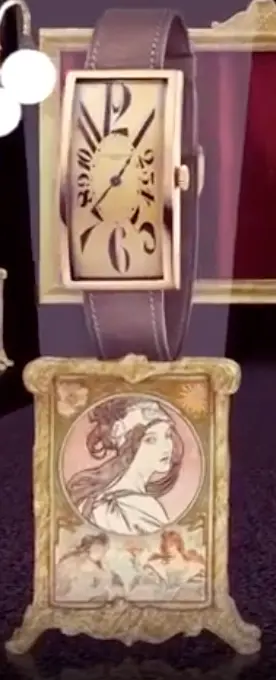
The Tissot “Banana” watch is a remarkable timepiece with an elongated, gracefully curved “Tank” style case, nowadays a popular tank style model is the one from Cartier.
It debuted in 1916 as one of the brand’s first forays into wristwatch design, which was starting to become increasingly popular.
Made in Le Locle, Switzerland, this watch stood out for its distinctive silhouette – nicknamed the “Banana” for its ergonomic curvature that hugged the wrist – and a dial adorned with graduated Art Deco numerals, reflecting the bold and elegant aesthetic of the era.
Launched during the First World War, when wristwatches were gaining ground due to their practicality, the Banana combined utility with sophistication, with a hand-wound mechanism that took its quality from the pocket watches for which the TIssots were renowned.
The case was often made of gold or silver. We discuss the Tissot Banana in this article.
Tissot Porto , Antimagnetic watches and more
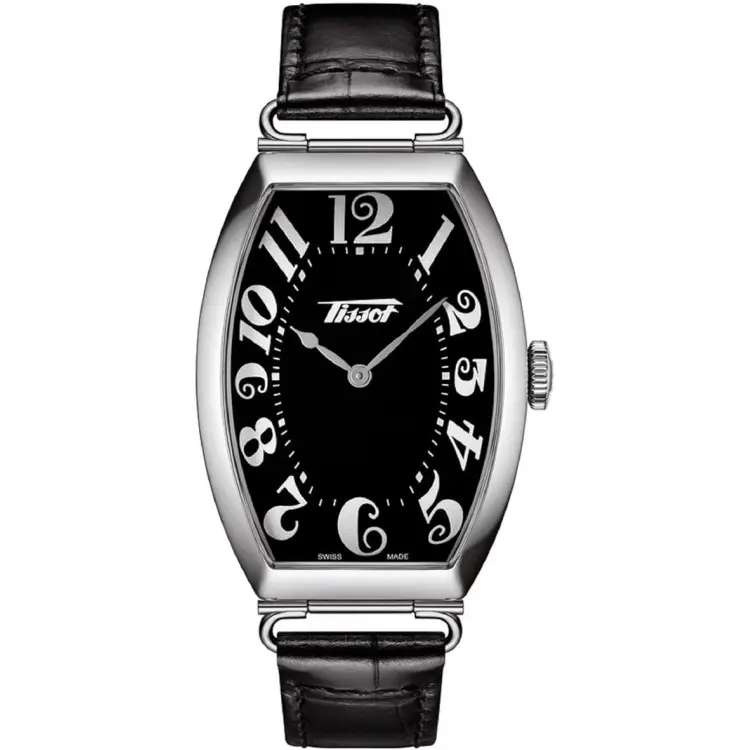
Tissot Porto with a tonneau-shaped case was launched in 1919. The Porto style prefigured the Art Deco era of jewelry and accessories.
The Tissot Antimagnétique was the world’s first antimagnetic watch, and that in itself is a huge achievement considering that most watches, at least those from major brands, have this protection.
Tissot launched the revolutionary watch in 1930 and antimagnetic technology has become extremely important in the world of mechanical watches even today.
In 1953, Tissot launched the first mass-produced watch with 24 time zones, the Tissot Navigator, which is still in shops today.
The Tissot Astrolon, also known as the IDEA 2001, was the world’s first mechanical plastic watch. It was launched in 1971. Later Tag Heuer released a plastic watch which they revived this year, and of course let’s not forget the OmegaxSwatch Speedmaster.
In 1985 and 1986, Tissot produced two of its most iconic watches. The RockWatch was made of granite sourced from the Alps. A year later, Tissot launched the RockWatch with Two Timer, the first watch with analog and digital time display. Both displays were activated by a single crown.
In the late 1980s, Tissot kept the naming pattern of the watches that represented exactly what material they were made of. After launching the RockWatch, they launched the Pearl Watch in 1987, followed by the Wood Watch in 1988. You guessed it, the Pearl watch had a Pearl dial, the Wood watch was, well, wood.
Tissot T-Touch
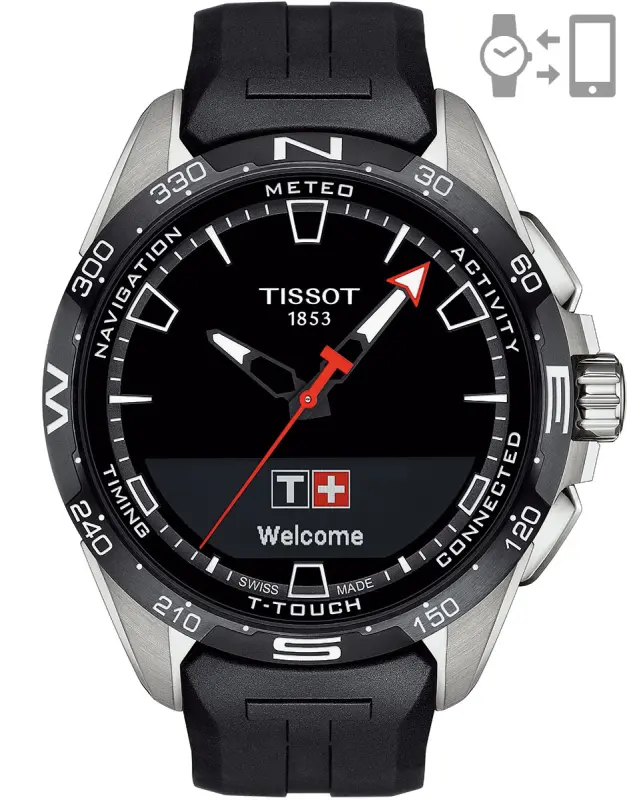
In 1999, Tissot introduced the original Tissot T-Touch, an innovative six-function watch with a touch screen and a hybrid analog-digital display.
This watch is arguably the most iconic timepiece for which Tissot is recognized among today’s wristwatch enthusiasts.
Since its debut, the T-Touch collection has expanded to include models such as the Sailing-Touch, Sea-Touch and T-Touch Expert.
Tissot History – Sponsorships and appearances
Tissot began its journey into motor sports in 1974 by sponsoring racing cars, a legacy underscored by the Tissot logo appearing on the vehicles in Ron Howard’s movie Rush. The movie captures the Formula 1 saga of James Hunt and Niki Lauda as it unfolded in the late 1970s.
In the 1990s, Tissot stepped up its involvement in sport, starting with world championships in cycling and ice hockey. Today, Tissot is the official timekeeper for a wide range of major sports, including the International Fencing Federation, the International Basketball Federation, the FIM Superbike Championship, NASCAR, MotoGP, the Ice Hockey World Championship and the International Cycling Union.
In September 2014, Tissot also assumed the role of Official Timekeeper for the 17th Asian Games.
In the U.S., Tissot’s public recognition is likely due to brand ambassador Danica Patrick, former racing driver. Historically, the range of brand ambassadors has relied heavily on motor sports figures, with MotoGP riders such as Nicky Hayden, Thomas Lüthi, Stefan Bradl and Bradley Smith wearing Tissot watches.
Beyond racing, basketball star Tony Parker and hockey player Steven Stamkos also represented the brand.
Actors Huang Xiaoming and Deepika Padukone have greatly diversified the list of Tissot ambassadors, making sure it’s not just a sporting spectacle.
As of March 15, 2025, both Huang Xiaoming and Deepika Padukone remain active Tissot ambassadors, still featuring prominently on the brand’s official website and in its campaigns.
Their involvement reflects Tissot’s blend of tradition and modern appeal, a theme consistent with their continuing roles.
Since then, the list of ambassadors has grown to include other notable figures. MotoGP riders Marc Márquez and Jorge Lorenzo have joined the ranks, reinforcing Tissot’s passion for motorsports, which dates back to its sponsorship of the Moto Grand Prix in Bern, Switzerland in 1953.
Indian cricketer Virat Kohli brings a strategic and team spirit, while Chinese actress Liu Yifei brings an entertaining edge.
Cyclist Primož Roglič, the 2021 prize-winning cyclist, also remains a key figure, underlining Tissot’s links with cycling.
Beyond ambassadors, Tissot watches have adorned the wrists of public figures such as Catherine, Princess of Wales, and Nelson Mandela, but have also graced the wrists of actors such as Angelina Jolie in Lara Croft Tomb Raider: The Cradle of Life and Mr. & Mrs. Smith, and Simon Pegg in Mission: Impossible – Rogue Nation.
These cases underline Tissot’s cultural breadth, combining its sporting heritage with a broader appeal.
Tissot is a renowned brand in the watch industry. Many innovations, pioneering in the industry, history-making designs and a gateway for watch enthusiasts into the world of luxury watchmaking.
In my opinion, you can’t go wrong with a Tissot watch, whatever the model. Their history, the prestige of the brand and their overall positioning in the market make their models appreciated worldwide.
This is the Tissot History a brand that could have been much more but settled for less.