


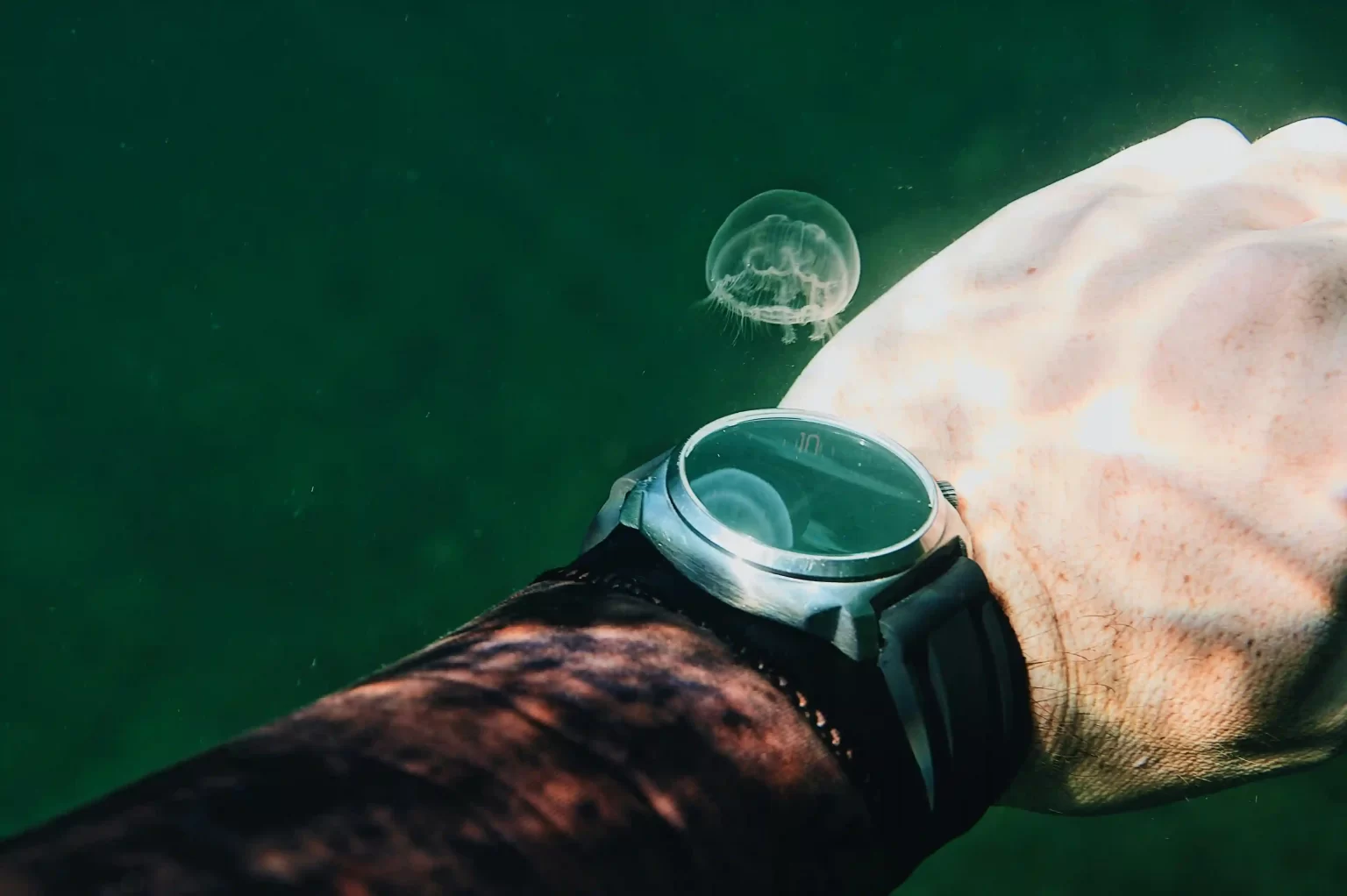

This comprehensive guide explores everything you need to know about dive watches. We can all agree that Dive watches are the most important type of watches out there. The majority of people love them and I think it’s the most popular type of watch with iconic models like Omega Seamaster 300 or Rolex Submariner.
- What is a Dive Watch?
- History of Dive Watches
- Dive Watch Guide – Essential Features of Dive watches
- Water Resistance
- Unidirectional Bezel
- Luminous Markers and Hands
- Dive Watch Guide – Legibility and Dial Design
- Case Construction and Materials
- Crown and Pushers
- Crystal
- ISO 6425 standard for Dive Watches
- Types of Dive Watches
- Professional Dive Watches
- Vintage Inspired Dive Watches
- Luxury Dive Watches
- Budget Dive Watches
- Dive Chronographs
- Movements in Dive Watches
- ⚙️ Movement Type Comparison
- 🔄 Automatic/Mechanical
- 🔋 Quartz
- ☀️ Solar (Eco-Drive)
- ⚡ Kinetic (Seiko)
- 💡 Quick Decision Guide
- Automatic Movements
- Quartz Movements
- Solar and Kinetic Movements
- Choosing Your Dive watch
- Popular Dive Watch Brands and Models
- Dive Watches Bracelets and Straps
- How to maintain your Dive Watch
- Regular Care
- Servicing Requirements
- Gasket Replacement
- Crystal Protection
- Professional Service vs Independent Watchmakers
- Dive Watches vs Dive Computers
- Collecting Dive Watches
- Dive Watch Guide – Conclusion
Dive Watches have evolved from specialized tools used for diving into cultural icons.
In this comprehensive guide I will try to explore and provide information about dive watches, from their history, essential features to buying considerations and maintenance tips.
By the end of this Dive Watches guide you’ll know:
- What makes a dive watch and the ISO standards that define them
- History behind legendary Dive watches
- Essential features
- How to choose the perfect dive watch for your need and budget
- Difference between movements (automatic, quartz, solar etc)
- Popular brands and iconic models
What is a Dive Watch?
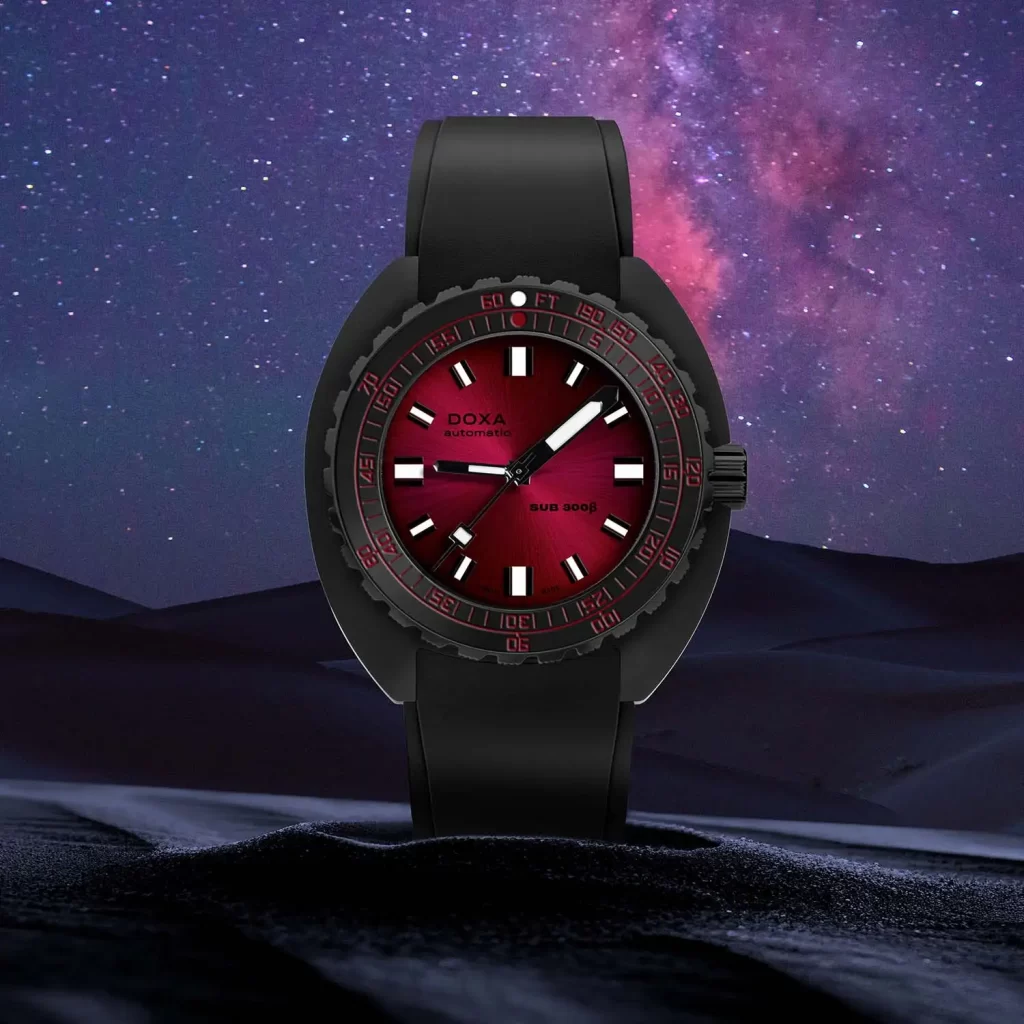
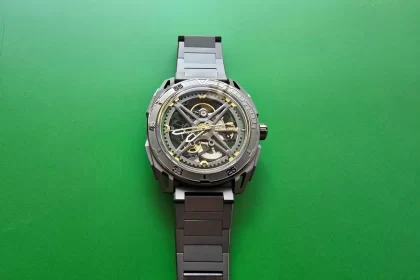
This is the first question we need to ask when it comes to this. A dive watch, like Doxa SUB 300 Ceramic is a timepiece designed to withstand high pressures and underwater conditions and still provide reliable timekeeping during your diving activities.
These types of watches are required to meet strict international standards, particularly ISO 6425 which defines the minimum requirements for watches to be considered dive watches. I will explain about ISO 6425 later in this article.
Dive watches have gone beyond their functional purpose and become iconic everyday pieces appreciated mostly for their durability, legibility and great aesthetics.
Unlike other types of watches, like dress watches or fashion watches, dive watches were built to survive extreme conditions. Usually they feature a water resistance rating typically starting at 200 meters ( The ISO allows starting with 100), they have a unidirectional rotating bezel for tracking dive time, luminous markers for low light visibility and a robust construction that can withstand impacts, corrosive saltwater environments and pressure.

History of Dive Watches
Coincidence or not, the development of dive watches began with the evolution of underwater exploration throughout the 20th century. Understanding the history of dive watches will help you and me appreciate why modern models feature specific characteristics and why certain models reached legendary status.
Also some iconic models like Rolex Submariner or Omega Seamaster are often compared and Rolex vs Omega is a constant topic amongst collectors.
Early Underwater watches
The grandparents of dive watches are actually Rolex and Omega. The journey began in the 1920s and 1930s when watchmakers began to experiment with water-resistant cases.
Rolex was the first one that made a significant breakthrough with the Oyster Case in 1926, a case that featured a hermetically sealed design. However, early water resistant watches couldn’t be used for diving because they wouldn’t survive the diving conditions.
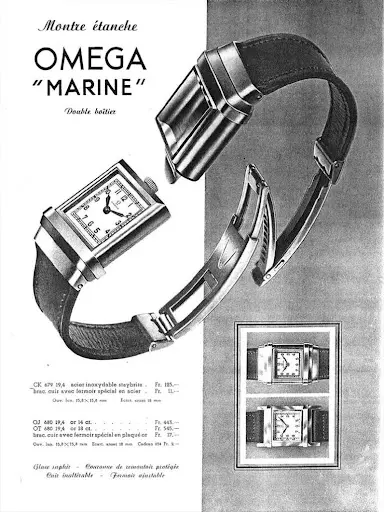
Omega stepped in, and in 1932 they released the first true dive watch called Marine, a watch that could withstand depths up to 135 meters.
The Marine was truly a pioneer timepiece which featured a double case system in which the entire movement and dial were housed inside a sealed inner case. Then it was placed inside an outer protective case.
All of these were the early attempts to conquer the depths of the sea.
The Golden Age of Dive Watches
True diving watches appeared in the 1950s, a period in which manufacturers started to heavily develop these types of watches. Two legendary dive watches made their debut in 1953 and defined this category forever.
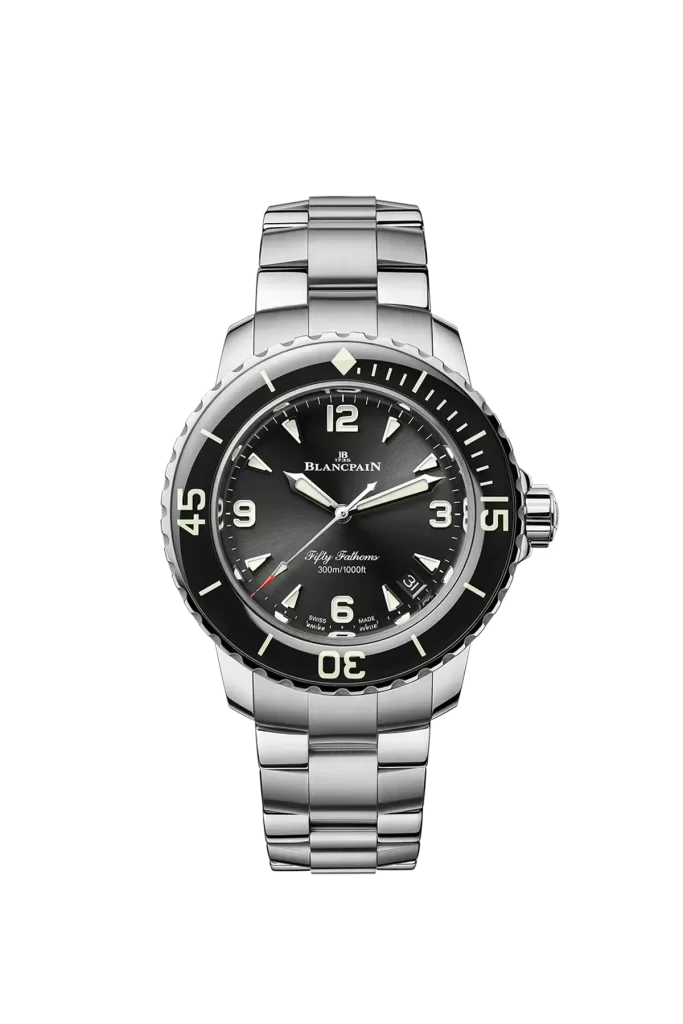
Rolex introduced the legendary Submariner which had a water resistance of 100 meters and the now iconic rotating bezel. In the same year, Blancpain released the Fifty Fathoms, a watch that was developed in collaboration with French Navy combat swimmers.
Fifty Fathoms introduced several innovations, including the unidirectional rotating bezel which turned counterclockwise in order to prevent the accidental extension of dive time.
Fifty Fathoms is often considered to be the first real dive watch in the world.
These watches were genuine tools developed for military and professional divers, the marketing exercises came later. It was a good time, a time in which watches were used for their intended purposes and not just a marketing exercise.
Jaques Cousteau famously wore a Deep Sea Special during his record breaking dive made in 1960, while military units from around the world adopted dive watches as standard equipment.
In the 60s and 70s numerous manufacturers entered the dive watch market. Brands like Seiko which introduced their first Diver in 1965 bringing affordability to the segment.
Omega, even though they were pioneers in the dive watches section, they released Seamaster 300 as a true dive watch in 1957. Other brands like Doxa, Squale or Zodiac created dive watches for professional use.
Modern Era and Renaissance
Dark clouds approached the Swiss Made watches in the 1970s and 1980s when the quartz crisis debuted. It was a challenge for the traditional watchmaking to survive. But they did, mostly due to their tool watch status and mechanical reliability.
Fast forward to the 1990s and 2000s saw a rising interest in mechanical dive watches mostly by nostalgic people but also due to the appreciation for mechanical craftsmanship.
Today, dive watches have advanced materials like ceramic, titanium or carbon composites, and they maintain their essential design elements established decades ago.
Nowadays, modern dive watches usually exceed 300 meter of water resistance with some professional models like Deep Sea rated for 1000 meters or more.
Despite their technical advances, the design language established in the 1950s haven’t changed that much. Which proves to us that they got it right from the first try.
Dive Watch Guide – Essential Features of Dive watches
We need to understand the key features that define dive watches, in this way we can appreciate the design and we can select the right model for your needs.
Water Resistance
It is the most important feature. Without this it wouldn’t be a true dive watch, just a pretty timepiece on your hand. The ISO 6425 standard states that the minimum water resistance for a watch to be considered a dive model is 100 meters. Though most modern examples exceed this standard by far.
Water resistance ratings can be confusing for some people because they don’t represent the actual diving depth, but rather the pressure testing standard. For example a 200 meter water resistance rating means that the watch was tested to withstand the pressure equivalent to that depth in laboratory conditions.
Real world diving however involves movement, changes in temperature and other factors that can affect the seals from watches. So the actual diving depth is usually less than stated.
For recreational diving, I’m no professional, but I don’t think it will exceed 40 meters, a 200 meter water resistance rating provides ample safety margin.
Professional divers and technical divers prefer watches rated for 300 meters or more. There are of course watches designed for saturation diving that can handle 1000 meters or deeper, but not a lot of divers will ever approach these depths.
Unidirectional Bezel
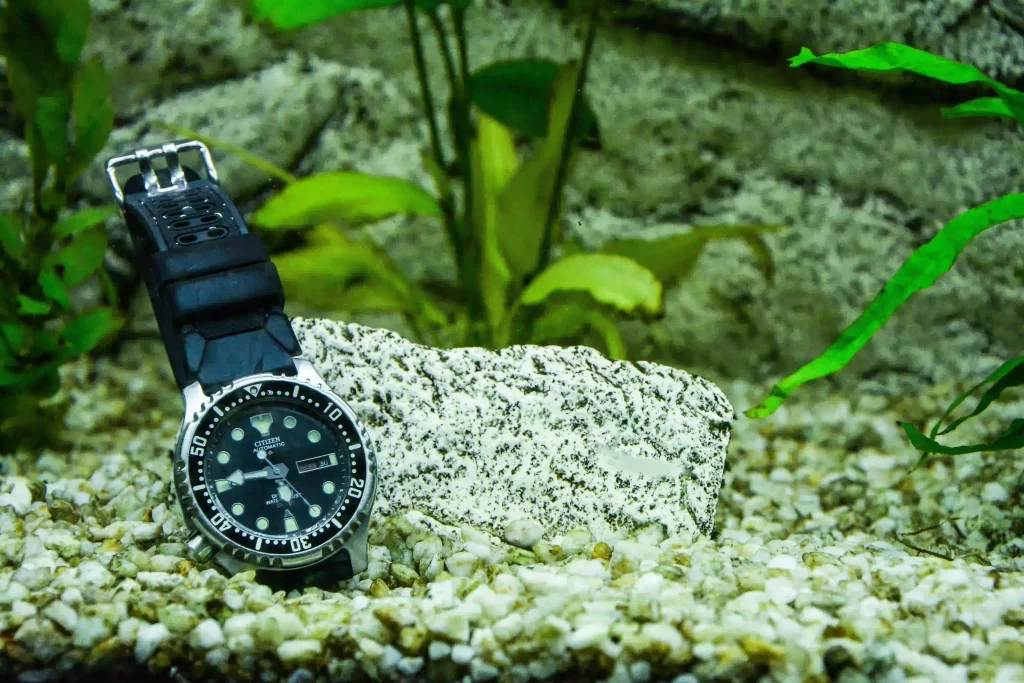
Like I said before, it was invented by Blancpain for their Fifty Fathoms model and it is perhaps the most recognizable feature of dive watches. The external ring rotates counterclockwise only and features minute markings, usually with the first 15 or 20 minutes highlighted for easy reading.
Divers use the bezel to track time spent under water. Before descending, the diver rotates the bezel so the zero marker aligns with the minute hand. As time passes, the minute hand moves forward relative to the bezel markings, showing how many minutes have elapsed.
And it was a genius move, because this system is very simple, but highly effective and it didn’t require underwater manipulation.
I usually use my diver bezel to track time when I’m doing something and I’m too lazy to set a timer.
One important aspect, crucial for those times mostly, was the fact that the bezel could rotate only counterclockwise. This way, if accidentally you knock the watch during a dive, the bezel can only move in a direction that shortens the elapsed time, never lengthening it.
This safety feature probably saved a lot of lives because it prevented divers from staying under water longer than planned.
Modern bezels use various mechanisms. Traditional friction-fit bezels offer 120 clicks for precise adjustments. Some watches feature ceramic bezel inserts that resist scratching and fading like Omega Seamaster Planet Ocean.
Luxury models also include sapphire crystal bezel inserts with metallized markings for durability and aesthetics.

Luminous Markers and Hands
It was and it still is very important to see the markers of a dive watch in low light conditions. All dive watches feature luminous material applied to the hour markers, hands, and usually on the zero marker from the bezel.
This luminescence allows divers to read the time in dark underwater environments or during the night dives.
Historically, Radium was the solution, but its radioactive properties led to its discontinuation. Then Tritium became the standard and it was used for decades, offering self illuminating properties even if it’s not exposed to light.
But Tritium is also radioactive, even though it is not as powerful as Radium, so this led manufacturers to search and transition to modern photoluminescent materials.
Today, we have Super-LumiNova and similar non radioactive compounds that dominate the market. Watches like Tissot PRX, Christopher Ward Bel Canto Lumiere or Hamilton Khaki Field all come with Super-LumiNova applied.
These materials absorb the light energy and emit it gradually in darkness. The intensity and duration of the glow depend on the quality of the luminous material. Usually high end dive watches feature a thick application of lume that glow for hours.
There are some brands that still use tritium-based illumination for their watches, like Ball, Luminox or Marathon. Usually they use small gaseous tritium light sources sealed in tiny tubes.
These provide constant illumination for years without needing to be exposed to light. But the glow is dimmer than freshly charged photoluminescent materials.
Dive Watch Guide – Legibility and Dial Design
It is one of the priorities when a manufacturer creates a dive watch. Legibility above all else!
Markers must be large , clear and highly contrasted against the dial background. Or it used to be. Today is not that important, as watches became more of a fashion or jewelry piece. Take for example Omega Seamaster 300 Black. Everything is black, even the logo, so the contrast is absent.
Most dive watches feature simple layouts with bold hour markers often incorporating geometric shapes like circles, triangles or rectangles at key positions.
The 12 o’clock position usually receives a special treatment, often with a triangular marker or doubled markers, which makes orientation easier even in low visibility.
Hands must be distinguishable from each other on the dial. The classic dive watch design uses big luminous hour and minute hands with distinct shapes. The seconds hand is often thin and may feature a contrasting color tip for enhanced visibility.
Usually complications on dive watches are kept to a minimum, mostly you will see a date window positioned at 3 o’clock or 6 o’clock. There are some divers that also have a chronograph complication, but those are straight ugly in my opinion. Some watches include depth gauges which are cool, but really rare.
Today you don’t really need a Dive watch if you go underwater or you are a professional diver. Now we have dive computers that track everything.
Case Construction and Materials
Cases are typically constructed from stainless steel, titanium, or modern materials like carbon composites or ceramic. Dive watch cases must withstand significant pressure, impacts and corrosive saltwater exposure.
Stainless steel, particularly 316L grade, offers excellent corrosion resistance and durability and has a reasonable cost. Other brands, like Rolex use a different 904L stainless Steel, which is better than the standard 316L used on most dive watches.
Titanium provides superior strength to weight ratio and better corrosion resistance than steel. Titanium dive watches are also much lighter and reduce fatigue during extended wear. However, titanium is known to be less scratch resistant and requires different finishing techniques.
Modern materials like ceramic and carbon fiber are common in high-end dive watches. Ceramic is scratch proof and maintains appearance forever. Carbon composites offer exceptional strength and beautiful aesthetics but watches with this material are more expensive.
A crucial thing when it comes to cases of dive watches is the case back. It is very important for maintaining water resistance. Most dive watches use screw down case backs with gaskets to create watertight seals.
Other models like some Omega Seamaster have an exhibition case back with sapphire crystal but these require additional engineering in order to maintain the water resistance ratings.
Crown and Pushers
The crown of dive watches is a potential weak point in water resistance, because it must provide access to the movement while maintaining a watertight seal. Dive watches have screw-down crowns that thread into the case compressing a gasket to create a hermetic seal. If you forget to close the crown after you set your time and date, your watch will be compromised.
Crown guards are the protective shoulders that are flanking the crown are also common on dive watches. They protect the crown from impacts that could damage or compromise the seal. The Crown guards also prevent accidental crown operation underwater.
Dive watches that come with chronograph complications include additional pushers that also must feature a screw-down mechanism to maintain water resistance.
Important to Remember! Never operate pushers underwater unless the watch is rated for this use, otherwise water will infiltrate and damage the movement.
Crystal
The crystal used must be high quality, because it must withstand pressure and scratch resistance while maintaining clarity.
Almost all watches have sapphire crystal which is second only to diamond in hardness. Sapphire crystals resist scratching from rocks, sand and it is perfect for daily wear.
Other brands like Seiko use on their entry level watches acrylic crystals, which was also used on vintage dive watches. The acrylic scratches easily but it is shatter resistant and can be polished to remove minor scratches. The warm, slightly domed appearance of the acrylic crystals attracts vintage enthusiasts and watch collectors.
Nowadays almost all manufacturers use anti-reflective coating applied to their crystal exterior, interior or on both surfaces. Usually the preferred one is the coating applied on the interior because it is protected from scratches.

ISO 6425 standard for Dive Watches
ISO 6425 standard was established by the International Organization for Standardization and it defines the minimum requirements for watches designed as dive watches. Understanding this standard helps distinguish true dive watches from watches that simply look like dive watches.
Core Requirements
In order to meet ISO 6425 certification, a watch must check numerous requirements. Water resistance must be rated for at least 100 meters, verified through testing at 125% of the rated depth. For example a watch rated at 200 meters, it means it was tested at 250 meters.
The watch must function normally at this pressure and must have 0 water infiltration when it is tested in a condensation chamber.
The unidirectional bezel must be present and clearly indicate the elapsed time. Markings at every 5 minutes are mandatory and the first 15 minutes must be special marked for better legibility.
The bezel must also function at 125% percent of rated depth and must be pre-settable with adequate protection against accidental rotation.
Visibility requirements state that time reading must be possible from at least 25 centimeters distance in total darkness after the luminous material was charged. The dial and hands also must remain legible in diving conditions.
Testing Procedures
ISO 6425 requires extensive testing that is beyond simple pressure testing. Watches undergo condensation testing in which they are heated and cooled with water on the crystal to detect any moisture ingress.
Thermal shock is another test that exposes the watch to rapid temperature changes from 4 degrees to 40 degrees celsius and back. This way they can check if the seals remain intact despite expansion and contraction.
Resistance to salt water is verified through a 24 hour immersion in a sodium chloride solution, then the watch is examined for corrosion or functional issues.
The watch must also demonstrate resistance to magnetic fields and shocks equivalent to a one meter drop onto a hardwood surface.
Marking and Certification
Watches that are certified to ISO 6425 must be marked “DIVER’S” followed by the depth rating in meters. This is a way to distinguish certified dive watches from watches that are labeled only as water resistant.
Some manufacturers exceed the ISO 6425, like Omega, Rolex or Blancpain creating watches that are capable of depths well beyond the minimum standard.
But you must know that not all excellent dive watches hold ISO 6425 certification, because it’s voluntary and usually involves costs. One of those brands is Rolex, they opt instead for rigorous in-house testing and its own Superlative standard.
Omega is another brand that has great Dive watches that don’t have ISO 6425 certification. Although for some models like Seamaster Planet Ocean Ultra Deep they use ISO 6425 certification.
Other brands that don’t use ISO certification are Blancpain which is credited with the first true dive watch, Panerai with their Luminor and Submersible models or Tudor, just to mention a few.
Is ISO 6425 necessary? Not really, usually the brands I mentioned are using their own testing which usually exceed the requirements of ISO.
Types of Dive Watches
Dive watches come in multiple styles and specifications, each model is suited to different users and purposes.
Professional Dive Watches
Professional Dive watches are the top of the category. These watches are built for serious diving activities and typically feature a 300 meters water resistance or even more. They have a robust construction and highly legible designs optimized for actual diving conditions.
Examples from this category include the Rolex Sea-Dweller and Submariner, Omega Seamaster Professional 300M or Blancpain Fifty Fathoms. These models usually have the latest materials and technology available while maintaining the design that professional divers trust.
Professional dive watches often include helium escape valves for saturation diving. The most notable model is Omega Seamaster 300M which has the Helium escape valve visible at 10 o’clock position.
During deep saturation dives, divers live in pressurised chambers breathing helium-oxygen mixtures. Helium molecules can and will penetrate watch cases during pressurization.
During decompression, trapped helium can create extra pressure inside the case, strong enough to pop off the crystal. So the Helium escape Valves allow gas to escape safely preventing the damage.

Vintage Inspired Dive Watches
The popularity of vintage aesthetics has brought numerous reissues and vintage-inspired looks. These watches capture the styling of classic dive watches from the 1950s-1970s while incorporating modern movements and materials.
Brands like Longines, Oris, Seiko or Tudor have released with great success vintage-inspired models that appeal to collectors or enthusiasts that are seeking classic style without the vintage maintenance concerns.
Usually these watches feature smaller case sizes and domed crystals. Vintage Inspired doesn’t mean compromised performance. Most of the models meet or exceed modern dive watch standards while appealing to nostalgic feelings.
Luxury Dive Watches
Luxury Dive Watches combines the dive watch functionality with premium materials, finishing and complications. Usually serve as jewelry and status symbols alongside with their functionality.
Brands like Blancpain, Omega, Rolex or Audemars Piguet create dive watches featuring precious metals, gem-set bezels and movements with exceptional finishing. These watches cost more than basic ones.
In recent years, since watches became a luxury jewelry, this segment exploded, with dive watches becoming acceptable in formal settings where they once would have been inappropriate.
This versatility makes luxury dive watches popular among people that want one watch for all occasions.
If you want to buy a Luxury Dive watch, but don’t know what to choose, we have a Luxury Watch Buying Guide for beginners that will help you.
Budget Dive Watches
Great dive watches are available at every price point., Budget dive watches from brands like Orient, Citizen, Casio or Seiko offer genuine ISO 6425 performance at low costs.
These watches use simpler movements and less expensive materials than luxury alternatives, but they maintain essential dive watch characteristics.
Many budget dive watches have automatic movements, 200 meter water resistance, sapphire crystals and excellent build quality. These watches are ideal for people who actually dive with their watches regularly because you can replace them easily if damaged or lost.
Budget Dive Watches are also a door for watch enthusiasts that are entering the watch world without major investments.
Dive Chronographs
Not really my cup of tea, I personally consider Dive watches that also have chronograph complications to be ugly. The best example is the Omega Seamaster 300 Chronograph. Maybe one exception is Breitling with their superocean line.
These types of watches feature screw-down pushers that must not be operated underwater otherwise it will be damaged.
I can understand that this can be appealing to people that appreciate mechanical complexity and want multiple functions in one watch. However, the additional complications reduce the dial legibility compared to the simple 3 hand divers. Not to mention that chronograph function is redundant because we have the rotating bezel for dive timing.
I’m pretty sure a professional diver will not use a dive watch that has other complications like chronograph.
Movements in Dive Watches
Of course, the movement powering a dive watch impacts the performance, accuracy and maintenance requirements.
⚙️ Movement Type Comparison
Compare automatic, quartz, solar, and kinetic dive watch movements
| Feature | Automatic | Quartz | Solar | Kinetic |
|---|---|---|---|---|
| Power Source | 🔄 Self-winding via rotor | 🔋 Replaceable battery | ☀️ Light energy | ⚡ Wrist motion charges capacitor |
| Accuracy | ||||
| Power Reserve | 38-80 hours Some: 100+ hours | 2-5 years Battery life | 6-12 months After full charge | 6 months After full charge |
| Maintenance | High $200-1000+ / 5-7 years | Low $20-50 / 2-5 years | Very Low Minimal | Low Minimal |
| Price Range | $200 – $50K+ | $50 – $5K | $150 – $2K | $200 – $1.5K |
| Best For | Enthusiasts & collectors | Practical users & divers | Eco-conscious & travelers | Best of both worlds |
| Key Pros | ✓ No batteries ✓ Craftsmanship ✓ Sweeping seconds ✓ Resale value | ✓ Very accurate ✓ Low maintenance ✓ Always running ✓ Affordable | ✓ No battery changes ✓ Eco-friendly ✓ Accurate ✓ Long reserve | ✓ No batteries ✓ Quartz accuracy ✓ Auto-winding feel ✓ Sweeping seconds |
| Key Cons | ✗ Less accurate ✗ Expensive service ✗ Stops if not worn ✗ Higher cost | ✗ Battery replacement ✗ Ticking seconds ✗ Lower resale ✗ Less prestige | ✗ Needs light ✗ Capacitor degrades ✗ Limited luxury options ✗ Ticking seconds | ✗ Limited availability ✗ Mainly Seiko ✗ Eventual capacitor replacement ✗ Less common |
🔄 Automatic/Mechanical
✓ Craftsmanship appeal
✓ Smooth sweeping seconds
✓ Better resale value
✗ Expensive servicing
✗ Stops if not worn
✗ Higher initial cost
🔋 Quartz
✓ Low maintenance
✓ Always running
✓ Affordable & reliable
✗ Ticking seconds hand
✗ Lower resale value
✗ Less collector appeal
☀️ Solar (Eco-Drive)
✓ Environmentally friendly
✓ Quartz accuracy
✓ Long power reserve
✗ Capacitor degrades over time
✗ Limited luxury options
✗ Ticking seconds hand
⚡ Kinetic (Seiko)
✓ Quartz accuracy
✓ Automatic winding feel
✓ Smooth sweeping seconds
✗ Mainly Seiko-only
✗ Eventual capacitor replacement
✗ Less common parts
💡 Quick Decision Guide
Automatic Movements
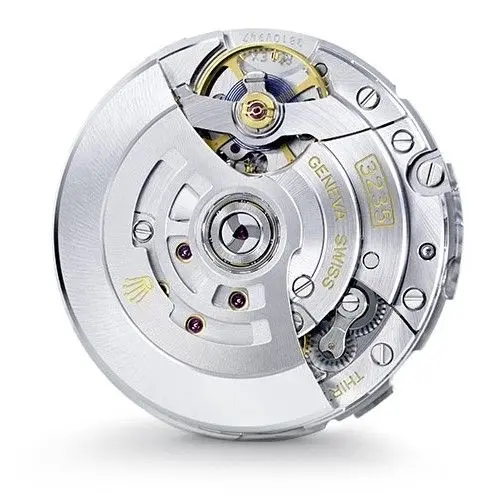
Traditional for Dive watches, automatic movements remain popular among enthusiasts. These movements use a rotor that spins with the wrist motion to wind the mainspring, eliminating the need for manual winding or battery replacement.
Automatic movements in dive watches usually offer power reserves of 38 to 72 hours, but some models have even 100 hours. Accuracy ranges from several seconds per day in basic movements to near-chronometer precision in high-end calibers.
It appeals to the romantic side of us who appreciate the mechanical art and engineering behind an automatic movement.
Why dont we have manual winding movements in Divers?
Because it’s not very practical. Maybe the diver will forget to wind the watch and it will not have any use for it while underwater. In the 50’s 60’s or even later, a mistake like this could have cost the divers life.
Also, the sweeping seconds hand motion and the visible craftsmanship seen through exhibition case backs is special, it’s the factor that makes a watch a jewelry. In my opinion, of course.
However, keep in mind that an automatic movement requires periodic servicing, usually every five to seven years.
Quartz Movements
Technically these are the best movements ever created. High accuracy, minimal maintenance and lower costs compared to mechanical ones.
Still, I think they have no soul! These battery powered movements maintain accuracy within seconds per month rather than per day as in mechanical ones.
The battery usually has power for two to five years. Which is convenient. But like me, there are a lot of watch enthusiasts that dismiss quartz dive watches and usually are less desirable than mechanical versions.
For actual diving, the quartz accuracy and reliability is desirable and beneficial. Many professional divers actually prefer the quartz dive watches because it requires less maintenance and maintain accuracy.
There are some high end quartz movements from Grand Seiko or Breitling that achieve exceptional accuracy, some of them approaching one second per year deviation.
Solar and Kinetic Movements
Solar powered movements are an evolution of quartz technology, using light energy to recharge the batteries or capacitors. These movements offer great accuracy without battery changes, it is enough for the watch to be in contact with light and it is recharged.
The most known and appreciated Solar Movements are Citizen’s Eco-Drive and Seiko’s Solar movement. Once they are fully charged, watches with this type of movement can work for months in complete darkness, once they get regular light exposure will never stop working.
Seiko’s Kinetic technology combines the automatic movements with quartz ones. It a has a rotor, similar to the one on automatic calibers that generates electricity to charge a capacitor which powers the quartz movement.
This hybrid approach takes the best from both worlds, offering quartz accuracy and automatic watch convenience.
But, it’s worth mentioning that Kinetic movements are not as popular as pure quartz or mechanical alternatives.
Choosing Your Dive watch
It’s not easy to select the right dive watch and it requires multiple factors to be taken into consideration based on your specific needs and preferences. In my case I take into consideration their history, both brand and the watch model. But we are not the same. So I will try to explain multiple options.
Intended Use
OK, we all agree that watches are not used anymore for their intended purposes. We have time displayed on our phone, computer etc. Basically where we look we can see the time. Some of us, and the numbers are growing, we still prefer “traditional” time telling, that’s why we use watches.
I’m pretty sure that divers are not using watches anymore to time their diving because they have better performing computers on their wrists. Also we have smartwatches. But, it might still be people that will use the watch for its intended purpose. Just for the fun of it.
So the question is : Are you a recreational diver who will actually use the watch underwater? Or a desk diver (like me) who appreciates dive watch aesthetics but won’t dive? Or maybe something in between?
I don’t know how to swim, so I’m not gonna dive with my watch, but I will spoil him in a small pool.
Actual divers should prioritize functional features like great bezel rotation, excellent lume, robust construction and comfortable bracelets. A 200 meters water resistance usually is sufficient, but if you do this more often, I suggest at least 300 meters.
Also keep in mind that quartz movement offers more practical advantages.
For desk divers and watch enthusiasts the looks and collecting goals may outweigh pure functionality. You can appreciate premium materials, chronometer movements and specific design details without considering underwater performance.
For me it is a must. I want to be sure that even though I will never dive underwater, I want to know that the watch can do it!
Size and Proportions
Traditionally dive watches feature large cases for maximum legibility underwater. Vintage dive watches typically measured 36 to 42 millimetres in diameter while modern dive watches exceed 44 millimetres in some cases. Of course due to the demand of the people, manufacturers started to produce dive watches in smaller dimensions as well.
Case diameter must be considered alongside lug to lug length, this way you can determine how the watch will fit your wrist. For example a watch with 42 millimetre in diameter but with 52 millimetre lug-to-lug length might be too big and overwhelm small wrists despite his moderate case diameter.
My recommendation is to try the watch in person first because a watch might look perfect in photos, but in reality you might not like it as much as you thought. Vice versa applies as well.
Keep also in mind that dive watches are actually tool watches meant for active use so the comfort during movements is really important and matters more than appearance.
Material Selection
You have to keep in mind that different materials impact durability, cost, weight and design. Stainless steel remains the most popular choice because it has proven durability and classic appearance. But you should take into consideration that in this case, the bigger the watch, the bigger the weight.
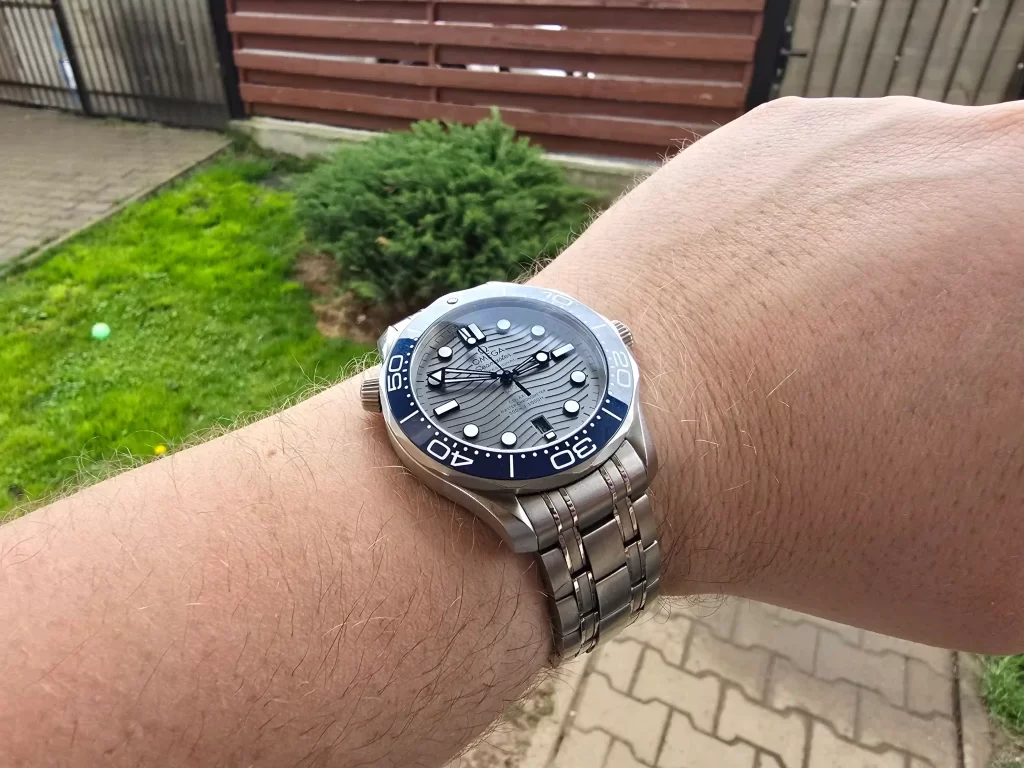
For example, in my case, I can’t wear the Omega Seamaster for more than a day, my wrist is starting to feel tired and sometimes it just hurts.
If you are like, or you want to wear your watch daily, then consider Titanium. I have a Bel Canto made of Titanium and it’s by far the easiest watch to wear for multiple days.
Titanium doesn’t sacrifice the strength of the watch, but it makes it way lighter. Also, it has hypoallergenic properties in case you have some metal sensitivities.
Bronze is becoming, or has become already more popular because it develops an unique patina over time. Bronze cases age visibly, developing greenish or brownish patina based on exposure. I personally am not really a fan of Bronze watches. Who knows maybe someday I will be.
Opposed to bronze , Ceramic cases offer the best scratch resistance and maintain a perfect appearance for life! However, you can damage ceramic cases or bracelets and repairs are difficult or even impossible to repair when damage occurs.
Movement Preference
In this case it often comes down to personal preferences or philosophy. I personally prefer and appreciate tradition, so the way to go for me is automatic movements because of the connection with watchmaking heritage. I love the sweeping second hands and visible mechanics through case backs.
But if you are interested in superior accuracy, then quartz movements are better, have minimal maintenance and lower cost. For actual tool watch use, quartz makes compelling practical sense.
You need to consider long term costs when choosing movements. Mechanical ones require service every five to seven years and it is not cheap at all, especially if you have a Swiss Made watch. Quartz movements on the other hand need only battery changes until the movement fails.
Budget Considerations
If you are like me, you desire a lot of watches, some expensive, some more affordable. The point is, normal people like us wont afford to buy anything they want. And we will have to live with that.
Dive watches span enormous price ranges, from under $100 to hundreds of thousands. My advice is to inform yourself about different watches, brands, go in the store and try them on and then set a budget. If the watch is very expensive, more than $10,000 , my advice for you is to wait until you can spend that much money.
Don’e buy watches to scratch the itch for a submariner, it’s better to save money until you can afford your dream watch. So establish the watch you want and also the budget. It is important to understand what different price points offer.
Entry-Level Dive watches from reputable brands like Seiko, Orient and Casio provide a genuine dive watch functionality and quality construction. These watches provide great value and sometimes they exceed the performance of watches that cost ten times more.
Mid-Range dive watches from brands like Oris, Longines, Sinn and Tudor offer great finishing, excellent movements and brand prestige and history while maintaining reasonable prices. In my opinion this segment provides the best balance of quality and value for many watch aficionados.
Luxury Dive Watches command premium prices based on brand positioning , finishing quality, manufacture movements and strong resale value. Some brands that are worth mentioning are Blancpain, Omega, Rolex or Audemars Piguet.
These are not the only brands that produce dive watches, there are many more but it will take too long to mention all of them. You can always check this list of Brands and if your favorite brand is not there, let me know.
These watches serve both as tools and investments, but expecting a watch like Omega to appreciate significantly or at all, is generally unwise. The same goes for buying watches as an investment.
Popular Dive Watch Brands and Models
When we say popular brands, we mean the ones that are iconic and everyone knows about them even though they are not really into watches. So we will talk a little about the major players in Dive watches category.
Rolex Submariner
Rolex Submariner defined the dive watch category and it probably is the most iconic watch in this field. It was released in 1953 and established some design elements that were copied by other watches.
The current generation of Rolex Submariner comes with a 41 millimetre case, 300 meters water resistance and with the caliber 3230 which has a 70 hour power reserve.
Rolex Submariner is the most desired watch and his fame extended beyond his category, becoming a cultural icon status. Submariner appeared in James Bond films which cemented its place in popular culture.
The design evolved gradually and maintains its core elements while incorporating modern materials like Cerachrom bezels.
Omega Seamaster
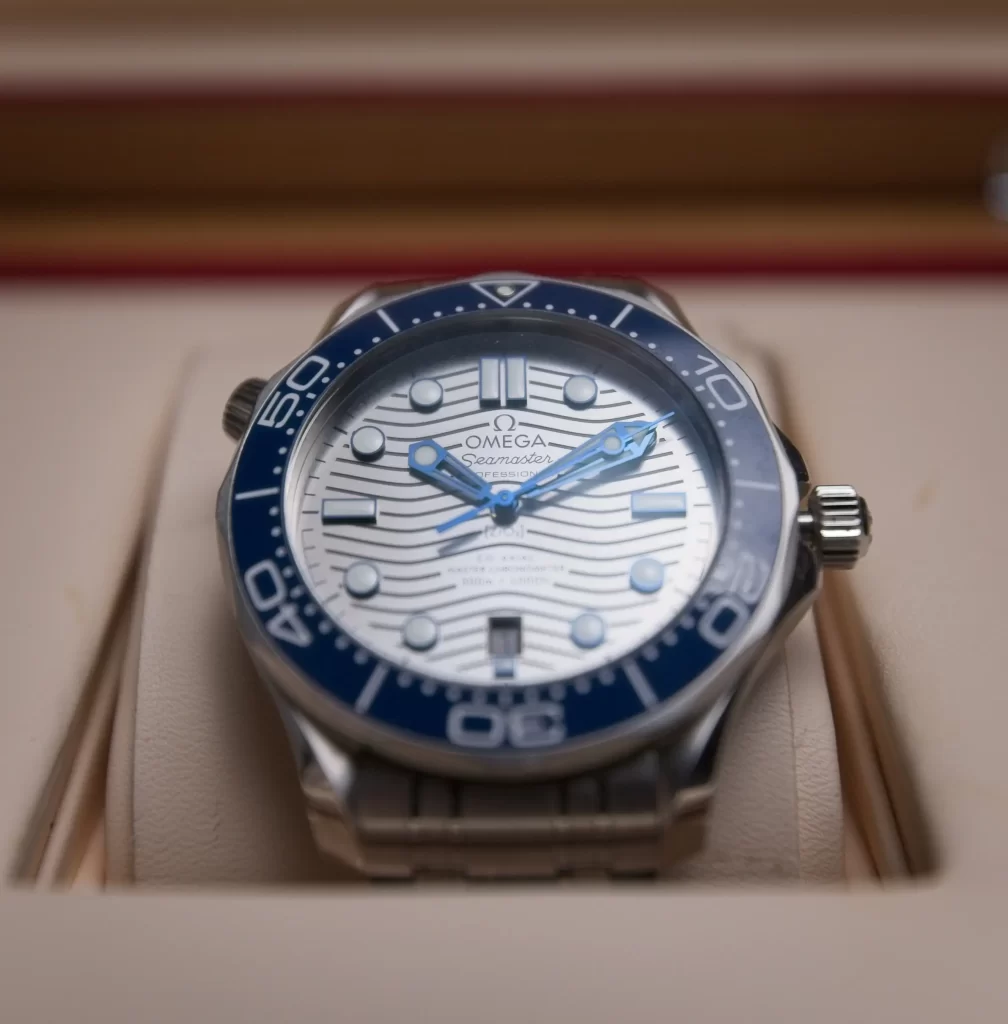
The Seamaster line traces back to 1948, but the current Seamaster Professional 300M defines the modern collection. The watch has a 42 millimetre case, a visible helium escape valve and has beautiful distinctive wave patterns on the dial.
Omega Co-Axial movements have great accuracy and offer extended service intervals. A great movement that proved his reliability in time.
Fame came later for the Seamaster, more exactly in 1995 when the watch appeared in the GoldenEye movie on the wrist of James Bond.
Unlike the Submariner tool watch aesthetic. Seamaster incorporates more decorative elements while maintaining his diving capabilities.
Seiko Prospex
Seiko entered the dive watch market in 1965 and they have produced numerous models, some of them being fans favourite from around the world.
The current Prospex line includes everything from the very affordable SKX series to professional grade Marine Masters which are rated for 1000 meters.
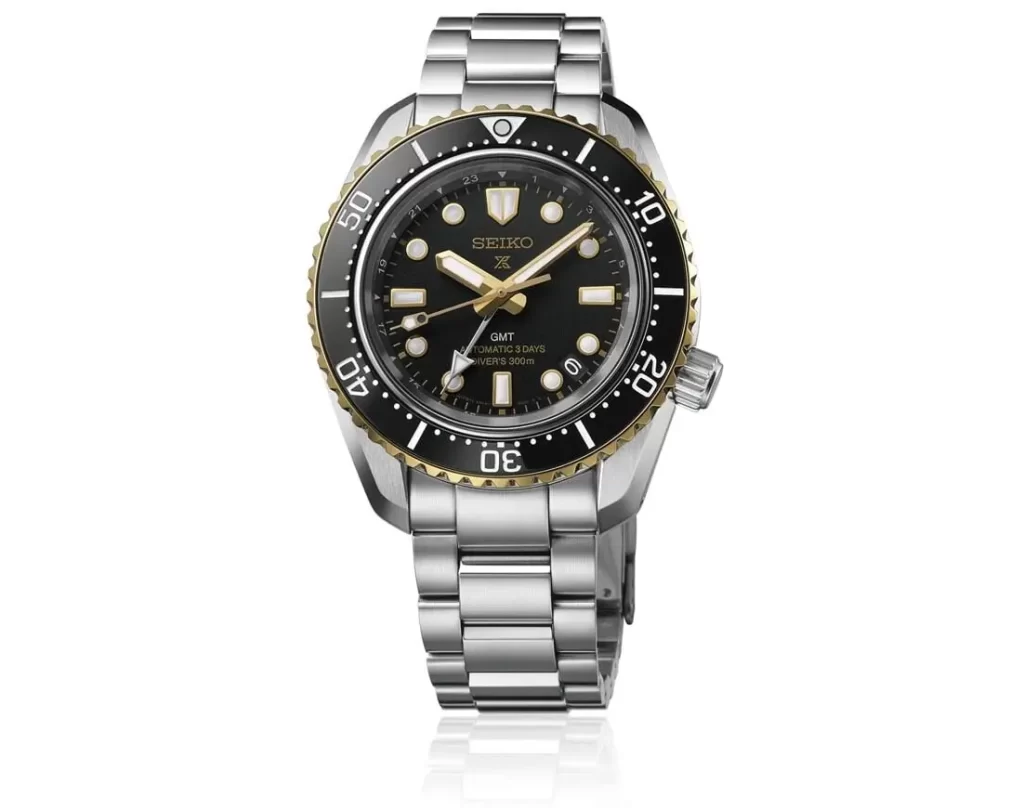
Recently they launched Prospex 1968 Heritage Diver, a superb watch with GMT function.
Seiko dive watches usually offer exceptional value, having in-house movements that are reliable. The brand spring drive technology combines mechanical and quartz elements appears in high-end Prospex models offering unique characteristics.
Blancpain Fifty Fathoms
I don’t think it’s very appreciated honestly. I don’t usually see pictures shared by people that own it, and no one ever asked me about this watch. But I will mention it because it is the model that settled the standard for dive watches as we know it.
It was introduced in 1953 for French Navy combat swimmers and pioneered the unidirectional bezel and established dive watch design principles.
Modern Fifty Fathoms pieces maintain the original spirit but it also incorporates luxury finishing.
Fifty Fathoms sit at the luxury end of the dive watch spectrum, it is appreciated by serious collectors and diving enthusiasts alike.
Tudor Black Bay
Tudor is Rolex’s sister brand and has achieved great success with the Black Bay collection. This collection is vintage inspired and it captures 1950’s aesthetics while delivering modern performance.
The Black Bay has a distinctive snowflake hour hand, gilt details and Tudor’s own movements.
Black Bay represents basically the sweet spot of quality, heritage and affordability compared to Rolex. It also comes in various sizes and colors and complications, basically this watch can be for everyone no matter what they prefer.
Dive Watches Bracelets and Straps
This is one of the most important aspects to take into consideration when you choose your dive watch. For example Omega Seamaster 300M is not very comfortable for me, I don’t like the buckle very much and I think it’s too big.
Dive watches come in different bracelets and straps, so do your research before choosing a metal strap or a rubber one.
Metal Bracelets
Metal bracelets are the traditional ones for dive watches, it provides durability , security and integrated designs. Three link Oyster style bracelets are most common, it offers robustness and enhances the tool watch appearance.
Quality varies in metal bracelets. Premium ones have solid links, solid end links with great finishing. Also they have micro-adjustments clasps which is a must in my opinion.
Some budget bracelets may use hollow links that feel cheap and might get damaged more quickly.
Diving extension is also a must because it allows the bracelet to expand accommodating wetsuit thickness. These can be a simple flip-lock mechanism or a more sophisticated sliding one. Some brands include a quick-adjustments system.
Rubber Strap
RUbber straps are perfect for actual diving and day to day wear. Water does not affect them, they are very flexible and secure. Modern rubber straps use various compounds from basic rubber to sophisticated material like FKM fluoroelastomer or Isofrane.
Quality rubber straps have smooth finishes, appropriate flexibility and very secure attachment systems. Usually rubber straps are more affordable than the metal bracelets and watches are a couple of hundreds cheaper than the ones on metal bracelets.
Some brands include rubber straps in the package alongside with the metal bracelet. Some watches look amazing on rubber, especially Ulysse Nardin Marine Torpilleur which in my opinion is a strap monster going basically with everything.
NATO Straps
There are some people who are obsessing over NATO straps putting them on all types of watches. I’m not really a fan but I can see the appeal.
NATO straps slip under the spring bars, threading through the case so the watch sits on top of the strap. If one spring bar fails, the watch will remain attached to the second one providing extra security.
NATO straps were originally military-issue straps, they became popular as casual alternatives for dive watches. These straps are affordable , comfortable and available in countless colors and patterns.
However, keep in mind that NATO straps add thickness between wrist and watch making it bulkier. Also take into consideration that not all watches will look good on NATO straps.
Leather Straps
Not the best choice honestly and it seems counterintuitive for dive watches because leather and water don’t mix really well. Leather straps are ok for casual wear or desk divers like me.
I don’t think that many dive watches will go well with leather when it comes to aesthetics, I know for sure that Rolex Submariner or Omega Seamaster would look hideous on a leather strap. But that’s just me. You do you!
How to maintain your Dive Watch
If you especially have an automatic movement on your Dive Watch, you need to take into consideration everything. The more you paid for the watch, the more it will cost you to service it. It’s not a rule, but in 99% of the cases it is like this.
Regular Care
If you swim with your watch, always, I repeat, ALWAYS rinse your watch with fresh water after exposure to chlorine or salt water. These chemicals can degrade gaskets and corrode the materials over time. Simple rinsing removes residues and extend case and components life.
Always ensure before entering a pool, a sea or an ocean, that your crown is fully screwed down. A forgotten unscrewed crown is the most common cause of water damage. Make this as a routine check before entering any water.
Also I recommend you, from personal experience, to always have the crown screwed down because the water is not the only enemy here, dust too.
Store your watch away from strong magnetic fields produced by speakers, MRI machines and other electronics. Of course, divers like Omega Seamaster have great anti magnetic resistance, but others like Rolex Submariner don’t. Strong magnetic fields can affect accuracy.
Servicing Requirements
Mechanical dive watches require complete servicing every five to seven years. Service involves a complete disassembly, cleaning , lubrication, gasket replacement and water resistance testing.
Costs for servicing range from a few hundreds to over a thousand dollars/euro depending on the watch complexity and manufacturer.
Water resistance tests should be performed annually if you are a regular diver or you expose the watch to water regularly.
These tests verify if gaskets remain functional and water resistance hasn’t been compromised. Many jewelers and watch shops perform pressure testing affordably.
When it comes to quartz movement, they need a battery chane every two to five years. If you are doing the change with a professional, he must inspect the gasket and make a water resistance verification. Your watch must remain water resistant after the change of battery.
Gasket Replacement
Gasket is really important because it seals the case back , crown and any pushers will degrade over time, no matter if the watch was exposed to water or not. These rubber or synthetic seals will dry out, compress and eventually will fail.
Regular servicing includes gasket replacement and if you don’t do it, your watch will be in big danger.
Crystal Protection
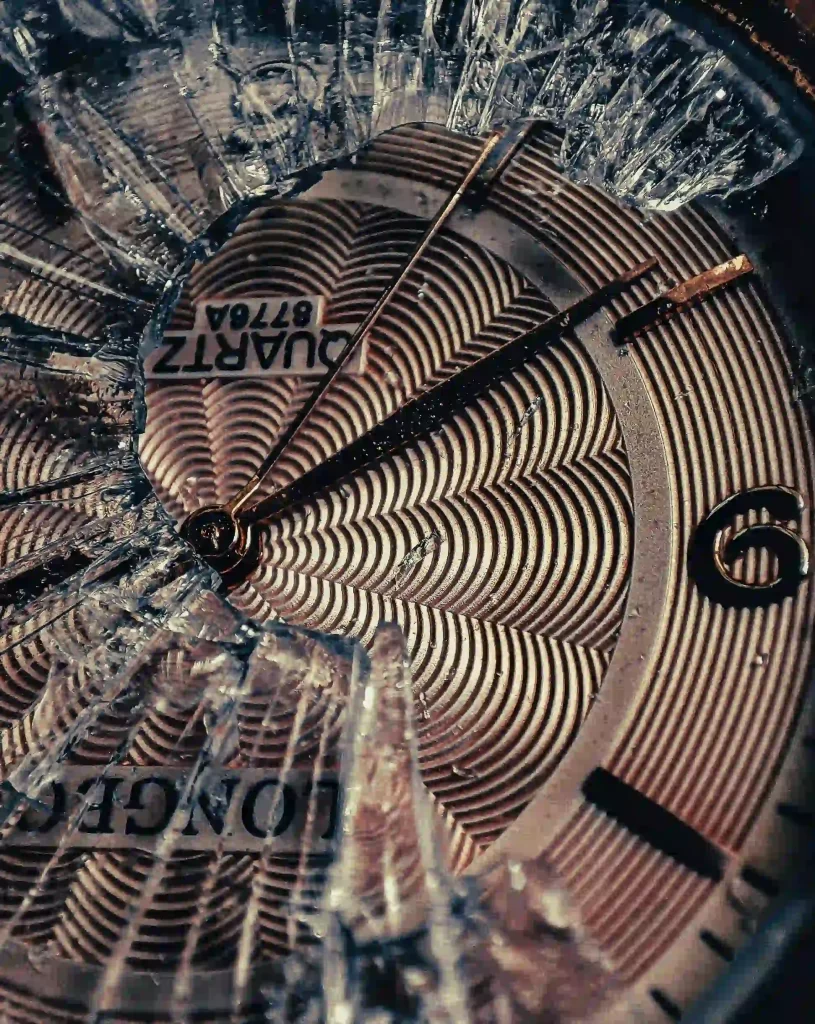
Sapphire crystal which is present on most dive watches, at least on the premium ones, is known for its extreme hardness. But still cracks can happen if you don’t pay attention and you hit the watch. Scratches are unlikely to happen though.
If you have crystal chips or crack, you need to go to service as soon as you can because a compromised crystal, especially a cracked one might allow water or dust to get in.
Professional Service vs Independent Watchmakers
It’s a tough choice. Not all people are professional honestly. You choose the one you trust more. Manufacturer services ensure original parts and trained technicians that will handle your watch at the manufacturer standards. Zero worries when you send your watch there. But keep in mind that will cost more.
Independent watchmakers can service most dive watches, some of them are experts, passionate about watches but for cost effective they might use aftermarket parts. If you have a watchmaker that you know for a long time and developed a relationship with, sure you can service your watch there.
But if you have valuable divers, like Rolex Submariner or AP I strongly recommend you to service the watch with the manufacturer because that way it maintains its authenticity and warranty coverage.
For divers like Seiko, the entry level ones, sure, you can use an Independent watchmaker.
Dive Watches vs Dive Computers
This part is mostly for people that are passionate about diving or professional divers. If you are a desk diver like me, this section is not for you!
What Dive Computers offer
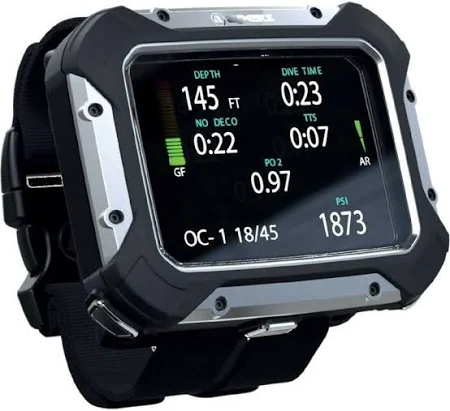
Dive computers track everything, depth, time, nitrogen absorption, decompression requirements and surface intervals. A dive computer provides critical safety information that watches cannot.
So, if you are a professional diver, it is probably better to get a dive computer, and use the watch only for the fun of it.
Modern dive computers are instruments that enhance diver safety. And this says it all.
Why Dive watches remain relevant
We already established that computers are superior for diving data. But dive watches remain popular among divers for several reasons. They are often used like a backup in case the computer fails or battery dies, or electronic malfunction etc. A mechanical dive watch continues to operate regardless of battery state or electronic failures.
Dive watches are more versatile and more attractive than a diving computer, you can wear the watch daily as a regular timepiece, while diving computers have only one purpose.
So the looks, craftsmanship and heritage of dive watches transcend the functionality.
Many divers wear both, watch and computer, using the computer for data and the watch to impress the ladies…just kidding.
Collecting Dive Watches
Dive watches are very popular, and almost any manufacturer has a line of Dive watches. Some of them are well known, others not so much. Take for example Hamilton, they have great field watches, or exceptional designs like Ventura Skeleton which was recently launched. But when it comes to dive watches, their line is not that impressive.
So keep in mind when you start your collection, do you want a well known diver? Or you just prefer the brand and it doesn’t matter if their divers are well known.
Building a collection
Many collectors focus their collections on dive watches, maybe because they appreciate the category history, maybe they appreciate the functionality and design diversity.
A dive watch collection might include vintage pieces as well, or modern interpretation for vintage releases, various brands and different movement types.
Staring with more affordable options allows exploring different styles, sizes and can give you a good idea about what you really like before you start investing in more expensive pieces.
You can build a collection spanning various decades, brands and price points that will not break your wallet.
Vintage Dive Watches
Vintage dive watches might offer historical appeal to some of you that appreciate values and historical meaning. However, buying vintage dive watches is not that easy because it requires expertise in order to avoid fakes or frankenwatches which have mixed parts.
Critical factors for vintage dive watches include original components, service history and of course condition. If the watch has refinished dials, replaced hands and aftermarket components, it will affect his value significantly.
Patina usually is desirable on dials and hands, but not when it crosses to damage or corrosion.
You need to work with reputable dealers especially when you are buying a vintage piece or high value pieces. Authentication is crucial!
Value Retention
Don’t enter this hobby thinking you will make money. There is a small percentage of watches that will hold their value well, particularly Rolex with their model Submariner, but even that is somehow fake. We will go into those details in another article.
Strong demand, controlled production and brand prestige maintain high resale values. However, the vast majority of watches depreciate instantly after the purchase. Just like cars.
Buying watches as an investment is a very bad idea. Buy the watches you love to wear, that makes you feel good and treat the value retention like a bonus, rather than an expectation.
Dive Watch Guide – Conclusion
Dive watches represent the perfect combination of form and function. From their origins as necessary tools for divers, to their current status as icons and everyday timepieces, dive watches have evolved beautifully while maintaining their true identity.
The dive watch category offers something for everyone, from affordable Seiko models to grail-level Rolex Submariners or everything in between.
I hate adding a conclusion heading, it makes it sounds like this was written by AI. But damn, it took me like 10 hours to just write it, nevermind the research I had to do. This was just a side note, a relief that I am at the end of the article.
So, there it is, everything you need to know about dive watch, what makes them special, how many brands are there and which ones are the most popular. How to take care of your watch and how to buy them.
It’s just information I gathered. My personal advice to you my reader is…Have FUN! Enjoy your watches, don’t chase the best ones or the most popular ones just because someone on Reddit or social media thinks Rolex is the king. No watch is the king and every watch is the king! Rolex submariner might be the king to you, but to me might just be an overpriced watch. Same goes for Omega Seamaster or any other model out there.
Enjoy it!





Brilliant article and a lot useful information about dive watches.
Thanks .R
Thank you very much!