Swiss made watches represent the highest excellence when it comes to horology, it combines precision engineering and centuries of craftsmanship. And for us collectors this label means more than just a country of origin, it’s a guarantee of quality, reliability and elegance. This label made Switzerland the undisputed leader in luxury watchmaking.
But how did we get to this? And is it still relevant today?
Swiss Made History
The labeling started to appear on watches in the 17th century, when watchmakers from Geneva started to stamp their timepieces in order to certify quality and to simply distinguish themselves amid growing competition. The use of the label or Swiss origin evolved over centuries as Swiss watchmaking grew in reputation.
By the late 19th century , “Swiss Made” was formally adopted and legally protected by the Swiss Federal Council which introduced trademark protections and use criteria to safeguard Swiss Watchmaking and quality in 1891.
Hallmarking and standardized use or marks related to Swiss origin started in 1880 when the Swiss Precious Metals Control Act was introduced which mandated government-controlled assay offices and practices.
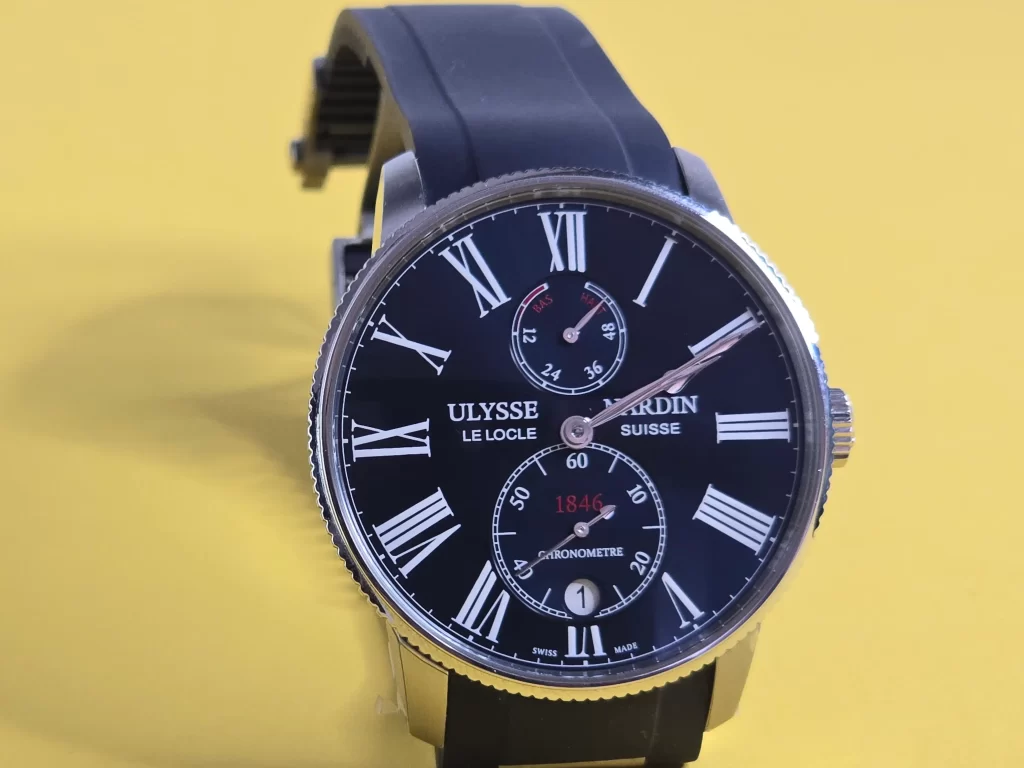
In the beginning some watchmakers only added “Swiss” on their watches. Something that we see even today on some models inspired by some vintage models, like the Ulysse Nardin Marine Torpileur, which I reviewed. Of course, they added “Swiss Made” at 6 o’clock, but for more nostalgic people, Suisse is present on the dial as well.
This label became an official mark of high quality watch production and a means to protect against counterfeits and foreign imitations.
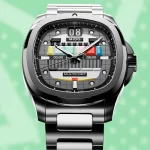
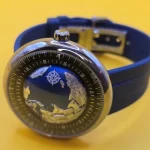
Swiss Made is present on watches from entry level luxury to high end luxury as well, like Omega Seamaster, Tissot PRX, Mido S01E02 or the Titanium version of the Multifort TV Big Date or even on the higher end pieces like Freak S Enamel or Louis Vuitton Monterey

1971 Modern Swiss Made ordinance. Ordinance on the Use of ‘Switzerland’ or ‘Swiss’ for Watches,
This was a pivotal legal framework for regulating the use of Swiss Made labels on watches. It was enacted by the Swiss Federal Council on December 23, 1971 and it defines strict criteria for what qualifies as a swiss watch. Basically it is the foundation of what we have today, and the key points introduced in 1971 are pretty much the same, with some exceptions.
Key Points of the 1971 ordinance include:
- Watch technical development must be made in Switzerland
- The watch movement must be Swiss. This means that the movement must be assembled in Switzerland, inspected there and contain components of the Swiss manufacture at least 50% of the value, excluding assembly cost.
- The movement must be cased up in Switzerland
- The final inspection must be made in and by manufacturer in Switzerland
- At least 60% of the manufacturing cost of the watch must be generated in Switzerland.
So basically the ordinance wanted to protect the heritage and reputation of Swiss watchmaking by ensuring that the process of creating the watch is still made in Switzerland and the implications of the manufacturer is beyond just assembly.
The ordinance was amended several times since 1971, with significant revisions in 1995 and 2016 which aimed to further strengthen the protection of the Swiss Made label.
The revision made in 2016 especially expanded the criteria, requiring at least 60% of the manufacturing costs of the entire watch, not just the movement, to originate in Switzerland.
Below you have a table which shows what exactly was added in each year.
| Criteria Aspect | 1971 Ordinance | 1995 Revision | 2016 Revision |
| Movement Swiss Requirement | Movement must be Swiss: assembled in Switzerland, ≥50% Swiss component value (excluding assembly) | Movement must be Swiss; increased clarity on component value | Movement must be Swiss; ≥60% of movement component value must be Swiss |
| Manufacturing Cost Location | ≥60% of manufacturing costs must come from Switzerland | Strengthened focus on manufacturing costs in Switzerland | ≥60% manufacturing costs of entire watches must be Swiss-based (not just movement) |
| Assembly | Movement cased in Switzerland | Assembly in Switzerland emphasized | Entire watch assembly in Switzerland |
| Final Inspection | Conducted in Switzerland by manufacturer | Final inspection required in Switzerland | Final inspection must be Swiss |
| Technical Development | Must occur in Switzerland | Emphasized but less specific | Technical development must be Swiss |
| Scope of Cost Percentage | Manufacturing costs generally covering movement and parts | Expanded scope, more cost elements included | Full watch manufacturing costs must meet the Swiss threshold |
| Purpose/Focus | Protect authenticity; combat counterfeits | Tighten standards to protect Swiss watchmaking reputation | Strengthen Swiss identity in global market; holistic approach |
Does Swiss Made Guarantee Quality?
Well, no! But it does guarantee the adherence to strict production standards, which can translate into quality? The thing is I have seen Swiss Made watches in this life with lower quality than other non swiss made watches. For quality we need to rely more on brands with history that emphasises quality of their work and want to give their clients the best watch that they can make.
Is there a Watchmaker that makes their watches 100% in Switzerland?
Some say they do, but it’s not a guarantee that they are telling the truth. From what we know, brands like Rolex, Jaeger-LeCoultre (JLC) or Audemars Piguet are known to produce a large percentage of their components in-house within Switzerland.
I heard people saying that Roger Dubuis is making 100% of their watches in Switzerland, but I can’t confirm it. Also the brand Ultramarine markets themselves as fully SWISS manufactured.
In reality it’s hard to tell and I don’t think that major brands make literally every single component in Switzerland. But some of them are close to that. Some components like dials, crystals or jewels might be sourced from outside of Switzerland due to costs.
Most commonly sourced components outside of Switzerland
As we already know, a lot of brands, even the big ones, outsource a part of the components in order to cut costs and still be compliant with Swiss Made regulations.
The most common components that are not made in Switzerland are:
Watch Crystals – often are produced by specialized manufacturers globally from countries like the USA, China or Japan. There are Swiss producers, but the brands outsource from other countries do the costs of synthetic sapphire production.
Straps and Bracelets – Leather straps are sourced from Italy or France usually, due to their high quality, but the metal bracelets come from Asia. These are often customized or designed by Swiss brands but produced outside of Switzerland.
Small mechanical parts – Many critical movement components are Swiss , but some lower complexity parts like screws, pins, some gears and springs can be sourced from international suppliers especially from Asia or Eastern Europe countries.
Packaging and Accessories – Manuals, boxes or additional accessories are usually produced outside of Switzerland to reduce the cost.
This is Swiss Made, the hard part of the watchmaking is made in Switzerland, but the easy part, that can easily be outsourced, it’s definitely outsourced. Is it good or bad? I don’t know! We can see that in recent years the Swiss regulator has tried to tighten the rules which are not received well by manufacturers. Does that mean we get better watches? Not really, but we might get more expensive ones.
In the end it doesn’t matter. You don’t need a Swiss Made watch to have a good watch, look at what Grand Seiko is doing, or German manufacturers. The point is that you can get a watch without a Swiss Made stamp and be an extraordinary watch.
I hope this article shined some light about Swiss Made Watches. I also wrote another comprehensive guide about Dive Watches, give it a read if you want!