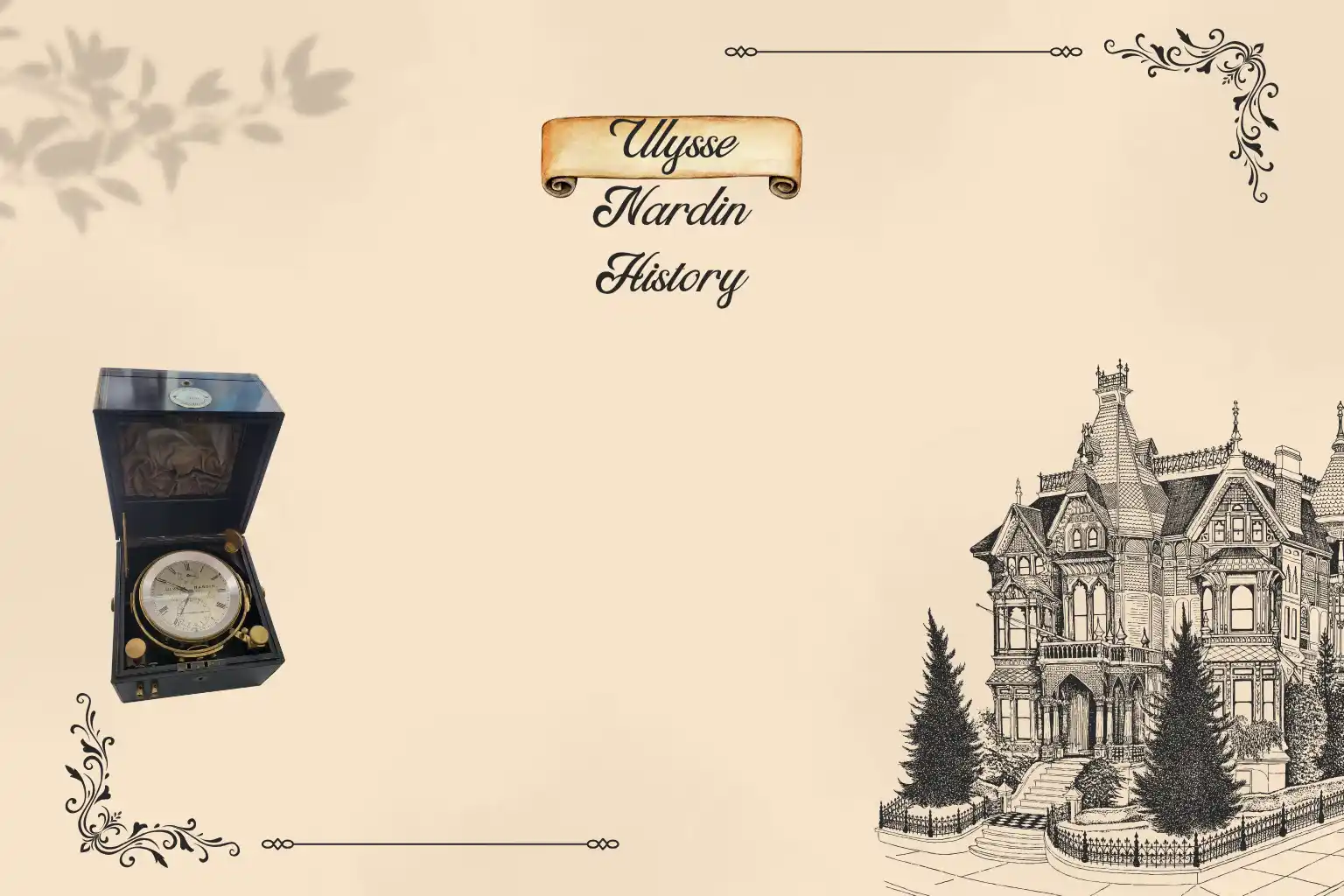
Ulysse Nardin History is an article that I planned to write for a long time. When you think about Swiss watchmaking or haute horology, brands like Patek Philippe or Audemars Piguet come to mind first. At least for the majority of people. But there is a brand that I discovered some years ago, and it strongly attached to me.
Ulysse Nardin deserves a spot alongside the giants of the industry because they are an important part of the watch industry and the history of it.
What makes this brand stand out? Not just their history, that’s for sure. I think it’s the combination between their technical ambition, artistic boldness and genuine passion for watches. I witnessed that some years ago when I was visiting their factory.
In my opinion Ulysse Nardin is not just another brand that just makes another watch, it’s a brand that focuses on high quality watches that makes you feel good when you wear them.
In this article I’m planning to explore their history, and I hope you are coming on this journey with me. What makes Ulysse Nardin special? We will find out in this article. And if you want more History Articles, you can check out the History of Tissot and the History of Atlantic watches.
Founding and Early History
Ulysse Nardin was founded in 1846 in Le Locle, a small town in the Jura Mountains, which is considered to be the heart of Swiss watchmaking. The founder was Ulysse Nardin himself, the son of Leonard-Frederic Nardin, who was a respected watchmaker in the region, specialised in minute repeaters.
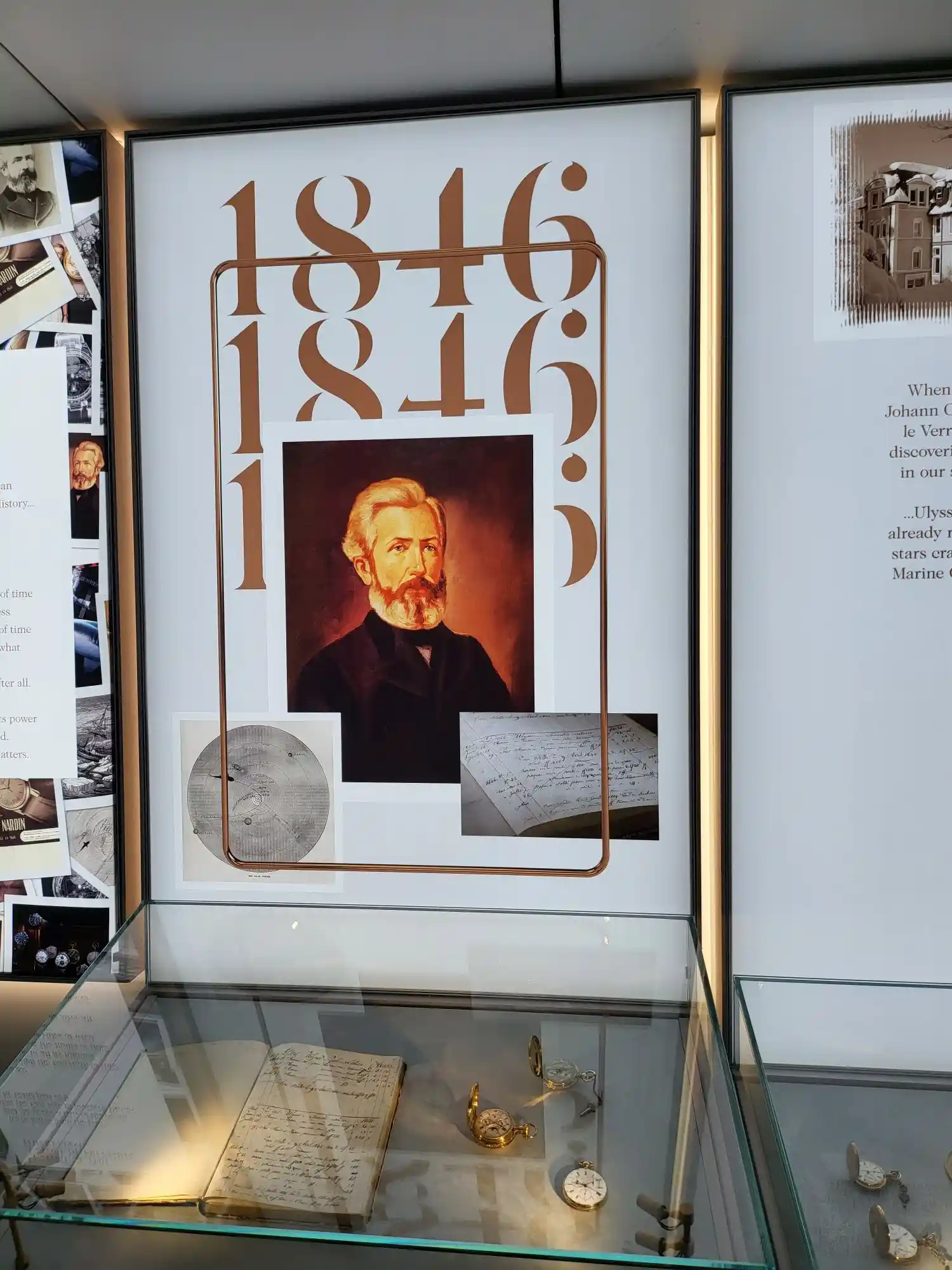
Ulysse was a pupil of Louis Richard and William Dubois, together they teached and helped Ulysse understand that the level of accuracy he was aiming for would require a new approach to watchmaking.
From the beginning, Ulysse had a clear focus, he wanted to make precision instruments, not just decorative pieces. His early work centered most of the time on pocket watches, but most importantly on marine chronometers.

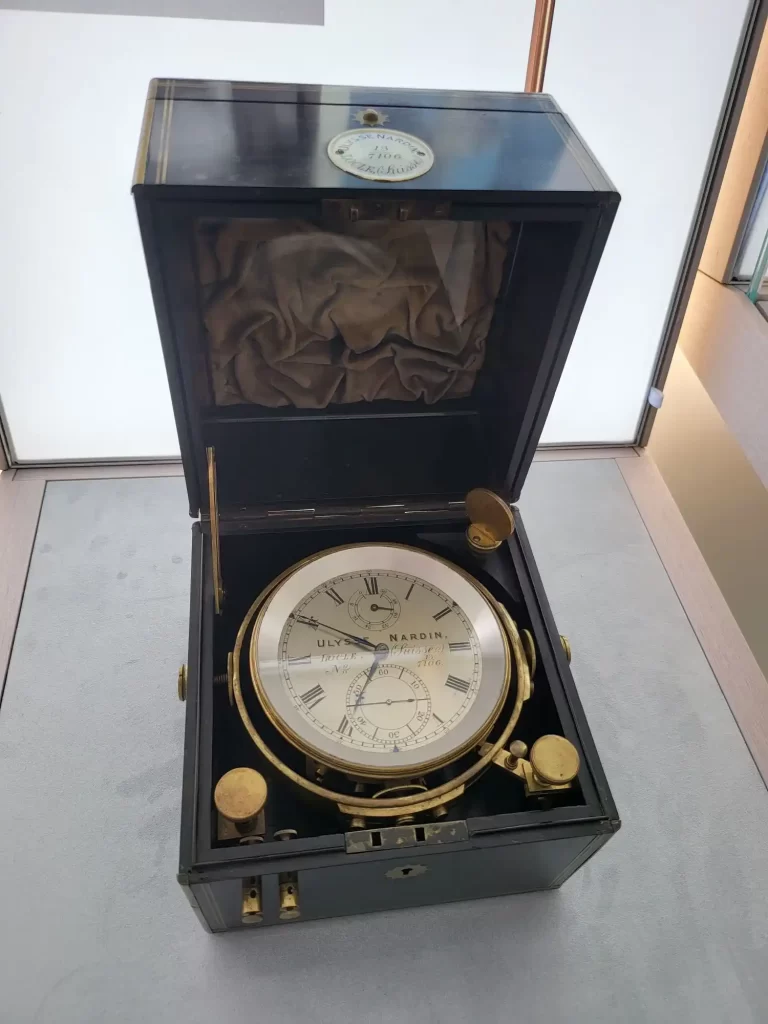
Marine Chronometers were specialized timekeeping devices used by naval officers and sailors to determine their exact position at sea. Back then GPS didn’t exist, so accurate timekeeping was a matter of life and death on the ocean because a ship that couldn’t tell accurate time couldn’t calculate its longitude and miscalculation could mean getting lost on the sea.
Ulysse Nardin took this responsibility very seriously and developed chronometers that were reliable under salt air, humidity, temperature changes and constant vibrations from ocean waves. The reliability and precision of his instruments earned Ulysse Nardin a reputation that spread quickly beyond Switzerland.
It all started when Ulysse Nardin was 23 years old, he took a loan of 500 francs from his father to fund his brand. At first his little shop was in the attic of his father’s home.
He was successful in producing accurate, complex pocket watches, including models with 8-day power reserve, a complaint calendar with moonphase and foudroyante seconds.
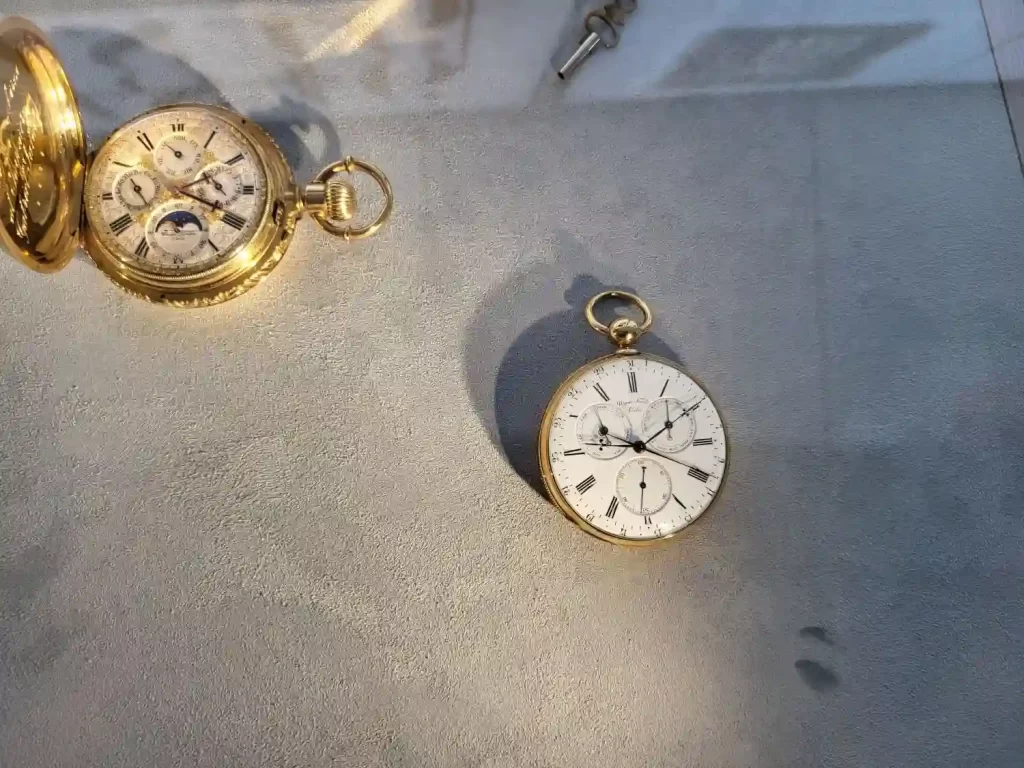
But remember, his dream was to create accurate chronometers, so in 1860, in a bold move that could have cost him his business, Ulysse invested in an observatory-grade precision regulator clock which was known as an astronomical regulator.
This very expensive tool allowed him to set and measure accuracy of his watches very precisely, becoming the most important tool of his workshop. So important that when his workshop was on fire, the astronomical regulator was the first thing he saved.
Two years after he acquired the astronomical regulator, Ulysse Nardin was winning the first of many gold medals in chronometry at the London Exhibition in 1862. But his ambition wasn’t the prizes, he wanted to dominate the field of accuracy and to be the best timekeeper in the world, and for that he needed to dominate the marine chronometers industry.
Unfortunately, Ulysse Nardin didn’t lived to see his watches dominate the marine chronometer accuracy, he passed away in 1876, but in his last years, he trained his son, Paul David Nardin, and he will continue what his father started, leading to his first gold medal shortly after his father died. Later he realised the dream of his father and Ulysse Nardin became the most accurate marine chronometer.
Ulysse Nardin History – Milestones and Innovations
Once Ulysse Nardin started, they couldn’t be stopped. Between 1846 and 1914, the brand won over 4300 first prizes and observatory diplomas in precision chronometry tests held around the world.
Observatory tests were scientific, rigorous evaluations of a watch accuracy. Winning a trophy was a big deal back then and winning thousands of them…well that put Ulysse Nardin in a category of its own.
During this period of time, the marine chronometers produced by Ulysse Nardin were adopted by more than 50 of the world’s naval forces and merchant fleets. Among the most important ones we can name: United States, Russia, Germany and France.
An important chapter in Ulysse Nardin life came later, in 1980’s when watchmaking legend Rolf Schnyder bought the company and brought in a Bavarian engineer named Ludwig Oechslin. What happened next was a revolution in mechanical watchmaking.
In 1985 Ulysse Nardin released the Astrolabium Galileo Galilei, a wristwatch that could show the position of the sun and moon, indicate eclipses and show the time of sunrise and sunset for any location on Earth! The watch was inspired by medieval astronomical instruments and was named after the great Italian Astronomer. Of course, the watch was immediately recognized as a masterpiece of mechanical engineering,
This was just the beginning though, in 1988 the brand released Planetarium Copernicus, a watch that displayed the position of all the planets in the solar system in real time. Keep in mind this was on a watch, with mechanical gears…
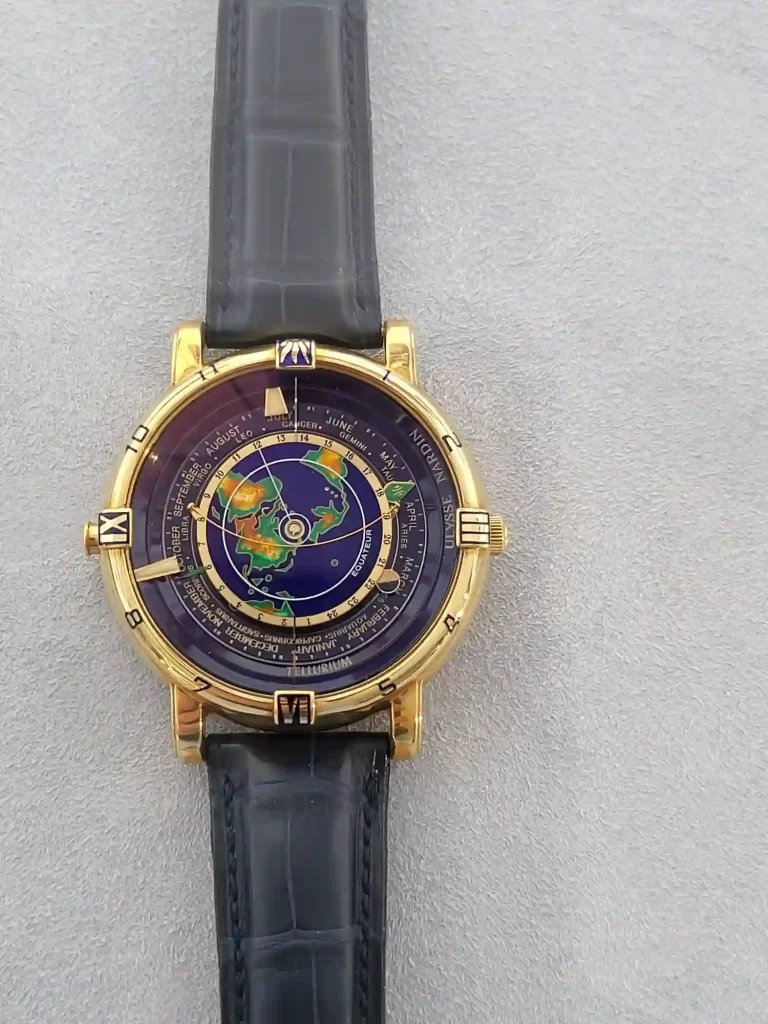
Then came Tellurium Johannes Kepler in 1992. Together, these 3 watches became known as the “Trilogy of Time” and established Ulysse Nardin as the leader of astronomical complications. Also, the “Trilogy of Time” is now part of the permanent collection of the Time Museum in Rockford, Illinois, which is one of the most respected horological museums in the world.
Let’s not forget about the Freak, first introduced in 1999, a watch that changed the industry. The Freak had no dial, no crown, no hands, nothing that a standard watch would have. Yet, it kept perfect time with a movement that rotated around the dial acting as a hand.
They used and still use silicone escapement, which they pioneered and now it’s used by several major watch brands around the world.
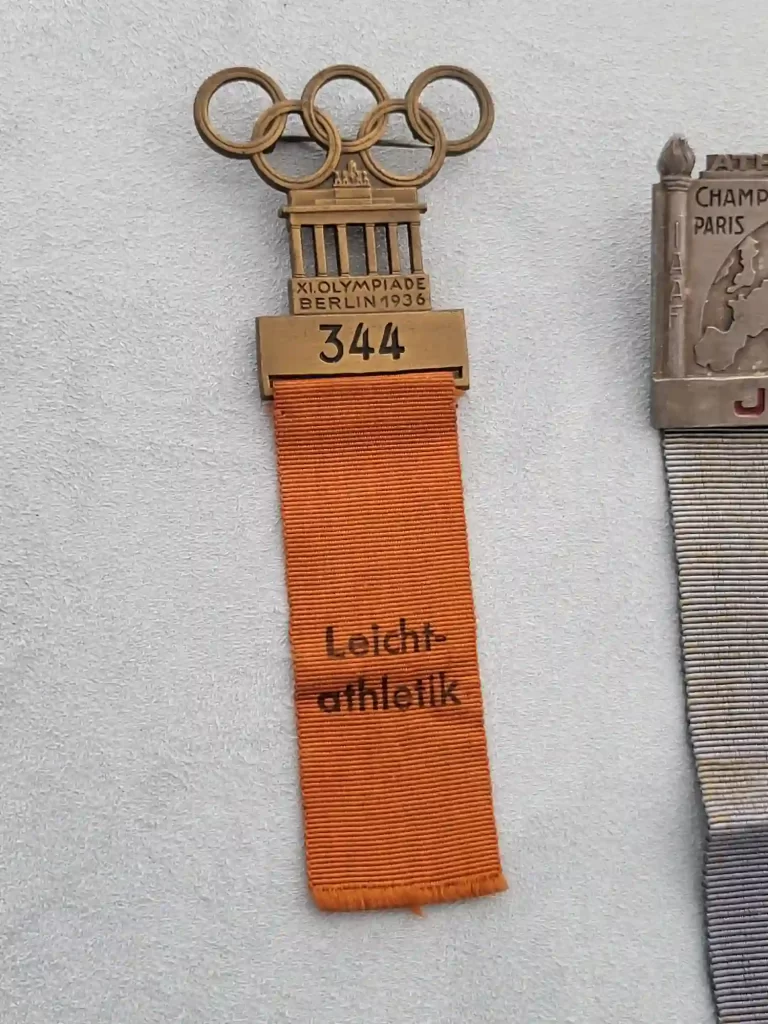
It is worth mentioning that Ulysse Nardin chronometers were used by officials to track time at Olympic Games from 1936 held in Berlin and Olympic Games from 1960 held in Rome. Good thing that Hitler’s watch wasn’t an Ulysse Nardin. He would have ruined it for all of us.
Cultural and Historical Impact
For what they did in the past, Ulysse Nardin had a great influence on history, honestly more than other brands can say about themselves. When you provide chronometers for naval fleets during wartime, it’s not about just selling watches, it’s about contribution to military operations and the navigation of ships that layered a role in world events.
In both World Wars, accurate timekeeping was critical to naval strategy. Ulysse Nardin chronometers were aboard on many vessels helping officers to navigate and coordinate. The brand was present on more than 50 navies around the world which means their tools were part of the most significant maritime operations of the 20th century.
On the watchmaking side, Ulysse Nardin focused on creativity that separates them from more conservative Swiss Made watch brands. They produced watches with great enamel artwork, engraving, and sculptural dials that crossed the boundary between watchmaking and fine art. The Jade collection for example, features dials with hand-painted motifs and detailing that take artisans a lot of time to complete.
From the 90’s, Ulysse Nardin embraced provocative designs. Some of the limited pieces featured risque automaton figures, which are mechanical figures that move when a button is pressed.
Ulysse Nardin History – Modern Era
Their new chapter began in 1983 when the brand was acquired by Rolf Schynder. At that time Ulysse NArdin was struggling, like most of the Swiss watchmaking industry due to the quartz crisis of the 1970’s which devastated the Swiss mechanical watch brands.
The partnership with Ludwig Oechslin proved to be the correct one and it became one of the most productive relationships in modern horology. Together they transformed Ulysse Nardin from a struggling chronometer maker into a pioneer of avant-garde mechanical watchmaking.
In 2014, the Kering Group acquired Ulysse Nardin. Kering is a French Luxury conglomerate that owns brands like Gucci, Saint Laurent or Balenciaga. At that time, it seemed like this was an exceptional move, because the brand started to have access to significant resources and global distribution networks.
But, the love affair wasn’t that great. Around 2022, CEO of Ulysse Nardin, Patrick Pruniax which I met personally when I was visiting their factory, led a management buyout of Ulysse Nardin and sister brand Girard-Perregaux from Kering.
So the buyout gave the brand back its independence. They are now grouped under Sowind Group SA, an independent entity that is based in La Chaux-de-Fonds, Switzerland. And my personal opinion is that for a brand with the DNA of Ulysse Nardin, this independence is a natural fit.
Today, Ulysse Nardin produces several key collections. The Marine, which is a direct nod to its chronometer heritage and remains one of its most recognized lines amongst the enthusiasts. I personally own a Marine Tourpilleur which I love, and my personal belief is that it is one of the best watches you can buy at the moment.
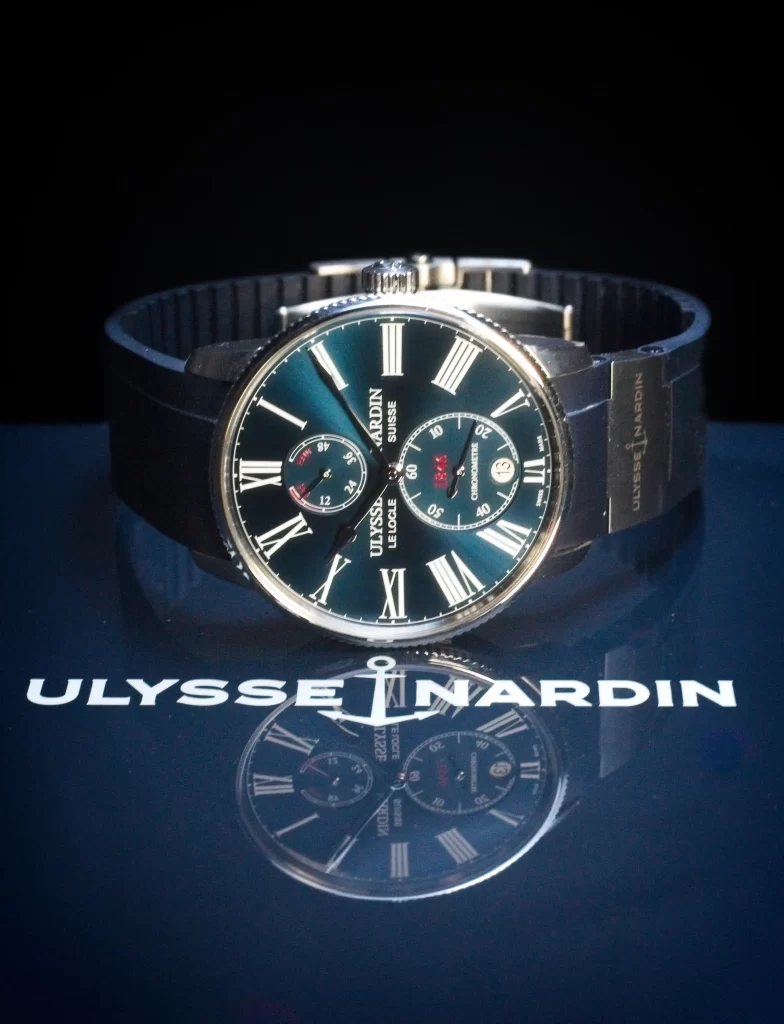
Of course, one of the hits and probably the collection recognized as being the best , is the Freak Collection, because with those models they continue to push the technical boundaries with newer versions incorporating increasingly advanced silicon and carbon-based components. Also the collaboration with URWERK by releasing the UR-Freak watch was a testament that other brands respect what the brand is doing.
And one thing I would like to mention, the Freak S with enamel dial is a perfect blend with their craftsmanship when it comes to dials and their technical expertise when it comes to movement. So it was only natural to release that model.
The Executive collection is for more fashion oriented people and the Classic Collection honors traditional watchmaking aesthetics.
The brand has around 250 employees and produces around 10.000 watches per year. Actually when I was talking with them, their plans were to produce 7500 watches per year, but I don’t know if they managed to do it, so let’s say they produce between 7500 and 10.000 watches per year.
They are doing this because they want to keep the quality high, and I can confirm it’s really high and the exclusivity. But one thing that I don’t really like though, is the Limited editions, and this goes for all the brands, stop making limited editions of everything. We don’t like it, and the limited edition should be something special.
Philosophy and Craftmanship
I’m not going to sum up their philosophy in one sentence and all the boring stuff. But I love the fact that they never stopped experimenting.
I like their approach on everything, Ulysse Nardin was among the first brands to use silicon components in mechanical movements. Also, they continued to develop proprietary materials and manufacturing techniques. They produce many of their components in-house, including silicon escapements, which are made using a process borrowed from the semiconductor industry.
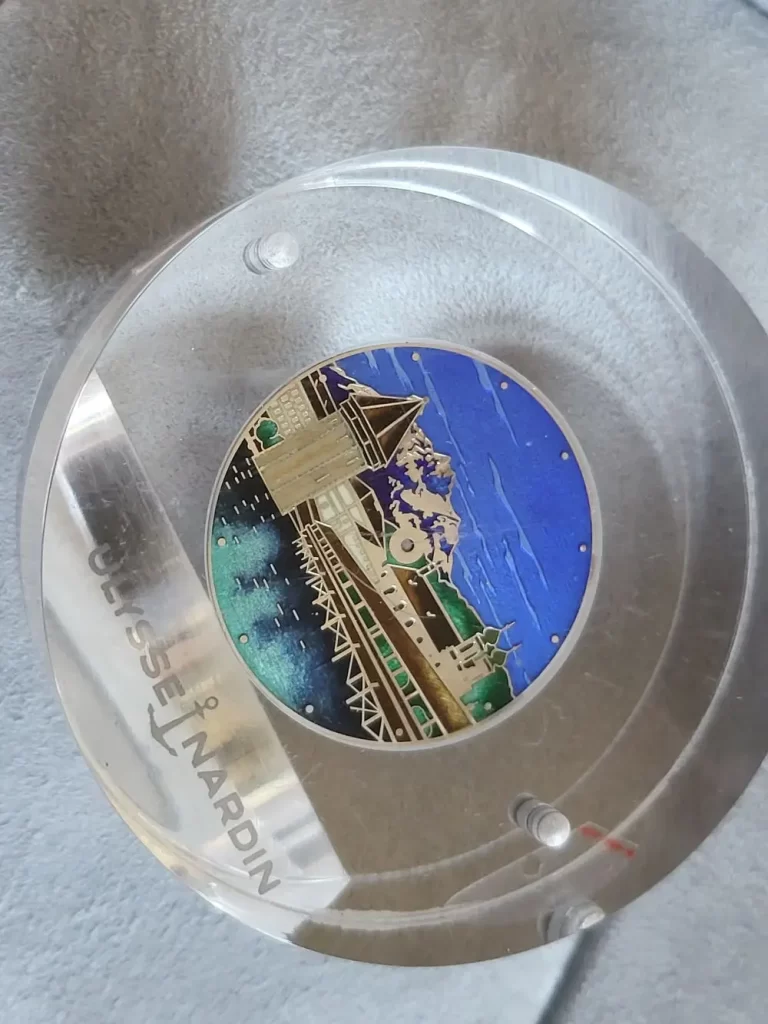
Ulysse Nardin craftsmanship also extends to the decorative arts. They have skilled artisans who specialize in enamel painting. I’ve seen it with my own eyes, hand engraving and gem setting.
Some of their extraordinary pieces can take one year to be completed by a single artisan.
Personally I love the combination of high-tech engineering and hand craftsmanship which is rare in the watch industry. The best collection to illustrate this is the Freak. On one hand we have a technical marvel with components that belong in a laboratory. On the other hand, the visual presentation, the way the movement becomes the display, the technical quality of the design, that my friends are genuinely artistic.
My final thoughts about Ulysse Nardin and their History
I think it is a brand that doesn’t get enough recognition. Their watches are amazing, underappreciated and pretty cheap compared with other Luxury Brands.
Today the brand sits in a rare position when it comes to watchmakers. They have genuine historical credibility going back 175 years. They made a lot of innovations, they survived the quartz crisis and they make great watches.
I still don’t think they take full advantage of their history. They are pushing hard on the Freak Collection, and I agree, it is an amazing watch. But let’s not forget the Marine collection, which draws their inspiration from the chronometers they made for the Navi during the World Wars and not only.
Marine Torpilleur for example has the design of one of the chronometers they produced for Navi all around the world. Did they tell us that? No! We had to see it with our own eyes in their museum. This is the problem I think, they don’t tell a story with their watches, even though they have the stories, they choose not to tell it to us. And for the most watch enthusiasts , a good story makes the watch more desirable.
Either way, Ulysse Nardin in my opinion is one of the best watchmakers and I hope to see new innovations and great watches from them for many years to come.
I hope you enjoy reading the Ulysse Nardin History as much as I enjoyed research it!