
One of the most common questions I hear from people is: On which wrist should you wear your watch on?
And it seems to be quite a dilemma, since even I have been asked this question, or in other situations I have been asked directly, “Why do you wear your watch on your right hand?”
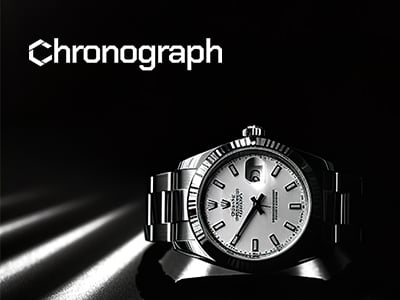
The point is that you wear your watch where you want, how you want, no matter if it’s a Dive Watch for which I also wrote a comprehensive guide on Dive Watches, or a Chronograph or even a Bel Canto Lumiere which will shine on your wrist like diamonds in the sky.
Well, we’re talking strictly about wrists, because I saw a lady on the internet wearing her watch around her neck like a necklace.
It may seem like a minor decision, the hand on which we wear our watch, but apparently people are really curious and usually have the wrong information on this subject.
So I thought we’d explore a little bit of the history of watch wearing.
Tradition tells us that watches are worn on the left wrists
It is true that most people wear their watches on their left hand, and this is a custom inherited from the time when watches first began to be worn on the wrist.
Since the watch crown was on the right side, it was easier to wind or set the time with your right hand. This way, you didn’t have to take the watch off your wrist.

However, those were times when watches were actually useful tools. Today, it has become just an accessory.
Another reason is to protect the watch from being knocked. Thus, the watch was worn on the non-dominant hand, so that it was protected from being knocked. And if you were left-handed, it was normal to wear the watch on your right hand.
The idea is that the dominant hand is more active than the other and the risk of the watch being accidentally hit is greater, which could damage the dial or mechanism.
That’s the whole idea behind wearing a watch on the left hand. Most people are right-handed, so most wear it on their left hand.
Personally, I don’t have a wrist that I always wear my watch on. I wear some watches on my right hand, such as the Casio GW 2100, because I think it looks better on that hand.
The same goes for the Ulysse Nardin Marine Torpileur, which I often prefer to wear on my right hand. Plus, sometimes my left hand swells up, so I switch the watch to my right hand.
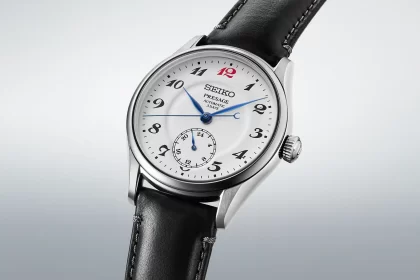


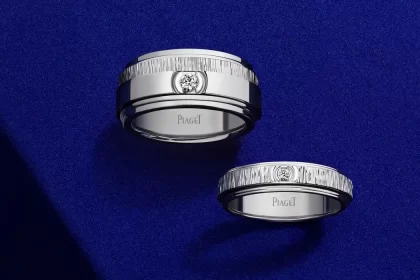
On which wrist should women wear their watches?
Similarly, there is no rule; both men and women can wear their watches on either hand without any problems and without being criticized.
Men prefer the left hand for historical or even etiquette reasons, as wearing a watch is associated with classic elegance, but also because if you are right-handed, you have easier access to the watch crown.
Women choose which hand to wear their watch on depending on what other accessories they are wearing. This is to maintain balance, especially if they wear an engagement or wedding ring on their left hand.
Fashion changes and adapts, so in modern times we see women wearing oversized, masculine-inspired watches. Even my wife prefers larger, masculine watches.
Design: The crown and buttons influence on which wrist you wear your watch on
I think they are very important, especially if you use your watch for what it was designed for, and not just as an accessory. If you have a chronograph, for example, and you are left-handed, then it is much easier to use the watch if you wear it on your right hand because then you have more precise control with your dominant hand (left).
The same applies if you want to set the time or change the date while wearing the watch on your hand.
The opposite is also true in this case.
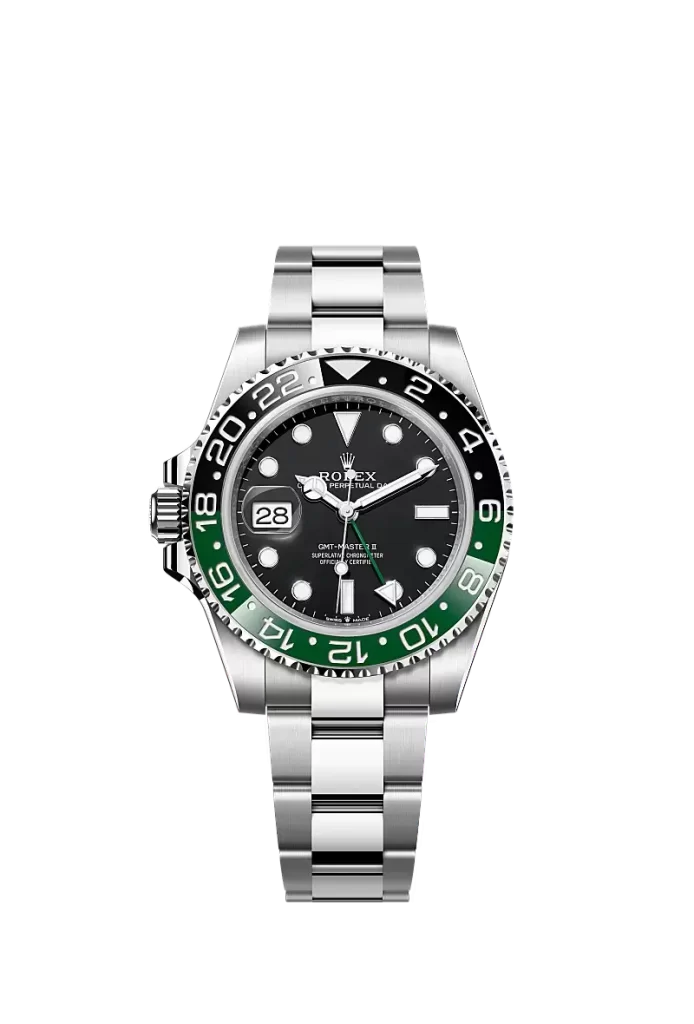
Some watches have the crown positioned at 3 o’clock (most watches are like this), making them ergonomic for wearing on the left hand, but there are also watches made especially for left-handed people, such as the Rolex GMT Master 2 Sprite, which has the crown at 9 o’clock for easier access.
Mistakes to avoid when wearing a watch
Watches should be worn according to the context and outfit. You don’t go to the beach wearing a watch that goes with a suit, with a leather strap. Instead, you choose a sports watch, a diver’s watch like Omega Seamaster, for example, which has more water-resistant.
Just as you don’t go to a wedding wearing a suit and a Casio Protek or Garmin.
However, comfort beats rules. There is no law on how to wear a watch. You do it however you want, on whichever hand you want, the important thing is that you feel good, that you like how it looks, even if others don’t. 90% of people are right-handed, which is why most wear their watches on their left hand.
The right hand is the one where your watch feels natural. Wearing a watch is about your personality, not rigid rules.
So my advice is to wear it wherever you want, as long as you feel good, you’ve adapted to the context you’re in and what you’re wearing, because a watch worn with attitude remains a symbol of discreet elegance.
Another guide that you can read is the Luxury Watch Buying Guide we put together, and I really think it will help you make the correct decision when it comes to luxury watches.