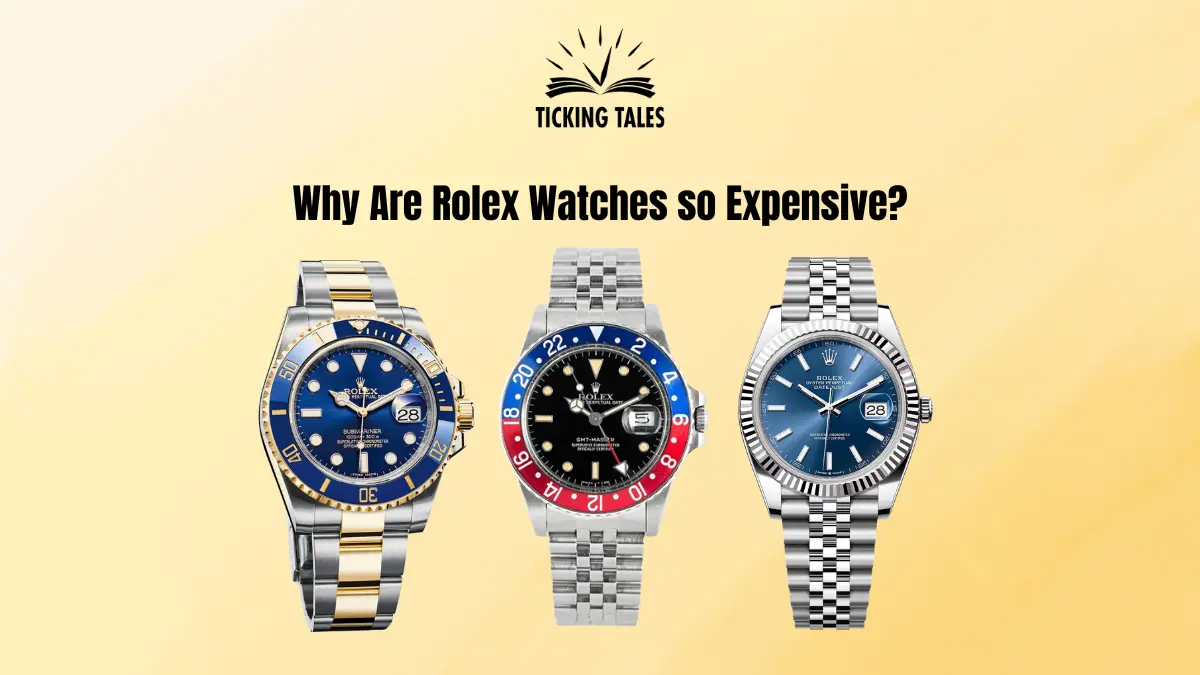
You can buy a watch for $20 that tells better time than a Rolex. So why are Rolex watches so expensive when a $9.99 Casio keeps more accurate time? The answer has almost nothing to do with telling time and everything to do with how Rolex builds, controls, and sells its watches.
Also, I know you guys are familiar, or encountered some people that don’t know anything about watches, which asked you “ Why pay x amount for a watch? It does the same thing like my Fossil”. Those are the people that eventually will buy a Rolex when they will have money…kidding
Let’s break it down piece by piece.
Rolex Makes (Almost) Everything Itself
Most luxury brands buy parts from outside suppliers and assemble them under their own name. Rolex doesn’t really do that. Over the decades it bought up its key suppliers and now controls almost the entire production chain itself: the metal, the movements, the cases, the bracelets, even the crystals.
That kind of control costs a fortune to build and maintain. But it also means nobody outside Rolex touches a watch before it’s finished, which is exactly how the brand likes it. In other words, they didn’t bought the product anymore, but acquired the whole factory. So this might be a reason why are Rolex watches so expensive.
The Steel That Fights Back
While most luxury watches use standard 316L steel, Rolex insists on 904L, which it calls Oystersteel. It resists corrosion better and takes a deeper, mirror-like polish. The catch: it’s much tougher on machinery, so Rolex needs heavier presses and slower, more careful machining just to shape it. Tougher steel, slower process, higher cost.
And we must respect the fact that they use something different than Omega or other manufacturers when it comes to steel.
Gold That Doesn’t Fade
Rolex doesn’t buy gold, it refines its own, including a proprietary rose gold blend called Everose that resists the fading other rose golds are prone to. And because gold prices move with the market, so does Rolex pricing. When gold jumped roughly 27% in 2024, Rolex pushed prices on some gold models up by as much as 8%. On a Daytona in gold, the raw metal alone can account for nearly half the retail price. You’re not just buying a watch, you’re buying a small gold bar that happens to tell time.

And in some cases, not Rolex, but I have seen and probably so are you, dealers that preferred to melt the gold from the watch than sell it, because they made more profit. So maybe buying a Gold watch it’s a good ideea.
The Most Expensive Lab Coats in Switzerland
Every Rolex is built in Switzerland, across several massive facilities, by people who are not cheap to employ because training them is very costly as well. Swiss watchmaking talent comes at a premium, and Rolex pays for plenty of it.
It also funds research most brands wouldn’t bother with. Rolex employs full-time tribologists, scientists whose entire job is studying friction and lubrication, just to perfect the oils inside its movements. It spent years developing the patented Parachrom hairspring so its watches stay accurate even after a magnet, a shock, or a rough day at the gym. None of this is cheap, and none of it is optional if you want the “it just works, forever” reputation Rolex has built.
Quality Control Strict Enough to Make a Drill Sergeant Nervous
Machines handle the rough work, but every movement is hand-assembled and adjusted by an actual watchmaker before it goes anywhere near a case.
Then it gets tested. Rolex doesn’t stop at COSC certification, the official Swiss chronometer standard. It runs its own internal “Superlative Chronometer” testing after the watch is fully cased, checking accuracy, water resistance, and power reserve under simulated real-world wear. The accuracy bar is ±2 seconds a day, more than twice as strict as the official Swiss standard. Most watches just need to keep decent time. Rolex watches need to pass a final exam first.
And I appreciate this, they chase perfection with every watch. They are in battles with other brands for making the most accurate watch, and especially in a “war” with Omega. For more details you can read our Rolex vs Omega head-to-head comparision.
Rolex Could Make More Watches. It Chooses Not To.
Rolex produces more than a million watches a year. That sounds like a lot until you realize global demand is bigger still, by a wide margin.
Part of the reason is structural: Rolex is owned by the privately held Hans Wilsdorf Foundation, not shareholders demanding bigger numbers every quarter. Nobody is pressuring Rolex to flood the market. So it doesn’t. The result is the now-legendary waiting list, where walking into a dealer and asking for a Submariner can mean walking out with your name on a list instead of a watch.
Of course, let’s not forget the scarcity marketing strategy that they apply.
When a Watch Becomes Worth More Than You Paid For It
Here’s where Rolex breaks the normal rules of buying nice things. Most luxury items lose value the moment you take them home. Certain Rolex sports models, like the Submariner, GMT-Master II, and Daytona, have historically done the opposite, selling on the secondary market for more than their original retail price, in part due to the scarcity market strategy. The market has cooled somewhat from its post-pandemic peak, but plenty of steel sports models still hold their value far better than the average luxury purchase.
Then Add Inflation, Tariffs, and the Price of Gold
Rolex raises prices nearly every year, partly to keep up with rising costs and partly because a luxury brand that never raises prices starts to look less luxury. Recent increases in 2025 and 2026 have leaned heavily on outside pressure too: new U.S. import tariffs on Swiss goods and a weaker dollar against the Swiss franc have both pushed prices up, especially on gold models. The strategy increasingly points toward buyers who don’t blink at a price hike, because that segment of the market barely notices economic downturns.
Why Are Rolex Watches So Expensive, At a Glance
| Factor | Why It Matters |
| Vertical integration | Rolex makes its own steel, gold, movements, and cases, which is expensive to control but guarantees quality |
| Oystersteel (904L) | Harder to machine than standard steel, requiring heavier tooling and slower production |
| In-house gold and rising prices | Gold cost increases get passed directly into watch prices |
| R&D (tribologists, Parachrom hairspring) | Years of niche science most brands skip entirely |
| Hand assembly and Superlative testing | Every movement is human-checked and tested twice, once by Swiss standards and once by Rolex’s own stricter bar |
| Controlled supply | Demand outpaces the roughly 1 million watches made per year, fueling waitlists |
| Brand prestige | Decades of sponsorships and exclusivity built a status symbol, not just a tool |
| Tariffs and currency shifts | External economic pressure adds to annual price increases |
So, Is It Actually Worth It?
Depends what you’re buying it for. But I would say yes, I think every collector or watch enthusiast should have at least one Rolex
As a Timekeeper
Not really the point. A $50 quartz watch will out-accurate a Rolex without trying. If pure timekeeping is the goal, you’re shopping in the wrong aisle.
As a Status Symbol and a Piece of Engineering
For a lot of people, yes. You’re paying for decades of obsessive manufacturing standards, a brand recognized everywhere from a board meeting to a beach in Bali, and a watch built to outlive you and get handed down afterward.
As an Investment
Be careful here. Steel sports models have a decent track record of holding value, sometimes beating it. Gold models are a different story, often losing 15–20% the moment they leave the store. Buy a Rolex because you want to wear it, not because you’re betting on it like a stock.
In the end, a Rolex is priced less like a watch and more like a luxury car: the cost reflects engineering, materials, and brand power as much as it reflects the actual function of telling time.
So there you go, when you ask yourself ” Why Are Rolex Watches So Expensive ? ” these are the reason I could think of. And remember, if James Bond wore that watch, probably you should wear it too.