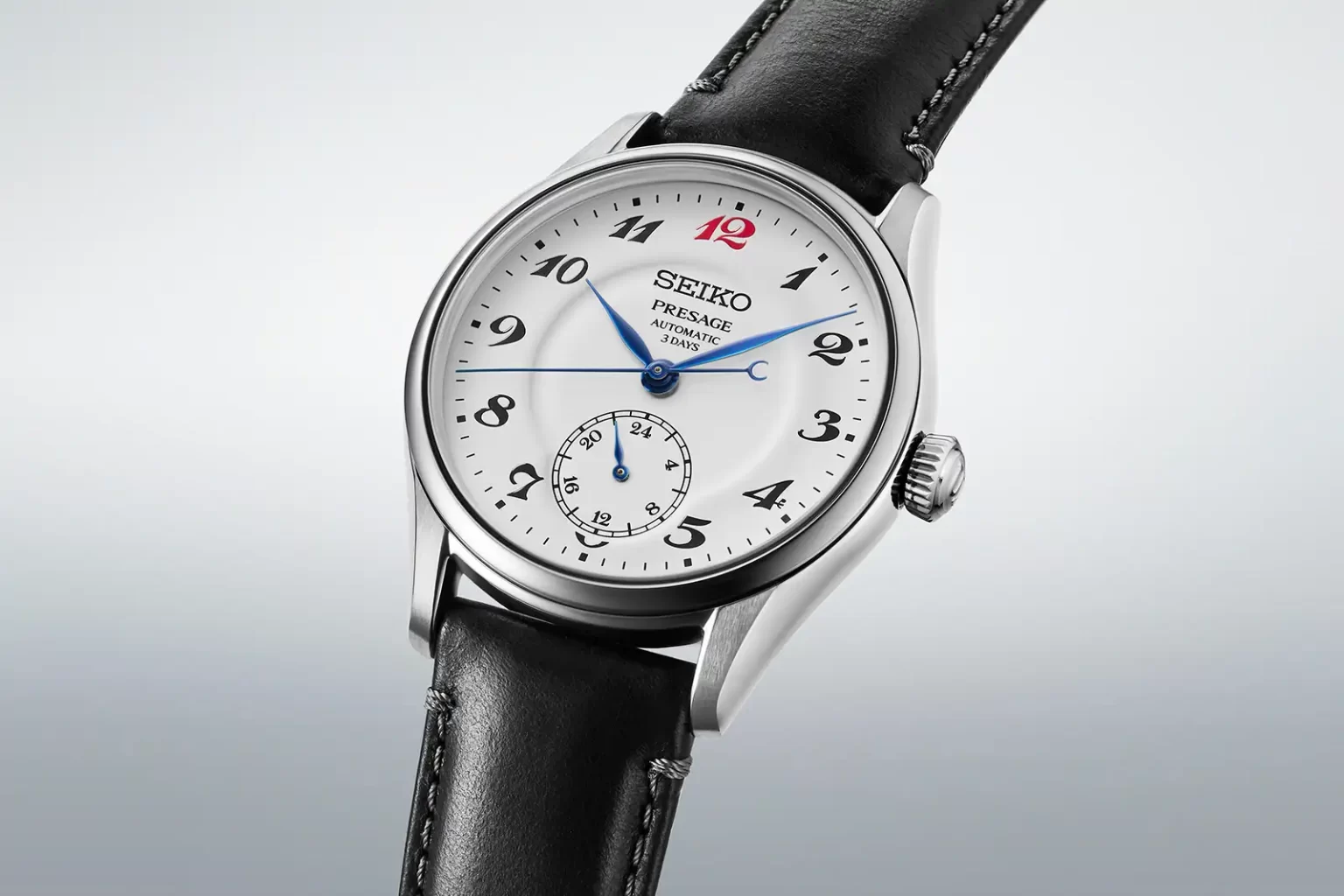
Seiko Presage HCC005 and the HCC006 were announced this week by Seiko, and they are twins, they have the same body, but different…personality I might say.
- What’s the difference between Seiko HCC005 and HCC006
- HCC005: white enamel, red 12 o clock and a vintage charm
- HCC006: Black dial, gold accents and urushi lacquer. This might be my favourite
- The Movement it’s reliable but makes the watch a bit chunky
- Specs at a glance
- Seiko Presage HCC05 and HCC006 should you buy it?
One is the quiet and well dressed watch, the other is the one that probably will became everyone’s favorite
Both models are part of the Presage family, which is the Seiko way to say “ we brought in real Japanese master artisans instead of using robots from our factory” . But this is not all, the watches are a little tribute to the 1913 Laurel, which was Japan’s very first wristwatch.
What’s the difference between Seiko HCC005 and HCC006
These models have the same case, same size, same movement. By the way, I wrote a guide about types of watch movements, maybe you should check that as well. Anyway, at first glance, the difference is only in colour, one has white dial, one has black dial. Simple! But the dials are actually what matters here and doing the heavy lifting.
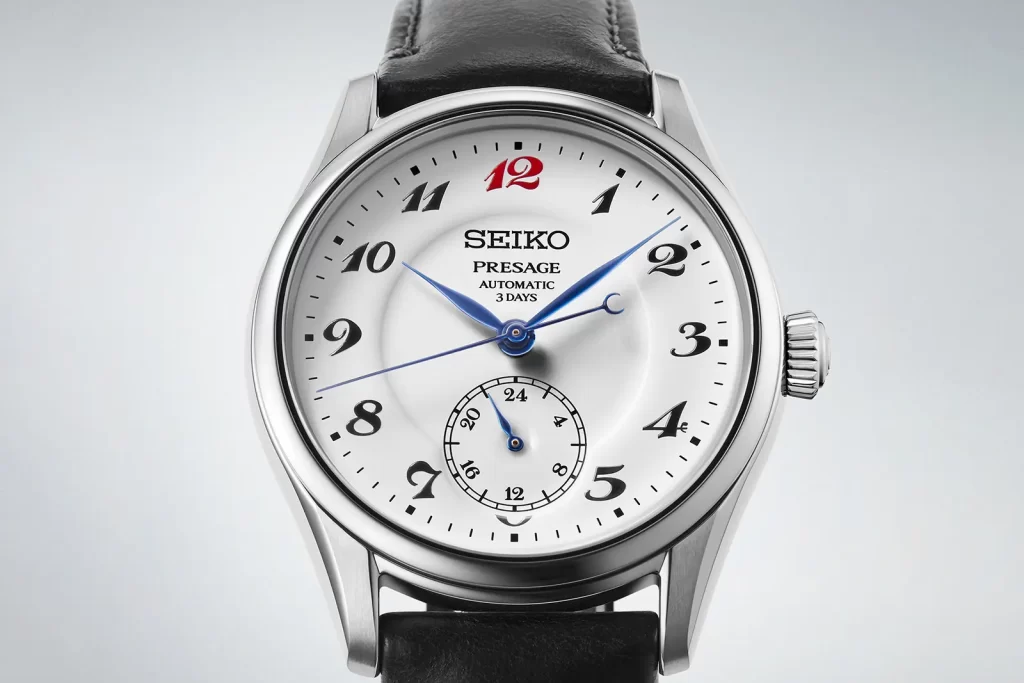
HCC005: white enamel, red 12 o clock and a vintage charm
My guess this one is the safe pick, even though I can say from the start that I prefer the black dial one. But for the majority of the people, the white enamel dial will be the first one to pick. It has a glossy white enamel dial and the 12 hour mark is painted in red. Same as the original Laurel launched over a century ago!
If you read my articles, you know I love Enamel dials, ever since I saw how they did it and since I got my own Ulysse Nardin Marine Torpilleur. Basically enamel dials are made by grinding down glass-like material, then is painted onto a copper base, then off it goes into an oven that has 800 degrees Celsius, multiple times until it comes out glassy. It’s basically immune to fading and getting old.
It is a slow and hard process, and the production is overseen by none other than Mitsuru Yokosawa, the Seikos’s enamel master.
The dial isn’t flat, is is recessed in the middle. A small detail, but one that gives the watch a visual depth and it looks better than your average white dial watch. But this can only be my opinion, for you it might look bad.

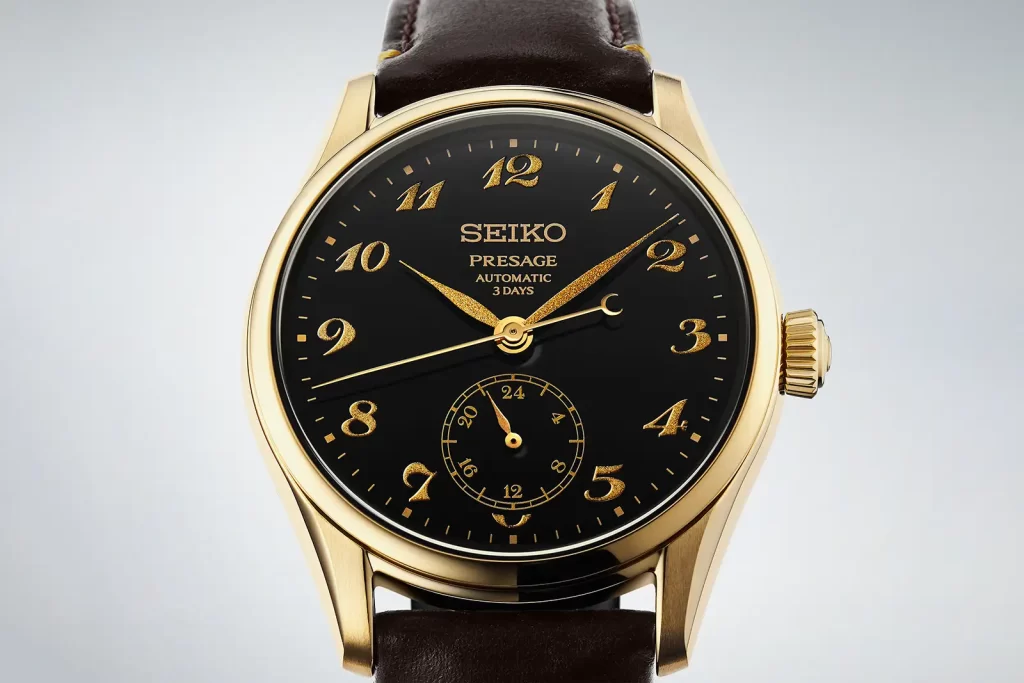
HCC006: Black dial, gold accents and urushi lacquer. This might be my favourite
Probably this is the one that will be discussed more. HCC006 doesn’t use enamel, but urushi–which is a traditional Japanese lacquer made from tree sap. It is applied layer after layer and polished until it has that almost wet looking shine. The hands and numerals are painted in lacquer as well, but it’s mixed with gold powder which adds an excellent contrast overall.
So we have a black dial with gold accents on numbers. And honestly, this watch looks like it belongs in a display case, not on an affordable watch list. It looks good and expensive.
I almost forgot to mention, the master lacquer Isshu Tamura is the master that oversees the lacquer procedure, and the actual hands-on work is done by the father-daughter duo Toshikazu and Mitsuki Tsuji. I don’t know them, but I think they are good in their field, if they are masters, right?
The case is gold plated, not solid gold and I think it’s fair at this price point. Even though I started to really like gold recently. Probably because I’m getting older.
The Movement it’s reliable but makes the watch a bit chunky
Both of the models come with the same movement, caliber 6R5H, mid-range Seiko automatic that has a 72 hours power reserve. Which is good and generous in my opinion and at this price point. Also, it has a 24 hour indicator at 6 o clock and it can be easily mistaken for a second timezone, but it’s not! I really need to know the reason behind this.
As I said, the trade-off is the thickness, which makes the case 12.4mm thick, and it puts the watch on the tall side considering this is supposed to be a dress watch.

Specs at a glance
| HCC005 (Enamel) | HCC006 (Urushi) | |
| Diameter | 39.6 mm | 39.6 mm |
| Thickness | 12.4 mm | 12.4 mm |
| Case material | Stainless steel, super-hard coating | Stainless steel, gold-coloured plating |
| Dial | White fired enamel, red “12” | Black urushi lacquer, gold numerals/hands |
| Crystal | Sapphire, dual-curved, AR coating | Sapphire, dual-curved, AR coating |
| Water resistance | 30 m | 30 m |
| Movement | Cal. 6R5H, automatic | Cal. 6R5H, automatic |
| Frequency | 21,600 vph (3 Hz) | 21,600 vph (3 Hz) |
| Power reserve | 72 hours | 72 hours |
| Strap | Oil-tanned leather, folding clasp | Oil-tanned leather, folding clasp |
| Limited edition | No — permanent collection | No — permanent collection |
| Price | €1,430 | €1,640 |
| Availability | September 2026, Seiko boutiques & retailers | September 2026, Seiko boutiques & retailers |
Seiko Presage HCC05 and HCC006 should you buy it?
Well, considering the fact that Raymond Well A.R.T was recently launched and doesn’t have anything interesting, except the integrated bracelet and it’s a little more expensive than Seiko Presage. It’s safe to say that these models are worth their money.
It is one of those affordable dress watches that were built with passion and people with great expertise worked on them. If you buy this watch, you don’t do it for the movement, you are doing it for the dial, which looks great in my opinion.
The real craftsmanship with centuries old techniques and real masters in their field makes these watches worth every cent in my opinion. Japan is renowned for the fact that they take care of their watches and personal objects, that is one of the reasons why people buy their second hand watches from Japan.
Would I buy it? Yes, without hesitation.
More information on Seiko official website