After the quartz revolution and the technological advances that were becoming increasingly prevalent in our lives, watches were starting to become useless from the point of view of being merely a tool that told you the time.
I am referring, of course, to classic, automatic, or manually wound watches like Ulysse Nardin Marine Torpilleur or even Tissot PRX, which were rapidly losing ground to battery-powered watches from Seiko or Casio.
Technological advances allowed Casio to play around a bit with the watches they were going to launch in the 1980s and 1990s, and some models seemed like something out of science fiction.
So we found ourselves able to buy a watch that measured the ambient temperature, calculated the distance we had traveled just by drawing a line on a physical map, or a watch with a capacitive touch screen in 1984.
I had seen a TikTok video about a more unusual watch, but from Seiko, and I thought that Casio Watches surely couldn’t be outdone, especially since they recently launched the G-Shock Nano Ring – a watch that can be worn on your finger like a ring.
So I did a little research and put together a list of unusual watches from Casio. They may seem mundane in terms of technology now, but at the time they were something out of the ordinary. Also it’s worth pointing out that it seems like a new trend right now for the quartz watches to revive old models from the 70’s, 80’s and 90’s like Timex is doing with their SSQ watch.
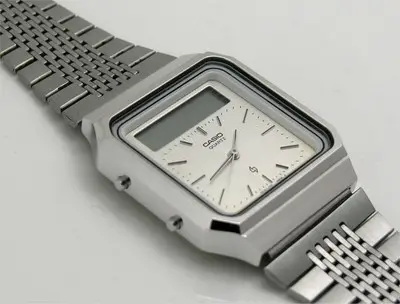
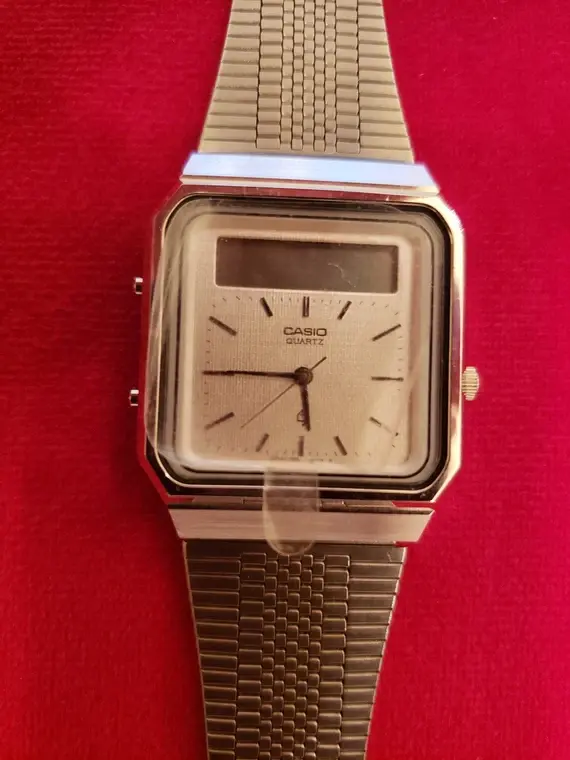
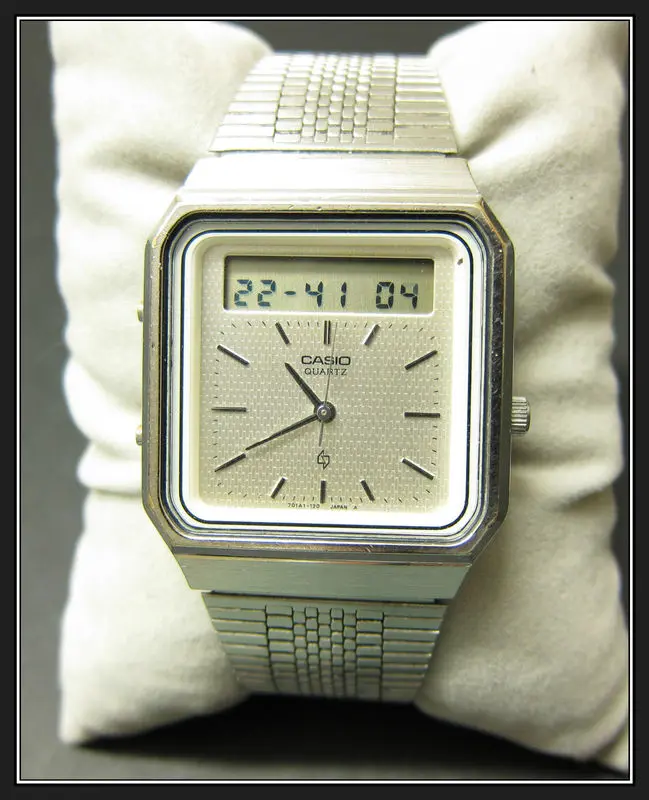
Casio AT-550
The Casio AT-550, or T550 as it was called by fans, is a digital-analog watch launched in 1984 with a feature that, at the time, seemed straight out of a sci-fi movie. Touchscreen! You couldn’t do much with it; in fact, you could only do one thing on the touchscreen, which was to calculate.
The screen was capacitive and could recognize handwritten numbers and symbols such as plus, minus, multiplication, etc.

It is probably the great-grandfather of the smartwatches we have today.
Casio AT-550 Features
Touchscreen Calculator—You could “draw” numbers and symbols on the screen with your hand, and they would be recognized instantly.
Analog-Digital Screen – At the time, watches like this were already very popular.
Alarm and Calendar – Of course, what would a watch from that period be without an alarm?
The model was produced in several variants, AT-550, AT-551, and AT-552, the difference between them being the color and materials from which they were made.
The AT-550 model is highly sought after by collectors and can fetch up to $200 if the watch is in good condition and functional.
To give you an idea, the Casio AT-550 was launched in 1984 and had a capacitive touchscreen (i.e., it responded to finger touch), more than 10 years before the launch of PDAs, which only had stylus-based touchscreens.
Casio MAP-100
The Casio Map-100 is famous for its “Map meter” function, which I initially thought was just a simple meter. You put on the watch, draw a line, and it tells you the distance. Simple and effective.
But it’s more than that. In fact, it is for those who travel, explore, or drive. In 1989, the year this model was launched, GPS was not widely available, especially for civilians.
So, with the help of the Casio MAP-100, which has a wheel, you could draw a line on a map, enter the scale of the map, and, as if by magic, the watch would tell you the distance. Well, not by magic, but based on mathematical calculations.
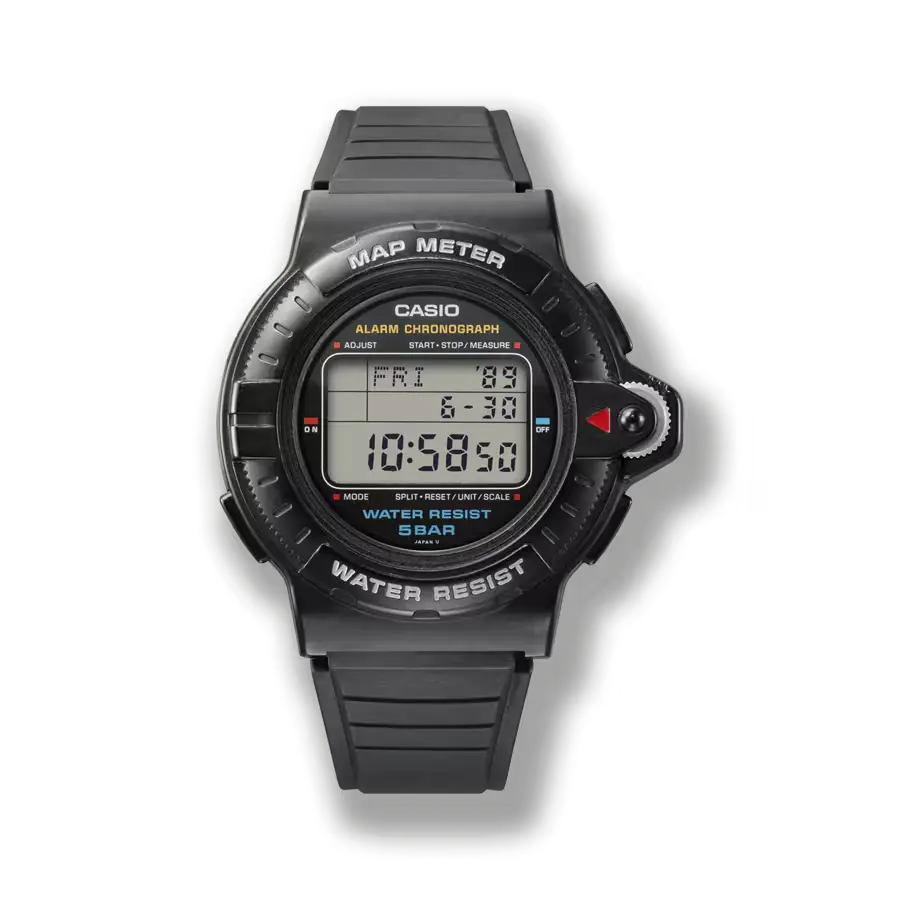
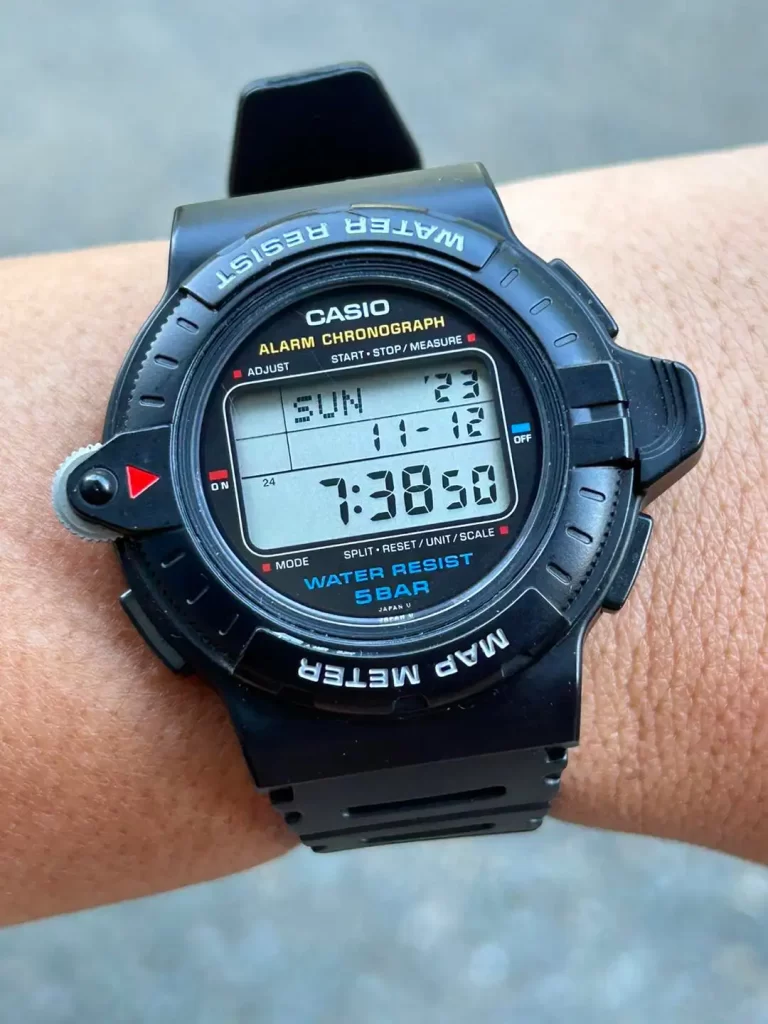
Casio MAP-100 A kind of Google Maps, but old-school.
After measuring the route on the map and finding out the distance, again with the help of the Casio MAP-100, you could enter your speed, and the watch would calculate the time it would take you to reach your destination.
Of course, the classic functions of a digital watch, such as alarm, stopwatch, calendar, etc., are also available.
It is the only watch of its kind in the world.
Casio JP-100W
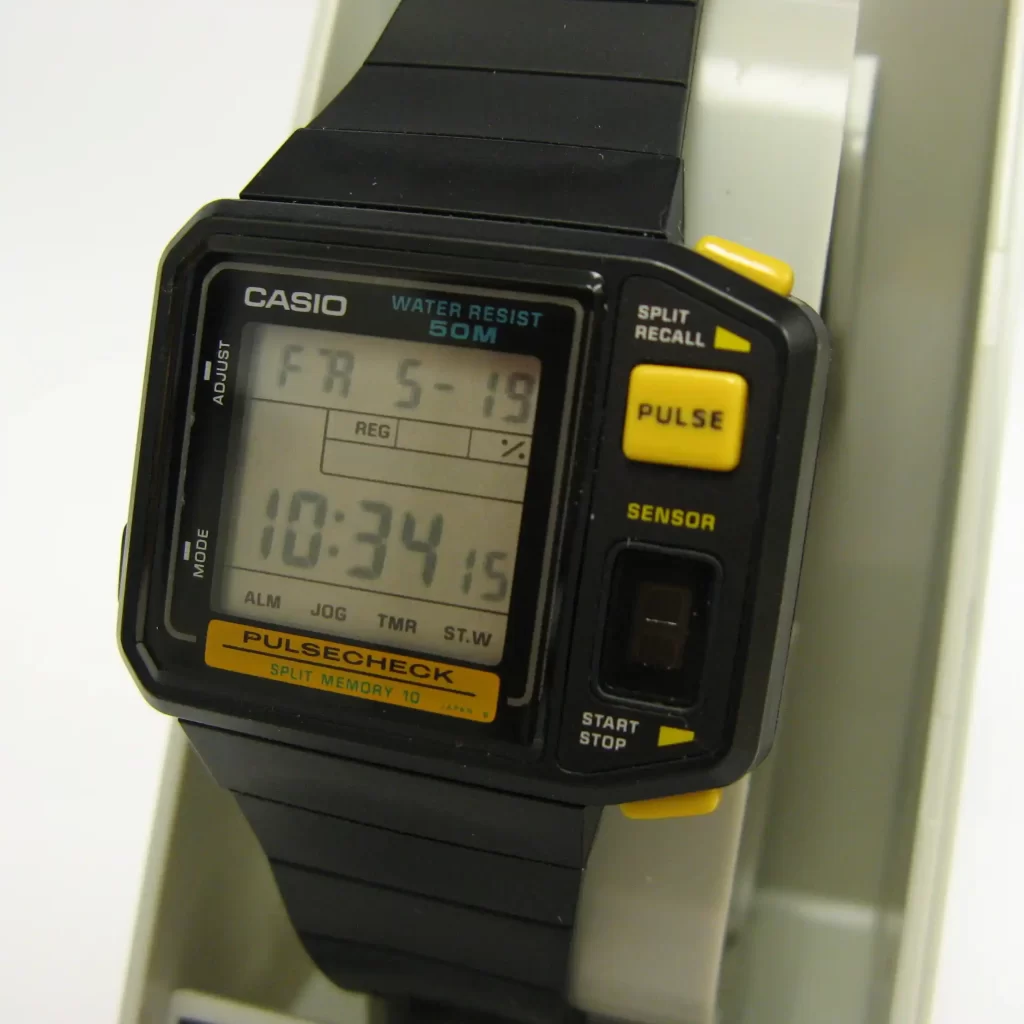
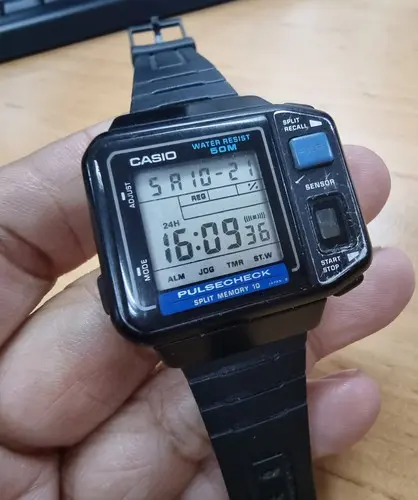
The Casio JP-100W was launched in 1987 and was designed for athletes, much like today’s smartwatches, only long before they existed.
It was one of the first watches in the world that could measure your heart rate. The sensor was located on the front, and after pressing the button, you had to place your finger on a sensor that measured the blood flow in your finger.
Another feature available was “Jog Mode” – quite simple, which reminded you to measure your heart rate after each run.
You could also set your standard heart rate, and the watch would display whether your heart rate was significantly above or below the set standard.
It also had internal memory, so you could compare different running sessions with the data on the watch, especially your heart rate.
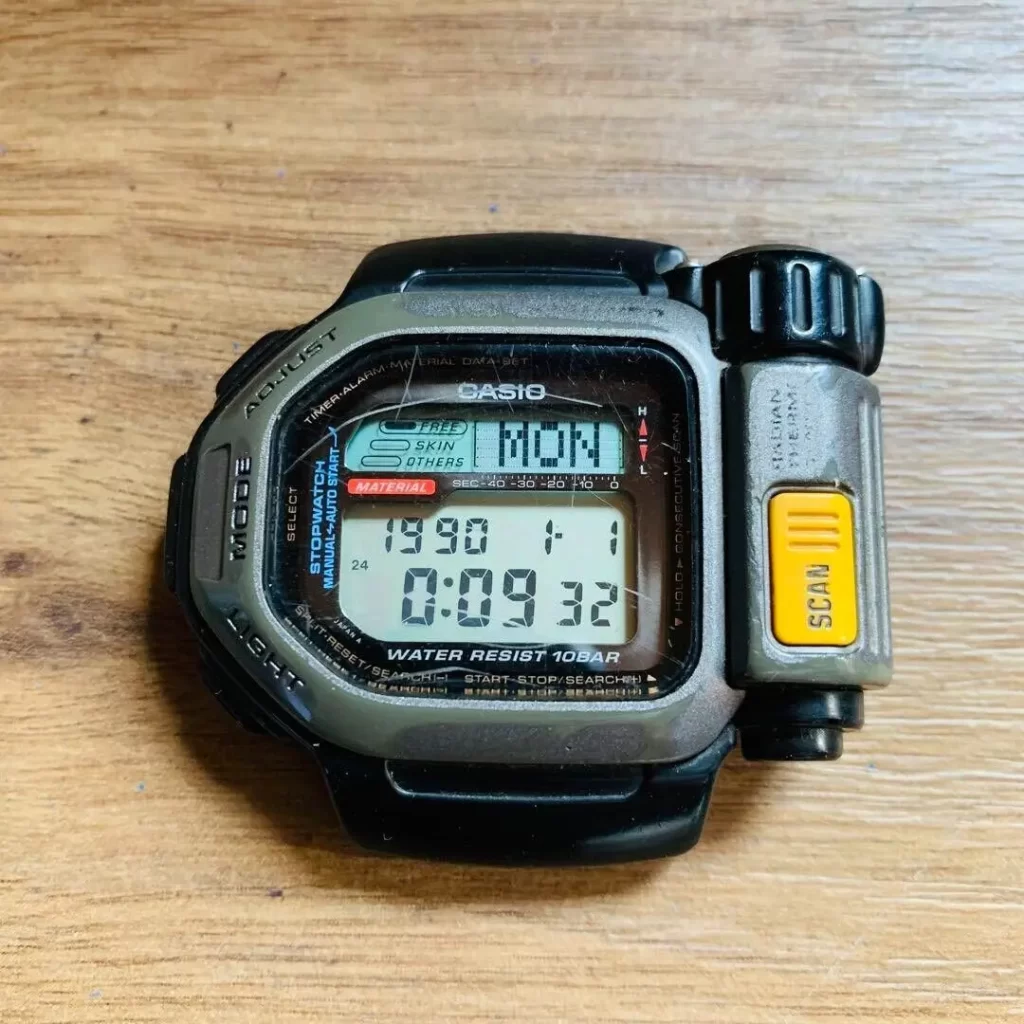
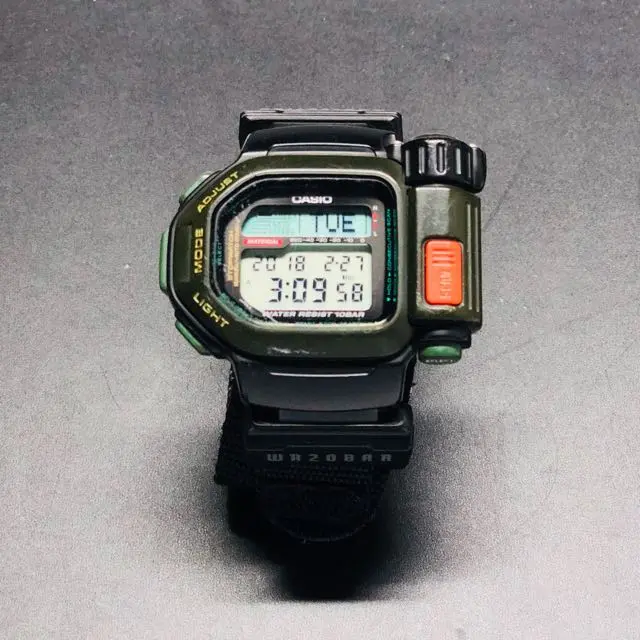
Casio TSR-100
The Casio TSR-100 was a remarkable watch, with a feature that seems futuristic even today. Launched in 1994, it had a sensor that could measure surface temperatures from -20 degrees Celsius to 200 degrees Celsius.
The watch achieved this thanks to its infrared sensor, and there was no need to touch the surface whose temperature you wanted to measure.
The Casio TSR-100 measured 51 mm and came with two strap options: one made of resin and one made of fabric.
It could store up to 30 measurements and had a setting that allowed you to choose the surface you were measuring: snow, wood, or leather.
It was rare at the time, and even today it is a unique watch.
Four interesting models, which in the 80s and 90s were a real technological innovation that you could carry with you, at a time when time was not about the hour of the day, but about what else you could do with your watch.