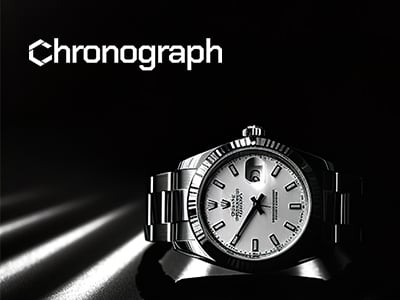
Chronographs are watches that have extra time keeping, besides the standard one. A chronograph watch has an on-demand stopwatch, which allows you to start, stop and reset the measurement of elapsed time, independently of the main time keeping.
- Chronograph watches: Core concept and definition
- The anatomy of a chronograph Watch
- How a chronograph watch works?
- Coupling:Oscillating pinion vs Horizontal vs Vertical
- Chronograph Movement types: Automatic, Manual, Quartz and Mecha-quartz
- Chronograph variations and Functions
- Flyback chronograph (Retour en Vol)
- Rattrapante (Split-Seconds)
- Monopusher Chronographs
- Regatta/Yachting timers
- Scale Types and Practical Applications of Chronograph Watches
- Historical Development of chronograph watches
- Origins: Horse Racing and Astronomy (1816 mid 1800s)
- Pocket Chronographs and Industrialization late (1800’s-early 1900s)
- From Pocket to the Wrist (1910s-1930s)
- Military, Aviation and Motorsports Era (1930s-1960s)
- The race to the Automatic Chronograph (1969)
- Quartz Crisis and Mechanical Revival (1970s-1990s)
- Fields of Use for chronograph watches
- Astronomy and Science
- Military chronograph watches
- Aviation chronograph watches
- Motorsport and Racing
- Medicine and Industry
- Space exploration
- Chronograph Movements that became Legends
- Lemania 2310 /Omega Calibre 321
- Omega Calibres 861/1861/3861
- Zenith El Primero (3019 PHC and descendants)
- Seiko 6139
- Valjoux / ETA 7750
- Other Chronograph Ebauches that worth mentioning
- Iconic Chronograph Watches
- Omega Speedmaster Professional “Moonwatch”
- Rolex Cosmograph Daytona
- TAG Heuer Carrera and Monaco
- Pilot and Tool Chronographs like Navitimer
- Frequently Cited “Top” Chronograph Watches
- Most Influential Movements (Summary Table)
- Chronographs Movements are the tools that people used the most
- FAQ Chronograph Watches
Chronograph watches evolved from scientific instruments into indispensable tools for aviation, astronomy, motorsport, medicine, space exploration or artillery. It is one of the most popular complications that can be found today on watches. That is because a chronograph is used in almost any domain you can think of.
In this article I plan to cover the full landscape of chronograph watches. From historical development, technical architecture, most influential movements and the best and most popular watches that defined categories like space chronographs or motorsport racing.
I also plan to map the anatomy of a chronograph dial, cover chronographs complications like flyback, rattrapante, regatta or monopusher while also explaining the practical scales such as pulsometers and tachymeters.
Chronograph watches: Core concept and definition
For those who are just getting into watches, let me explain briefly what a chronograph is. Essentially is a watch that incorporates a function called stopwatch, alongside and independent from the normal time-telling. It has separate hands and usually comes with sub-dials which measure elapsed seconds, minutes and sometimes even hours.
The key feature is the user control via pushers which means that the timing function must be able to start, stop and reset on demand, without affecting or interrupting the base timekeeping.
In modern times, or modern usage i would say, the chronograph and stopwatch are equivalent, but in wristwatch culture the term specifically refers to integrated watch calibers with dedicated chronograph indication and function. The majority of the chronograph watches come with scales like telemeters, tachymeters or pulsometers in order to help the user to translate the elapsed time into speed, heart rate or distance.
One of the recently launched watch, that is a chronograph also is Breguet Marine, and I really love the redesign they did, too bad that is too expensive for my budget.

The anatomy of a chronograph Watch
First we need to explore what exactly we see and what we have on a chronograph watch. Whether we have indications or buttons, everything that we see or touch on a chronograph watch is there to help us.
External Controls and Indications
Usually a chronograph case architecture adds one or two pushers besides the standard crown. Those pushers are used to control the chronograph function of the watch.
We have the start/stop pusher which usually sits at 2 o’clock position and basically it engage and halts the chronograph mechanism.
At 4 o’clock we have another pusher that resets, or returns the chronograph hands to zero. On flybacks chronographs it can reset and restart with just one push.
Then we have the monopusher which commands everything with one single button. Usually the pusher is integrated in the crown or positioned at 2 o’clock and it cycles through start-stop-reset.
On the dial the basic elements include a central sweep chronograph seconds hand, which usually stays parked at 12 o’clock position and sweeps only when the chronograph runs. Then we have the sub dials which usually show the same things.
-30 minutes counter: usually positioned at 3 o’clock
-12 hour counter: which usually is positioned at 6 o’ clock, but there are models that add the seconds for the base timing in this position, like the Tissot Chronograph XL Limited edition which we reviewed.
-Running small seconds which can be found positioned at 9 o’clock, but sometimes can be found in other positions like I mentioned above.
Mecha-quartz designs like SEIKO VK64 keep the running seconds on a sub-dial while the central chronograph is mechanically driven for a smooth sweep and an instant snap-back reset.

Scales on the bezel or dial
On the bezels you can find tachymeter scale, which helps you read the speed over a known distance. Normally it is calibrated for 1km or 1 mile. Tachymeter is more common and you can basically see it on each chronograph you might think of. At least the popular one like Omega Speedmaster.

Then we have the Telemeter scale which measures the distance between you and an event that you can hear or see. Let’s take the lightning example: you start the chronograph when you see the lighting, then you stop it when you hear the thunder. The seconds hand, the big chronograph one, not the base one, will point to a certain number on the outer dial that will show you the distance in kilometers.
Telemeter scale was used in world war for example to time the distance of enemy artillery fire by timing the flash and the sound, or boom. Telemeter scale can be present on the bezel or on the outer dial.

Pulsometer scale was used, or still is to see the heart rate by timing a number of heart beats, usually 15 or 30, so you don’t have to count the beats for 60 seconds. Basically you start the chronograph, and you count 15 or 30 beats, after you stop the chronograph you just look at the pulsometer scale and voila, you see your heart rate. No math required.
Of course there are other scales as well, like asthmometer, or decimals and specialist scales for industrial timing, or even medical. Are these useful? Yes, if you go back in time, otherwise it is just a fun thing to have and use.
With my chronograph I time when I’m boiling an egg for example, even though my house is smart and I can tell google to do it. But it’s fun, I feel like I’m getting a little away from technology. Just a little…
For serious or more accurate stuff, you have dedicated devices, even smartwatches that can do all these things 100 times better. Or a smart ring, which I use.
But the feeling of doing this from a mechanical chronograph watch makes me happy and beats everything else.
How a chronograph watch works?
We will try to explain in a simple way how a chronograph watch works. It’s not rocket science, or is it? Anyway, the engineering behind it is absolutely beautiful.
Base Movement vs Chronograph mechanism
So, a mechanical chronograph has a base of things that are necessary, like mainspring, gear train, escapement, balance etc. Everything a normal movement has, but on top on that, you have an additional mechanism that kind of branches off the gear train to drive separate hands for timing.
Of course, when the chronograph is off, the watch functions just like any other watch out there, but when the chronograph is activated, a part of that energy is diverted to a second gear train which moves the chronograph hands from sub-dials.
Like I said before, usually you have two pushers positioned at 2 o’clock and 4 o’clock, the first one is usually used for starting and stopping the chronograph while the second one is used to reset it or flyback on specialized movements.
As I mentioned before, if you have a monopusher movement, then with a single pusher you can do all that because it cycles through start, stop and reset.
Actuation Cam/Coulisse Lever vs Column Wheel
So what exactly is the Actuation system? Basically it coordinates the sequence of the operations we talked about; start, stop and reset. We have two main and popular types that are used today:
Column-Wheel Chronograph
A chronograph with a column wheel system uses a turret shaped wheel that has vertical columns and recesses and each press of the pusher rotates the wheel one increment. As the wheel turns differently, they fall or are lifted off the spaces between columns which engage the clutch by lifting or applying the brake and this allows the block or reset of the hammers.
The column wheel chronograph is well known for the crisp and smooth feel of the pusher. Also it’s very precise but it comes with a cost. Meaning this type of movement is more complex and costs more to manufacture. Also is more costly to service.
This system is used in many classical and high end movements like Lemania 2310, Omega 321 or the legendary Zenith El Primero. It is also used in numerous ratrapante calibres and of course used in modern chronograph watches from Rolex with the calibre 4130.

Coulisse/Cam-Switched chronograph
This is the alternative to column-wheel which is replaced with a shaped cam or shuttle that moves when the pusher is pressed while repositioning the levers to start/stop and reset.
This system is more simple to produce, it is robust and it’s ideal for high-volume calibers like Valjoux 7750. One negative thing about this can be the fact that the pushers feel are often stiffer and less smooth when you press it when compared to a column wheel system.
It’s easy to service, it has lower cost to be produced and it’s known to be very reliable. Of course this system can be found in lower end watches which are more affordable than Zenith or Rolex.

Coupling:Oscillating pinion vs Horizontal vs Vertical
The coupling system simply determines how power transfers from the timekeeping gear train to the stopwatch mechanism. We have 3 types, Oscillating Pinion, Horizontal clutch and Vertical Clutch. All three differ in their mechanical layout, smoothness and reliability.
Horizontal Clutch
Horizontal clutch offers visually attractive layouts meaning that you can see the gears engage but also meaning that it can cause a slight stutter of the chrono seconds hand at start if the teeth are clashing.
It is used in traditional chronograph watches like early El Primero and many vintage models. It is essentially a pivoting intermediate wheel that swings horizontally to mesh with the chronograph seconds wheel when it is activated.

Vertical Clutch
The vertical clutch has two co-axial discs that are pressed together. When clamped, friction engages them to rotate together driving the chronograph train. Pretty simple, and allows almost perfectly smooth starts and the chronograph can run continuously with a minimal impact on balance amplitude.
Vertical clutch was pioneered by SEIKO in 1969 and was later adopted by other brands, including Rolex in the model Daytona 4130 and also multiple modern in-house calibres.

Oscillating Pinion
Oscillating Pinion was patented in 1887 by Edouard Heuer, it has a small pinion that swings into engagement with the chronograph wheel when actuated. It was implemented in the Valjoux 7750 calibre and it combines aspects of horizontal coupling and it has a very compact packaging suitable for industrial production.
You can find Chronographs with Oscillating pinion in watches from TAG Heuer, Richarl Mille, Seiko or F.P Journe.

Heart-Cams and Reset Mechanism
With the chronograph stopped, if you press the reset pusher, hammer levers fall onto cams that are hearth-shaped which are mounted on the chronograph wheels, forcing them to rotate to their initial (zero) position.
It was developed in 1844 by Adolphie Nicole and quickly became a standard in the industry because it ensures a quick and precise return to the 12 o’clock position for all chrono hands regardless of their position.

Chronograph Movement types: Automatic, Manual, Quartz and Mecha-quartz
So to understand better, chronographs are working on base movements, the work and types of base movements explained in our guide Watch Movements Explained.
Basically we have the same movements here and can ge grouped by how their base movement is powered and regulated.
Manual-wind mechanical
As you already know, a Manual wind movement requires regular winding via the crown, it offers a direct and tactile connection with your watch if you prefer that. The best part though is that they have thinner profiles.
Which is a plus if you don’t like bulky watches. Classical movements with manual winding are Lemania 2310, Omega 321, Omega 861/1861 and many vintage Venus or Valjoux calibres.
Automatic Mechanical
The automatic mechanical chronograph does exactly what it says, it has a rotor that winds the spring bar, so you don’t have to manually wind your watch. Very convenient and it’s my favourite thing in a movement.
A good example of a chronograph watch that have automatic chronograph movement is Zenith El Primero, alongside with Seiko 6139/6138, Valjoux 7750 movemenand its derives and some in-house movements from IWC, Rolex or Omega.
An affordable option can be the Traska Chronograph that I really like because it’s different than traditional chronograph watches.
Quartz Chronograph
THis type of movement uses a battery drive quartz oscillator for timekeeping and often stepper motors for the chronograph hands. It has great accuracy and it’s low cost. One thing that bothers me is the fact that the pushers for this type of movement tend to feel a little bit “digital”. I personally don’t get the same satisfaction when I press the button like I do when I use a mechanical chronograph.
One good example of a quartz chronograph watch is Tissot Chrono XL Romanian limited edition which I reviewed. Or even the freshly launched Tissot PRX Quartz Chronograph can be a good option.
Mecha-quartz or Hybrid chronographs
This type of movement combines quartz timekeeping with a mechanically actuated chronograph module. The time keeping is controlled by a quartz movement, while the chronograph works through gears, levers and a hammer reset, all powered by the same battery.
Seiko offers that, with their movement VK64 which has an accuracy of +/- 20 seconds per month. It also has a 4 beat per second chronograph sweep, good pusher feel and instant snap-back reset.
It doesn’t cost much either to service a Mecha-quartz movement.
Chronograph variations and Functions
In the world of watches nothing is simple, so of course we have a big variety of chronographs, each does something different and special I might add.
Flyback chronograph (Retour en Vol)
Basically a flyback chronograph resets to zero and immediately restarts, all with a single push of a button, while the mechanism is running. Instead of the normal sequence (stop, reset, start) you can press the flyback pusher once to stop, zero and resume timing, which allows you rapid timing of successive laps or whatever you are timing.
Historically the flyback chronographs emerged in the early 20th century in aviation. Longines was one of the first to produce a flyback chronograph which was based on the 13.33Z movement. THis was in the mid 1920’s and they patented the mechanism in 1935 or 1936. Later flyback icon watches include models from Longines and Breguet.
Modern watches with this function you can find on watches from Blancpain.
Rattrapante (Split-Seconds)
A split-seconds chronograph, or Rattrapante, adds a second, superimposed central chronograph hand which is controlled independently of the main chronograph hand. Both hands start together but when you push the rattrapante button it stops the split hand which helps you record an intermediate time while the main hand continues. If you press the pusher again the split hand will “catch up” with the main hand.
Mechanically, a rattrapanete chronograph must have an additional column wheel or cam to manage the split hand, also a sophisticated clamp mechanism to hold the split wheel stationary and an isolator clutch to prevent the movement while the main trains continues to run.
This makes the movement more complex than a standard chronograph and places rattrapante watches among the most challenging and prestigious complications in watchmaking.
Monopusher Chronographs
The name says it all. A monopusher chronograph use a single button to control everything, start, stop and reset in sequence, remember on normal chronographs you have separate pushers for start/stop and reset.
Basically all early chronographs were mostly monopushers and the pusher was mostly integrated into the crown. Some brands continue to make monopushers till this day.
Because the reset can happen only after the chronograph has been stopped, monopushers can’t offer flyback behaviour. But people appreciate them for the clean look.
Regatta/Yachting timers
Honestly, I have yet to find a Yachting timer watch that I like design wise. Regatta chronographs are specialized watches that are timing the countdown sequence to a sailboat race start. It often does it in a 5 or 10 minutes interval. Instead of counting up from 0, typically they feature coloured apertures or sub-dial segments that count down giving skippers a clear visual cue.
These timers are often combined with standard chronograph functions.
Scale Types and Practical Applications of Chronograph Watches
We have different scales for different applications that help measure things like distance, pulse and so on. Nowadays it’s easy to do that with a smartwatch, but doing it analogically has a special charm. Let’s not forget that retro is popular at this point.
Tachymeter
This scale allows the user to measure the average speed over a known distance, usually 1 km or 1 mile. You start the chronograph at the beginning of the measured distance and stop it at the end. The chronograph seconds hand points to a number on the tachymeter scale indicating units per hour.
For example: 120 on the scale-120km/h if the measure distance was 1km

Telemeter
This is a cool one. It basically measures the time interval before seeing and hearing something. I don’t know how this could help a normal person, but I’m seeing myself on a stormy day measuring the time since I see the lightning and hear the sound. Sounds fun!
Telemeters historically were used in military and meteorological contexts. It works pretty simple, you start the chronograph when you see the lightning flash and stop when you hear the sound. The seconds hand will show you the distance between the event and you, usually in kilometers.

Pulsometer
This one is obsolete now, not even as fun, because we need accurate data. But who knows, maybe if we end up in a post-apocalyptic world where everything electric is dead, this could come in handy, if you are a doctor.
A pulsometer allows quick reading of heart rate by timing a fixed number of heartbeats. You start the chronograph when counting begins, stop it after 15 or 30 beats and read the scale where the seconds hand points.
Of course these type of watches were traditionally marketed to doctors and nurses.

Decimal and Other Scales
Some chronograph watches come with decimal scales that divide each minute into 100 units, it simplifies industrial time and motion calculations, conversions between seconds and decimal fractions per hour.
Other chronograph watches might have asthmometers which measure the breathing cycles, or multi scale dials that combine tachymeter, telemeter and pulsometer for multi role timing. Now that is a watch that I want!
Sure, everything is easy now with smartphones and smartwatches, but for fun and heritage, I can see myself wanting a traditional tool like the ones I presented.
Historical Development of chronograph watches
Like any other tool, chronographs watches appeared because it solved a problem humanity had at that moment. Let’s dive a little bit into the history of chronograph watches.
Origins: Horse Racing and Astronomy (1816 mid 1800s)
THe first known chronograph in the modern sense was created in France, by Louis Moinet in 1816, he designed an ultra-precise pocket stopwatch for astronomical observations. It was capable of measuring to 1/60th of a second. Moinet’s instrument was not for sale so it wasn’t commercialised, but it established the idea of a dedicated tool that measures time separate from a standard watch seconds hand.
Then, in 1821, Nicolas Mathieu Rieussec, who was a watchmaker to King Louis XVIII, built a device to time the horse races at the Champ de Mars in Paris. His device dropped ink onto a rotating dial at the start and end of each event. It was basically writing the time. From this came the term chronograph from the Greek word chronos (time) and graphein (to write).
In 1844 the patent of Adolphe Nicole introduced the reset-to-zero heart-cam mechanism, making it possible for the chronograph’s seconds hand to return to its original position rather than stopping where it was. It was a foundational step towards the wrist chronograph.
Pocket Chronographs and Industrialization late (1800’s-early 1900s)
During this period, chronographs were primarily pocket watches used for artillery calculations, engineering, railways and some sports timing. Keep in mind that this was a period of wars, and as we all know, in war time, technology is developed way faster.
Complications like tachymeter and telemeter scales allowed military officers to translate elapsed time into ballistic and distance data.
Specialized ebauche makers from Switzerland like Lemania, Venus Landeron and Valjoux emerged as dedicated suppliers of chronograph movements powering watches from brands like Heuer, Breitling, Omega, Rolex or Patek Philippe.
The calibres developed set the architecture for future chronographs, especially small-diameter column wheel design.
From Pocket to the Wrist (1910s-1930s)
Longines is generally credited for the first chronograph wristwatch, 13.33Z monopusher wrist chronograph arrived first in 1913. This calibre had integrated the start-stop-reset into a single pusher establishing a basic form factor of the wrist chronographs watches.
Breitling introduced their chronograph in 1915 with an independent pusher, separated from the crown, and by the 1930s multi-pusher, mult-register wrist chronograph became a standard tool for doctors, pilots and sport officials. Tachymeter scales on bezels and dials became visual signatures for the chronograph watches.
Military, Aviation and Motorsports Era (1930s-1960s)
From 1930, chronographs became deeply integrated with aviation and military operations, especially for pilots because it allowed them to calculate fuel consumption and navigation fixes. In the World-War II, dash-mounted chronographs and wristwatches with chronographs were standard for pilots and planes.
After the war ended, chronographs migrated to racing circuits, with brands like Heuer (carrera, autavia), Rolex (pre-Daytona Chronographs), Breitling (Navitimer,CHronomat) and Omega (seamaster and speedmaster) became the best suppliers for drivers and teams.
The race to the Automatic Chronograph (1969)
It was a big battle, chronographs were an important part of the sports that became more and more popular and generally a very useful tool. By the late 1960s, three parallel projects were racing to deliver the first self-winding chronograph wristwatch movement.
Chronomatic consortium , composed of Heuer, Breitling, Hamilton/Buren,Dubois and Depraz introduced the modular automatic Calibre 11 in 1969, combining a microrotor base calibre with a chronograph module.
Zenith announced its integrated high-frequency El Primero calibre 3019 PHC on January 10 1969, a 36,000 vph column-wheel automatic chronograph. It was presented in Geneva at a press conference and it became a legendary movement.
Seiko launched the Speed-Timer 6139 in the spring of 1969 which was an integrated column-wheel automatic with a vertical clutch, the evidence shows that production began in early 1969 and the commercial sales started in May of the same year.
Who was the first? It’s still a big debate, Zenith announced the first that they have an automatic Chronograph, but Seiko appears to be the first that sold one commercially to the public.
Quartz Crisis and Mechanical Revival (1970s-1990s)
The quartz revolution that started in the 1970s reduced the demand for complex mechanical chronographs, and this led to many movement lines to be discontinued. Zenith El Primero for example ceased production around 1975 and their survival story is amazing. Watchmaker Charles Vermot hid the tools and blueprints in the attic of the factory, because Zenith ( a broadcasting company from the USA that bought the brand) wanted to sell everything and sell the matrices as well. It’s a very interesting story I learned when I was visiting their factory in Switzerland. I will make a separate article about it soon.
In 1974 Valjoux introduced the cam-operated automatic calibre 7750 which was cheap to produce, and had a robust design made by Edmond Capt. The production was halted in 1975 because the demand collapsed. When mechanical watches began to recover in the 1980s, the Calibre 7750 was resurrected and went on to become the dominant Swiss Automatic chronograph movement. It powered movements from brands like Breitling, TAG Heuer, IWC, Oris, Sinn and many others.
By the 1990s and 2000s chronographs were fully reborn as symbols of mechanical prowess and heritage, brands started to invest in making their own in-house calibres and reissues of historical designs. The digital chronographs and smartphones made the tools redundant, but that didn’t stop the chronograph watches to have their place in the world.
Fields of Use for chronograph watches
As I mentioned before, chronograph watches were very important tools and they were necessary in some fields.
Astronomy and Science
Everything has to do with the stars! Moinet’s original chronograph was built to measure the astronomical phenomena, this reflects early scientific demand for precise measurements.
High-Frequency chronographs enabled laboratory measurements to fraction of a second.
Military chronograph watches
Like any new technology, chronographs quickly found their applications, particular in artillery, where officers could use scales and elapsed time to measure distances and shell velocities. Chronographs were used during both World Wars and were standard tools for gunnery, navigation and coordination of manoeuvres.
Aviation chronograph watches
Chronographs became essential cockpit instruments for pilots because they could calculate fuel , timing of legs and turns and dead-reckoning navigation. It was used in military aviation, but after the war quickly became an essential tool for commercial pilots as well, until GMT watches took stage and became one of the preferred watches for the pilots, especially the Rolex Pan Am collaboration watch.
Heuer Time of Trip from 1911 laid the groundwork for icons such as Breitling Navitimer.
Motorsport and Racing
Probably the field that we are most familiar with, and the one that spawned a lot of historical watches. One of those watches is Omega Speedmaster that in 1957 was a racing chronograph, the first with external bezel tachymeter. Then Rolex Daytona appeared in 1963 and became an Icon that people still love today.
By the mid 20th century, chronographs were firmly tied to the motorsport culture.
Medicine and Industry
I already said that we have chronographs with pulsometer scale that helped doctors to track the heartbeat. In industry chronographs were used to time the motion of the production lines or laboratory precise timing when it was needed.
Space exploration
Of course we had to talk about this, it is the most famous used of a Chronograph watch. NASA adopted Omega Speedmaster Professional as the official chronograph for missions in the 1960s with the goal to put a man on the moon.
After it passed the tests of environmental and resistance in 1965, the Speedmaster was certified “flight-qualified for all manned space missions” and it was worn during Gemini and Apollo missions, including the all six lunar landings.
Buzz Aldrin was the man who wore it on the moon on 21 July 1969, it was the Speedmaster reference 105.012 while Neil Armstrong’s model remained in the lunar module as a backup in case the electronic timer failed.
During the Apollo 13 mission, the Speedmaster was put to use, astronaut Jack Swigert used his watch to time a critical engine burn that helped bring the crew safely home earning Omega the famous Silver Snoopy Award.
It wasn’t the only watch in space, SEIKO automatic 6139 “Pogue” became the first automatic chronograph in space because William Pogue loved the watch and wore it during a mission.
Chronograph Movements that became Legends
There are some movements that made everything we have possible and became instant legends.
Lemania 2310 /Omega Calibre 321
Lemania 2310 calibre was introduced in 1942 and it is regarded as one of the most beautiful and historically important manual-wind chronograph movements. It had a compact diameter of 27mm, column-wheel actuation and lateral clutch. Omega adopted it as Calibre 321 (originally named 27 CHRO C12) in 1946 and it powered early Speedmaster references from 1957 and in the end it powered the watches that passed NASA’s tests.
Calibre 321 combinations of reliability under extreme conditions, robustness and visual elegance make it a benchmark that inspired high-end models used by Patek Philippe, Breguet, Vacheron Constantin and other models that are based on the same Lemania architecture.
Omega had replaced it in 1968 with the cam-switched 861 and later introduced it again as a modern recreation of 321 for select Speedmaster models.

Omega Calibres 861/1861/3861
Calibre 861 was introduced in 1968 and it was derived from Lemania 1873, it replaced the 321 column wheel with a cam system and maintained a lateral clutch, it was all done to simplify the production but retain the reliability. Calibre 861 powered Speedmasters through much of the Moonwatch classic era including references worn by astronauts.
Calibre 861 evolved into Calibre 1861 in 1990s and then into calibre 3861 in 2021 which added the Omega’s Co-Axial escapement, silicon balance spring anti-magnetism to 15,000 gauss, chronometer grade accuracy and Master Chronometer.
The 3861 Moonwatch maintains the manual wind architecture and NASA flight qualification.

Zenith El Primero (3019 PHC and descendants)
It was launched in 1969 as calibre 3019 PHC and it was the first fully integrated, high-frequency automatic chronograph movement oscillating at 36,000 vph (5 Hz) and capable of timing to 1/10th of a second. It combined horizontal clutch, column-wheel actuation, 12 hour and 30 minutes counters, date, and the most important thing, a thickness of only 6.5 mm, making it really compact for a movement that complex.
The production was halted during the quartz crisis, but El Primero was revived in the 1980’s and since then has spawned over 70 variations remaining in production and powering numerous Zenith models and third-party watches.
The most notable watch that used a modified El Primero was Rolex for the Daytona Model from 1988 to 2000.

Seiko 6139
It was introduced in 1969 and was one of the first automatic chronograph movements and the first to combine an integrated column-wheel chronograph with a vertical clutch in a mass-produced wristwatch. It had a single 30 minute counter at 6 o’clock position, entral chrono seconds, day-date complication at 3 o’clock position and a “magic lever” automatic winding system.
The Calibre 6139 architecture influenced later vertical clutch chronographs and it is often cited as the grandfather of the modern automatic chronographs and because William Pogue wore it in space, it became a cult status.

image source
Valjoux / ETA 7750
Edmond Capt designed the Valjoux 7750 and it was introduced around 1973-74, it became the most produced Swiss automatic chronograph movement and it is widely considered the industry workhorse.
It has a cam-operated chronograph mechanism, an oscillating pinion coupling and three sub-dials positioned ad 6-9-12 with day-date position at 3 o’clock. It beats at 28.800 vph with a power reserve of 44 hours.
It was discontinued during the quartz crisis but returned into the production in the 1980s and since then underpinned countless chronographs from entry level watches to luxury brands with countless derivatives and modules for additional complications.

Other Chronograph Ebauches that worth mentioning
Venus 175/188 and Landeron 48/51 supplied many mid-century chronographs and it influenced the Valjoux 7733 movement
Lemania 5100 was introduced in the 1970s and it was a utilitarian cam-actuated automatic chronograph with mounted minute and seconds hand centered. It was prized for legibility and robustness in military and tool watches.
Modern in house chronographs calibres from brands like Audemars Piguet (cal. 4401) A.Lange &Sohne (L951 family) and Patek Philippe (CH 29-535) are influenced by the classic Lemania/Omega 321 architecture.
Iconic Chronograph Watches
We spoke about historical movements and of course we need to speak about the most Iconic Chronograph watches as well.
Omega Speedmaster Professional “Moonwatch”
One thing that bothers me about Speedmaster is the fact that Omega launches a lot of derivations from this watch. Try to keep it simple guys!
As I mentioned before, it was introduced in 1957 as a sport and racing chronograph, it was the first watch to place the tachymeter scale on the beel rather than the dial for improved legibility. Early references like CK 2915 and CK 2998 used Lemania based calibre.
By 1965 SPeedmaster was approved as NASA official watch and was certified for all manned space missions.
Today Moonwatch models are powered by calibre 3861 but it maintains the classic asymmetrical 42 mm case, black dial and the external Tachymeter scale. Of course, there are derivations like the Omega Speedmaster 38mm, Omega Speedmaster Reverse Panda or even the collaboration with Swatch that spawned the beloved Moonswatch released in multiple variations along the time.

Rolex Cosmograph Daytona
Rolex introduced this model in 1963 and it was originally known as Cosmograph, a very Russian name I might add, and it was targeted to professional racing drivers. It had an Oyster case, manually wound chronograph featuring a tachymeter bezel and three sub dials. Early references used Valjoux 72 based movements and initially wasn’t a great succes.
But later it gained legendary status through association with motorsport and the “Paul Newman” exotic dials.
In 1988 Rolex launched the first automatic Daytona, reference 16520 which was powered by a heavily modified Zenith El Primero movement. What Rolex did was to reduce the vph to 28,800 and it was re-engineered to Rolex specifications.
In 2000 Rolex introduced their own in-house calibre 4130 that has a vertical clutch, column wheel, reduced component count.
Modern Rolex Daytona are the most desired watches globally.

TAG Heuer Carrera and Monaco
Heuer Carrera was launched in 1963 and it was designed with clarity and legibility in mind for racing drivers. It had a clean dial, slim bezel and well-spaced registers. It was originally powered by Valjoux manual-wind calibres.
With the arrival of the Calibre 11 automatic chronograph in 1969, Heuer also introduced the Monaco, a square-cased, water resistant chronograph that broke the design conventions. It became a cult status symbol after it appeared in the Steve McQueen movie Le Mans.
Monaco was on my list of wanted watches to buy, but recently it went down on that list, I don’t know why honestly.
Both Carrera and Monaco lines are a core TAG Heuer collections, but the recently skeletonized stuff they launched and the increase of the price on Monaco doesn’t sit well with me.


Pilot and Tool Chronographs like Navitimer
When you think of a tool chronograph, the first that comes to mind is Navitimer, which was introduced in the 1950s. It combines a slide-rule bezel with a chronograph for pilots to perform complex calculations in flight.
TIpically Navitimer was powered by Venus or Valjoux manual wind movements and later by automatic calibres like 7750 and till this day it remains one of the most recognisable pilot chronographs.
I think I should also mention Sinn watches which are often based on 7750 calibre, Lemania 5100 military chronographs and modern in-house pilot chronographs from IWC.

Frequently Cited “Top” Chronograph Watches
| Model | Key Features / Significance |
| Omega Speedmaster Professional “Moonwatch” | NASA‑qualified, first watch on the Moon, long‑running hand‑wind lineage from Cal. 321 to 3861. |
| Rolex Cosmograph Daytona (manual‑wind, Zenith, and 4130 eras) | Archetypal racing chronograph, association with Daytona Speedway and Paul Newman, highly coveted in all eras. |
| Zenith El Primero A386 and descendants | First high‑frequency integrated automatic chronograph, enduring movement still in production. |
| Seiko 6139 “Pogue” | First automatic chronograph in space, pioneering vertical‑clutch/column‑wheel automatic architecture. |
| Breitling Navitimer | Combined slide‑rule computer and chronograph for pilots, emblematic aviation chronograph. |
| TAG Heuer Carrera (1960s) | Pure, legible racing chronograph design, enduring Carrera lineage. |
| TAG Heuer Monaco (Cal. 11) | First waterproof square chronograph case, cinematic association with Steve McQueen. |
| Patek Philippe 5070 / 5170 / 5370 | High‑horology chronographs with Lemania‑derived or in‑house movements, exemplary finishing. |
Most Influential Movements (Summary Table)
| Movement | Type | Era | Key Traits |
| Lemania 2310 / Omega 321 | Manual, column wheel, lateral clutch | 1940s–1960s; revived 21st c. | Powered early Speedmasters and many high‑end chronographs; NASA‑proven. |
| Omega 861 / 1861 / 3861 | Manual, cam, lateral clutch | 1968–present | Simplified architecture; continuous Moonwatch evolution to Master Chronometer spec. |
| Zenith El Primero | Automatic, column wheel, horizontal clutch | 1969–present | First high‑frequency integrated automatic chronograph, later used by Rolex. |
| Seiko 6139 | Automatic, column wheel, vertical clutch | 1969–1970s | First vertical‑clutch automatic chronograph; “Pogue” spaceflight. |
| Valjoux / ETA 7750 | Automatic, cam, oscillating pinion | 1974–present | Most common Swiss automatic chronograph, workhorse for many brands. |
Chronographs Movements are the tools that people used the most
Chronograph watches evolved from the 19th century tools that literally wrote the time with ink to some of the most beloved and symbolically wristwatches on the market today.
Today they are not necessary tools but the history behind them makes the chronograph watches really special. I often find myself timing everything with a chronograph just for the fun of it, especially when I’m boiling eggs.
I really want a watch with a telemeter to measure the distance from the lightning and sound. Thank you all for reading this article, no AI was used in creation, although if you consider Google docs fixing my spelling mistakes AI, then sure.
If you liked this guide, be sure to check also our guide about Dive watches.


FAQ Chronograph Watches
It’s a watch with a built-in stopwatch that runs independently from the main timekeeping. You start, stop and reset it on demand with pushers, and the time of day never gets interrupted. Separate hands, usually with sub-dials, count elapsed seconds, minutes and sometimes hours.
Press the pusher at 2 o’clock to start the timing. Press it again to stop. Read the elapsed time on the central chronograph seconds hand and the sub-dials. Then press the pusher at 4 o’clock to send every hand back to zero. A monopusher does all three steps with one button, and a flyback resets and restarts with a single push.
The 30 minute counter usually sits at 3 o’clock. The 12 hour counter usually sits at 6 o’clock. Running small seconds usually sit at 9 o’clock. Layouts vary, though. The Tissot Chronograph XL Limited Edition puts the base seconds at 6 o’clock. The central chronograph seconds hand parks at 12 and only sweeps while the chronograph runs.
A chronometer relates to accuracy, while a chronograph is a stopwatch function. To earn COSC chronometer certification, a movement has to hit a precision of minus 4 to plus 6 seconds per day. A watch can be both. A three-hand watch can be a chronometer with no stopwatch at all
A mechanical chronograph has the normal base movement: mainspring, gear train, escapement and balance. On top of that sits an extra mechanism that branches off the gear train to drive the timing hands. With the chronograph off, the watch behaves like any other. With it on, part of the energy goes to a second gear train that moves the chronograph hands. Three systems handle the details: the actuation system (column wheel or cam), the coupling (oscillating pinion, horizontal clutch or vertical clutch) and the heart-shaped cams that reset the hands.
A column wheel is a turret-shaped wheel with vertical columns, and each pusher press turns it one step. It gives a crisp, smooth pusher feel and great precision, but it costs more to build and more to service. You find it in the Lemania 2310, Omega 321, Zenith El Primero and Rolex 4130. A cam system is simpler, robust and easy to service, and it suits high-volume calibres like the Valjoux 7750. The pushers often feel stiffer.
It uses two co-axial discs pressed together. Friction makes them rotate as one and drive the chronograph train. Starts are almost perfectly smooth. Seiko pioneered it in 1969, and Rolex later adopted it in the Daytona calibre 4130.
It’s a scale on the bezel or dial that measures average speed over a known distance, usually 1 km or 1 mile. Start the chronograph at the beginning of the distance and stop it at the end. The seconds hand points to the speed in units per hour. A reading of 120 means 120 km/h over a 1 km distance.
It measures the distance between you and something you see and then hear, like lightning. Start the chronograph at the flash and stop it at the thunder. The chronograph seconds hand points to the distance, usually in kilometers. Artillery crews used it in wartime by timing the flash and the boom.
It gives you your heart rate without 60 seconds of counting. Start the chronograph and count 15 or 30 beats. Stop it and read the number where the seconds hand points. No math required. Brands marketed these watches to doctors and nurses.
It resets to zero and restarts with one push, while the chronograph is running. You skip the normal stop, reset, start sequence, which makes timing back-to-back laps fast. Flybacks emerged in early 20th century aviation.
It adds a second central hand on top of the main chronograph hand. Both start together. Press the rattrapante pusher and the split hand freezes to record an intermediate time while the main hand keeps running. Press again and the split hand catches up. It needs an extra column wheel or cam, a clamp and an isolator clutch, so it ranks among the most prestigious complications.
One button controls start, stop and reset in sequence, often built into the crown. Early chronographs were mostly monopushers. Reset only happens after a stop, so a monopusher can’t be a flyback. People buy them for the clean look.
It times the countdown to a sailboat race start, often in 5 or 10 minute intervals. Instead of counting up from zero, it uses coloured apertures or sub-dial segments that count down.
Louis Moinet built the first chronograph in the modern sense in 1816, a pocket stopwatch for astronomy that measured to 1/60th of a second. He never sold it. In 1821 Nicolas Mathieu Rieussec built an ink-dropping device to time horse races in Paris, and that gave us the name from the Greek chronos (time) and graphein (to write). Adolphe Nicole added the reset-to-zero heart cam in 1844. Longines is generally credited with the first wrist chronograph, the 13.33Z monopusher of 1913.
Three projects raced to be first in 1969. The Chronomatic consortium (Heuer, Breitling, Hamilton/Buren, Dubois and Depraz) launched Calibre 11. Zenith announced the El Primero 3019 PHC on January 10, 1969. Seiko launched the 6139 that spring and began sales in May. Zenith announced first, but Seiko appears to have sold first.
The Omega Speedmaster Professional. NASA certified it as flight-qualified for all manned missions in 1965. Buzz Aldrin wore reference 105.012 on the moon on July 21, 1969, while Neil Armstrong’s watch stayed in the lunar module as a backup. On Apollo 13, Jack Swigert timed a critical engine burn with his Speedmaster, which earned Omega the Silver Snoopy Award.
Not unless the maker says so. A pusher pushed into the case can compromise the seal and let water in. The Blancpain Fifty Fathoms Chronograph and Omega Seamaster Professional Chronograph are rare exceptions that can be actuated at depth.
Nothing, unless it’s a flyback made for it. Pressing really hard could break it.
It depends on the clutch. A vertical clutch lets the chronograph run continuously with minimal impact on balance amplitude. A horizontal clutch can show a slight stutter of the chronograph seconds hand at the start when the teeth clash.
They carry an extra mechanism, and the complexity adds cost. Column wheel movements cost more to make and service. Chronographs often cost nearly double a comparable three-hand watch. Quartz chronographs and mecha-quartz movements like the Seiko VK64 (accurate to plus or minus 20 seconds per month) cost far less, and mecha-quartz is cheap to service.
The names that come up most are the Omega Speedmaster Professional Moonwatch, Rolex Cosmograph Daytona, Zenith El Primero, Seiko 6139 “Pogue”, Breitling Navitimer, TAG Heuer Carrera, TAG Heuer Monaco and the Patek Philippe 5070, 5170 and 5370.
The Valjoux/ETA 7750, designed by Edmond Capt and introduced around 1973 to 1974. It beats at 28,800 vph, has a 44 hour power reserve and uses a cam-operated chronograph with an oscillating pinion. It powers chronographs from entry level to luxury brands.
Smartwatches and smart rings time things better. A mechanical chronograph wins on feeling, and it times a boiling egg with a lot more charm.